
What to do When a Client Cries
What do you say when a client cries in session?
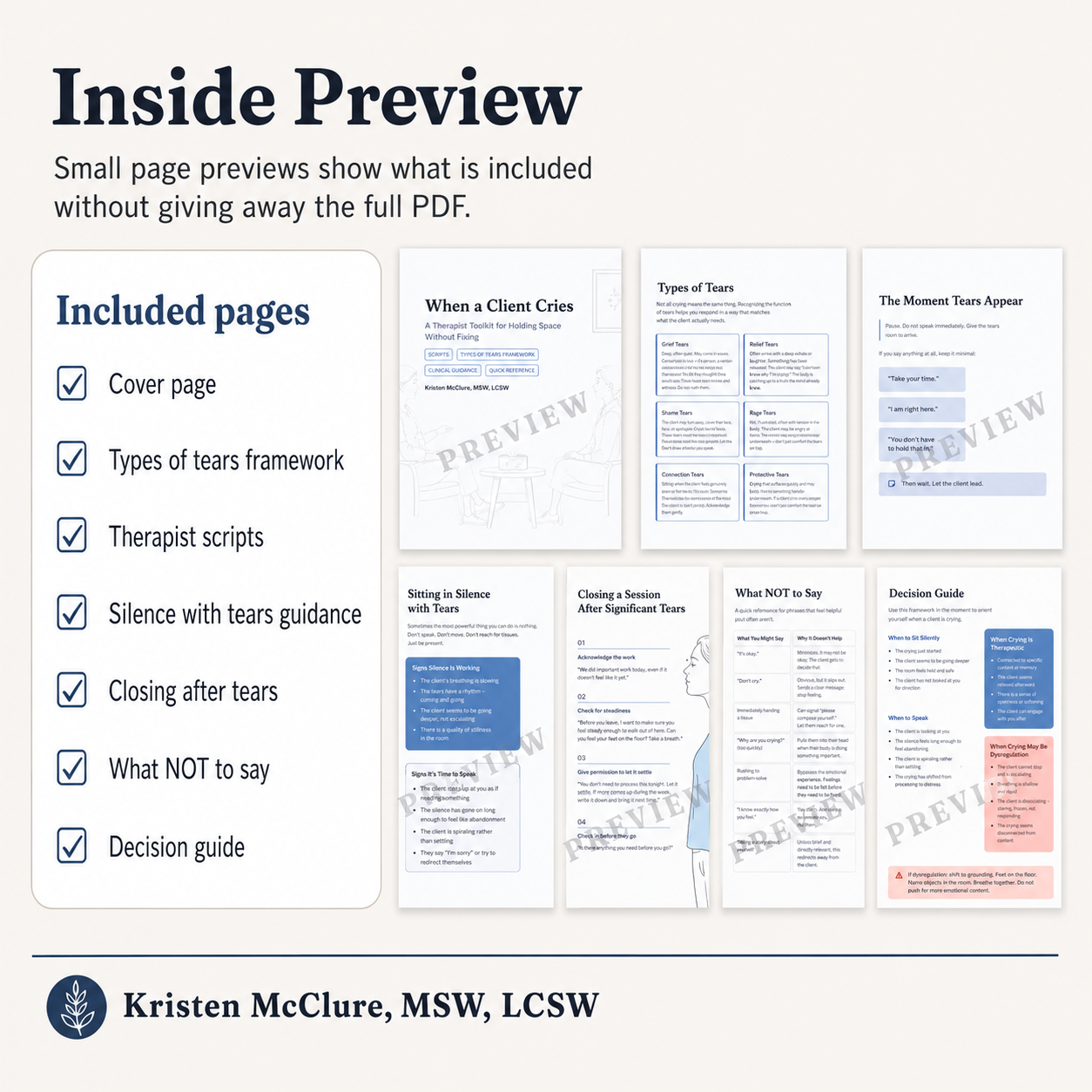
This 20-page therapist toolkit gives you scripts, clinical guidance, a Types of Tears framework, and a decision guide for holding space when a client cries.
Crying in therapy is not always a problem to solve. Sometimes it is grief. Sometimes it is relief. Sometimes it is shame, rage, connection, overwhelm, or the first moment a client’s body has been able to let something out.
Use this toolkit when you need help knowing when to stay silent, what to say when a client apologizes for crying, how to respond without rushing to fix, and how to close the session after significant tears.
Inside, you will find:
🔵 A Types of Tears framework for grief tears, relief tears, shame tears, rage tears, connection tears, and protective tears
🔵 Scripts for the moment tears appear
🔵 Scripts for when a client apologizes for crying or tries to stop themselves
🔵 Guidance for sitting in silence with tears
🔵 Language for breakthrough moments, shutdown after crying, and first-time tears after months of therapy
🔵 Support for telehealth sessions when a client cries on screen
🔵 Guidance for therapists who feel the urge to cry with the client
🔵 A closing-session framework for helping the client leave feeling steady
🔵 A “What Not to Say” quick reference
🔵 A decision guide for knowing when crying is therapeutic and when it may be dysregulation
Designed for therapists who want to stay present, steady, and clinically grounded when a client’s emotions come into the room.
Format: Instant PDF download
Length: 20 pages
Best for: therapists, interns, associates, supervisors, and private practice clinicians
Use for: session preparation, supervision discussion, clinical reflection, therapist reference, and emotional-process work
For educational and professional support use only. This resource does not replace clinical judgment, supervision, crisis intervention, or applicable legal and ethical standards.
This covers the full product: scripts, Types of Tears framework, clinical guidance, telehealth support, therapist countertransference, what-not-to-say guidance, closing framework, and decision guide.