
Figurative Language & Context Clues - Emotions & Descriptive Vocabulary
Figurative Language & Context Clues | Sensory Words and Multiple Meanings
Students may understand what cold, rough, soft, heavy, or warm mean physically, but what happens when those same words are used to describe a voice, welcome, conversation, or interaction?
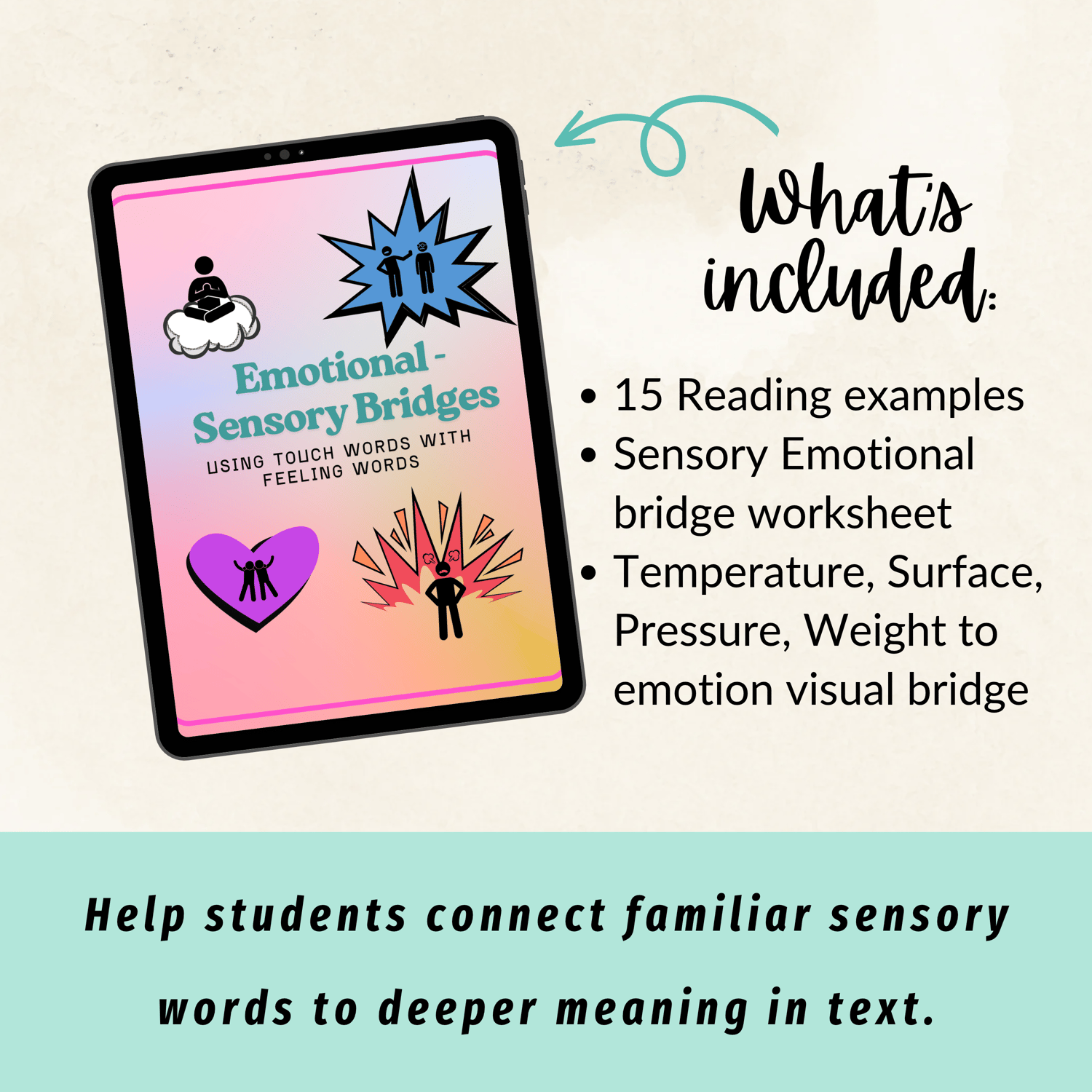
Emotional-Sensory Bridges helps students connect familiar sensory experiences with more abstract meanings in text.
Students learn a simple reasoning process:
Physical/Sensory Meaning → Context Clues → Possible Story Meaning
Rather than memorizing rules such as cold = unfriendly or soft = caring, students examine the surrounding sentence and use evidence to determine what the word might mean in that context.
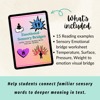
What’s Included
- Educator introduction and teaching notes
- Temperature → Emotion visual bridge
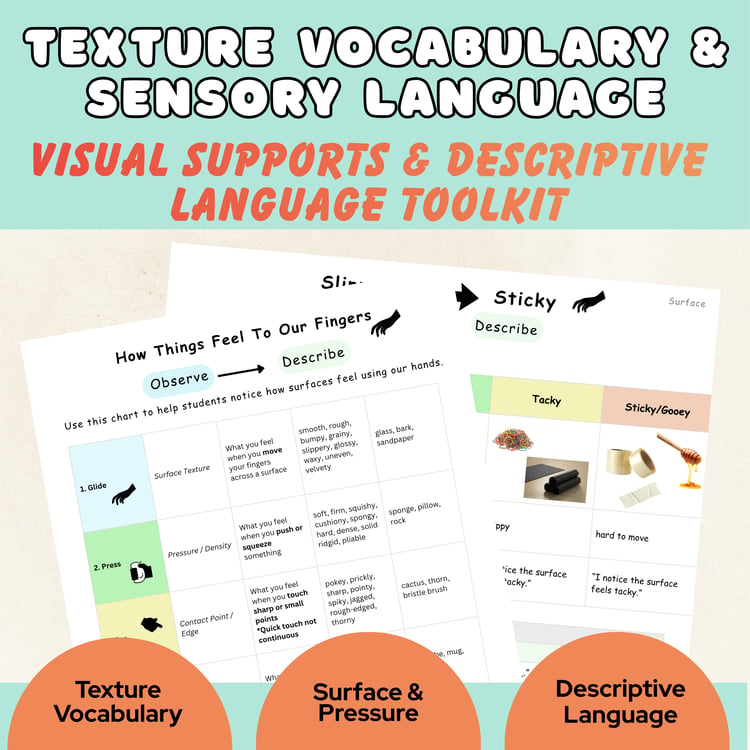
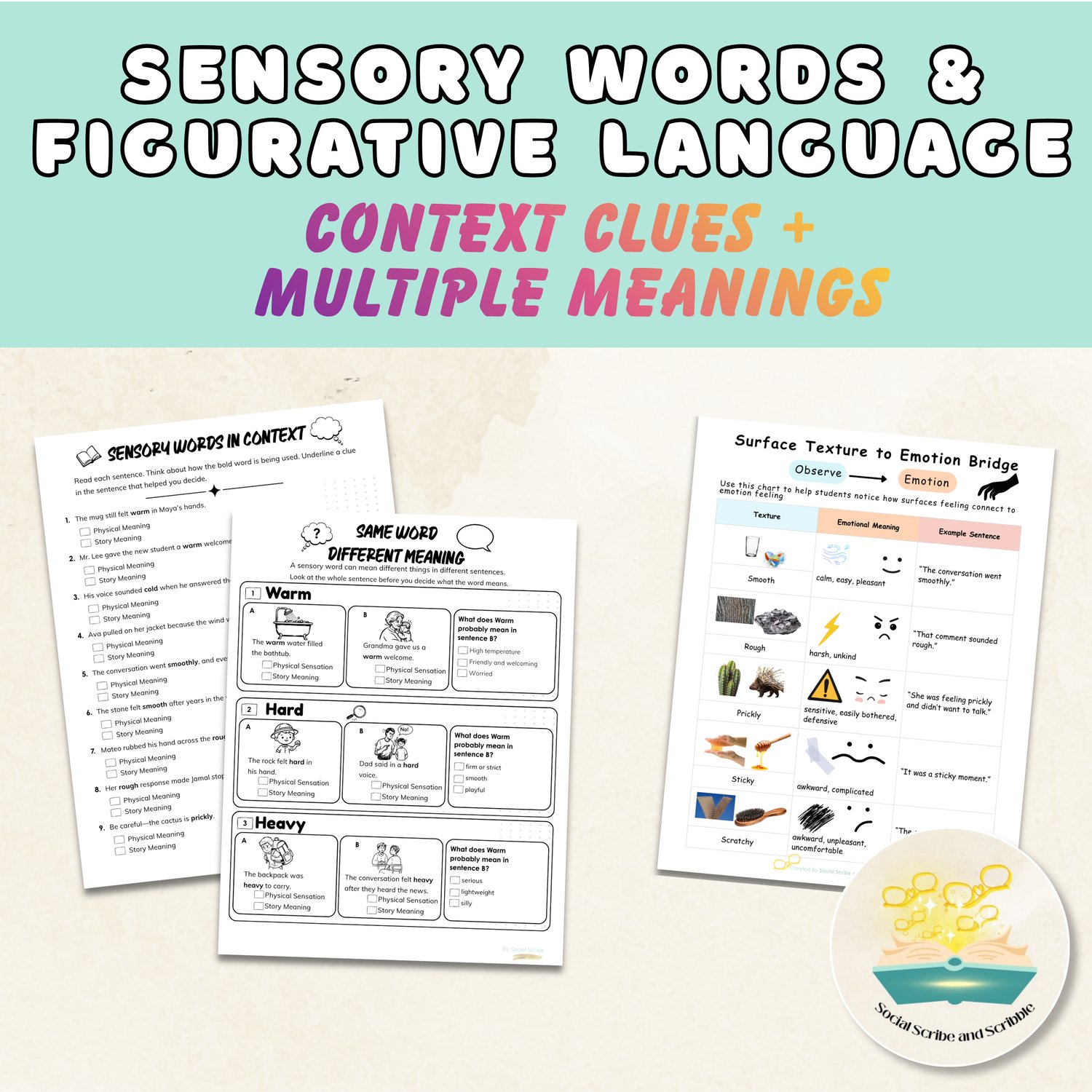
- Surface Texture → Emotion visual bridge
- Pressure, Texture & Weight → Emotion visual bridge
- Build the Bridge scaffolded practice
- Same Word. Different Meaning. comparison practice
- Sensory Words in Context with 15 reading examples
- My Sensory-Emotional Bridge reusable application worksheet
- Answer key
From Concrete Meaning to Deeper Understanding
Students begin with something familiar, what a sensory word means physically and gradually learn to notice when that same word is being used differently.
Activities move from modeled visual support to comparing literal and story meanings, identifying context clues, explaining evidence, and applying the strategy to outside texts.
Use the resource during reading comprehension, figurative language instruction, speech-language therapy, intervention, or small-group instruction.