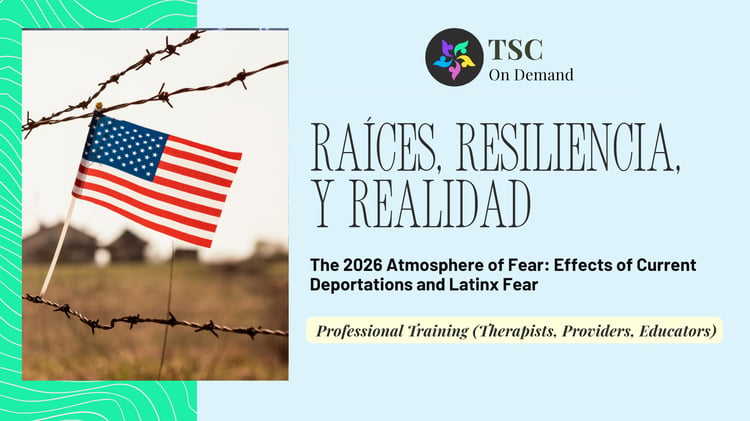
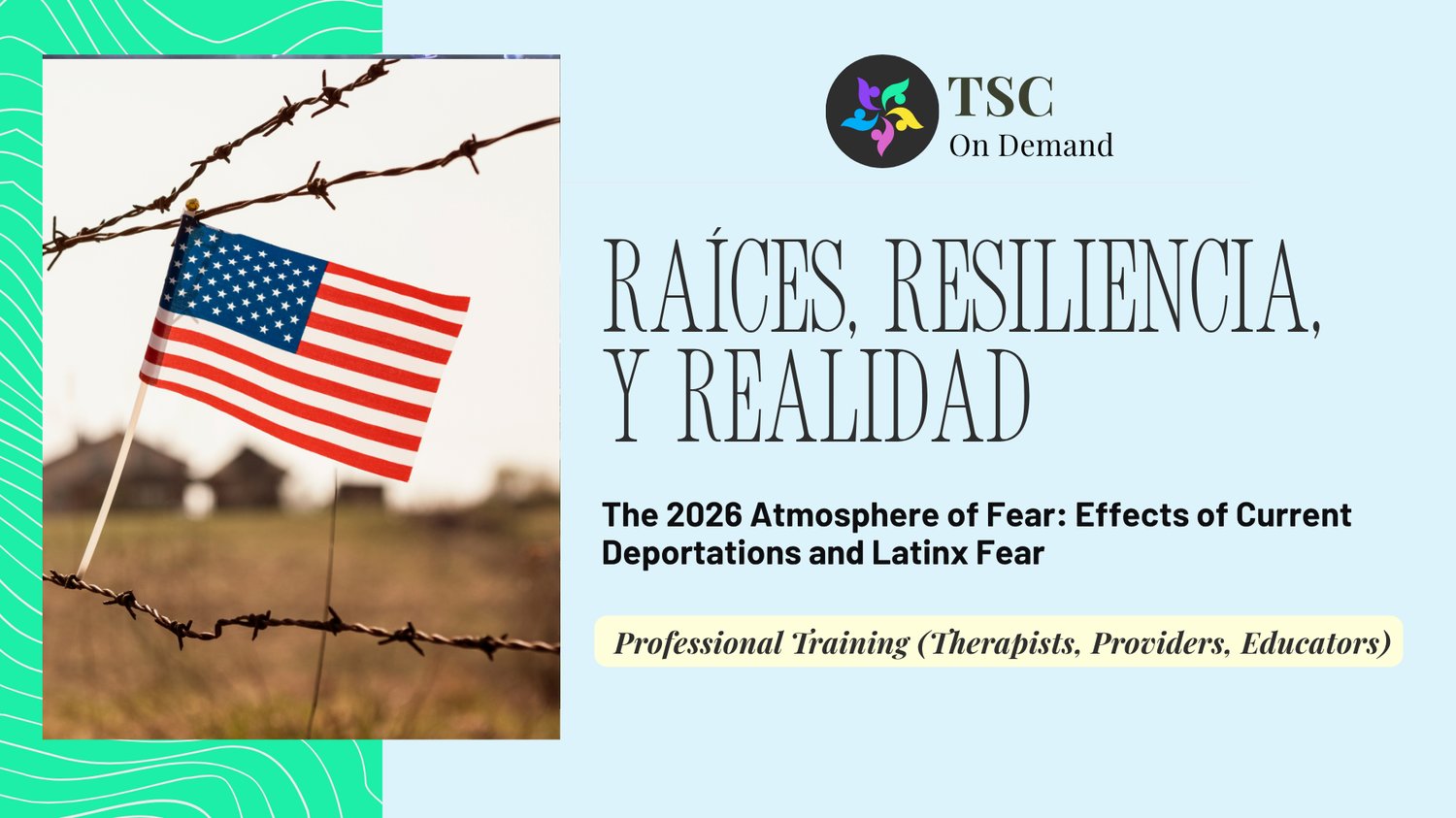
Raíces, Resiliencia, y Realidad: The 2026 Atmosphere of Fear Effects of Current Deportations and Latinx Fear
On Sale
$150.00
$150.00

Summer sale now 50% OFF
(PRE-RECORDED WEBINAR )
Mental health does not exist in a vacuum.
For many Latine individuals and families, today's emotional struggles are not simply the result of individual experiences. They are shaped by immigration policies, community-wide fear, economic instability, family separation, systemic surveillance, and the daily uncertainty of what tomorrow may bring.
Across the country, clinicians are witnessing increased anxiety, depression, hypervigilance, school avoidance, PTSD symptoms, and disengagement from treatment among Latine children, adolescents, and families.
Yet many mental health professionals have never been trained to understand how immigration-related stress, deportation fears, and systemic barriers impact mental health and therapeutic engagement.
The truth is: what may appear as treatment resistance, missed appointments, isolation, hypervigilance, or withdrawal is often a survival response to ongoing fear and uncertainty.
In this therapist-led training, Victoria Valdez, LMFT, explores the psychological and physiological effects of current immigration policies, and practical clinical strategies for supporting Latine individuals and families experiencing toxic stress and community trauma.
No politics.
No assumptions.
Just culturally responsive, trauma-informed clinical tools designed to help therapists understand, support, and advocate for Latine communities during a time of heightened fear and uncertainty.
If you're ready to better understand the realities impacting your clients and develop practical interventions that foster safety, resilience, and healing, this training is for you.
Many clinicians are witnessing a significant increase in anxiety, depression, hypervigilance, and chronic stress among Latine children, adolescents, and families. Children may present with PTSD symptoms related to fears of family separation, while families often experience heightened conflict, shifting family roles, and increased emotional strain. Schools, community programs, healthcare services, and even therapy sessions are seeing reduced participation as families withdraw out of fear and uncertainty. At the same time, growing distrust of institutions and helping professionals can create additional barriers to engagement and treatment.
Without understanding the broader social, political, and cultural realities influencing these experiences, clinicians may misinterpret what are actually adaptive survival responses. With greater awareness and culturally responsive approaches, however, therapists can strengthen therapeutic relationships, increase engagement, and help families move from a state of panic toward preparedness, resilience, and healing. This webinar provides both the context and practical clinical tools needed to effectively support Latine children, adolescents, and families navigating today's immigration climate.
Understanding Toxic Stress in 2026
Learn how chronic exposure to immigration-related fear impacts the nervous system, brain development, emotional regulation, and overall mental health.
The Mental Health Impact of Current Immigration Policies
Examine how deportations, family separation, legal vulnerability, economic instability, and reduced access to services contribute to mental health.
The "Chilling Effect" and Barriers to Care
Learn how fear of surveillance and institutional involvement impacts treatment engagement and access to care.
Supporting Children and Adolescents Living in Fear
Explore the unique effects of immigration-related stress on youth
Learn developmentally appropriate interventions to support children and adolescents experiencing chronic uncertainty.
Practical, trauma-informed, and culturally responsive strategies that clinicians can immediately apply to their work with Latine children, adolescents, and families. Participants will learn how to increase emotional safety, build trust with families, address hypervigilance and chronic anxiety, strengthen resilience and coping skills, improve treatment engagement, and support healthier family functioning.
Mental health therapists, counselors, social workers, psychologists, and interns.
School counselors, educators, and youth-serving professionals
Community mental health providers
Case managers and family support specialists.
Professionals working with immigrant, mixed-status, first-generation, and multi-generational Latine families
Clinicians seeking culturally responsive and trauma-informed approaches to treatment.
Providers who want practical tools for supporting clients impacted by immigration-related stress and fear
Build Greater Clinical Understanding
Develop a deeper understanding of how immigration policies and systemic stressors impact mental health, family functioning, and treatment engagement.
The training explores advocacy as an essential component of clinical practice, helping providers understand how to ethically support clients beyond the therapy room through resource coordination, community partnerships, collaboration with legal and advocacy organizations, trauma-informed systems navigation, and culturally responsive case conceptualization that acknowledges the broader social realities impacting clients' lives.
Strengthen Therapeutic Relationships
Learn strategies that foster trust, safety, and connection with clients navigating fear and uncertainty.
Expand Your Trauma-Informed Toolbox
Walk away with practical interventions you can immediately integrate into therapy sessions.
Better Support Children and Families
Increase your ability to identify, assess, and address the effects of toxic stress, trauma, and chronic fear.
Improve Treatment Engagement
Learn how to reduce barriers to care and create therapeutic environments where families feel safer seeking support.
Integrate Advocacy Into Clinical Practice
Discover ways to support clients through culturally responsive, community-centered approaches that extend beyond traditional therapy models.
Bonus Resources Included
In addition to the pre-recorded webinar, you'll receive 7 downloadable resources to help you apply what you've learned in both clinical practice and personal reflection.
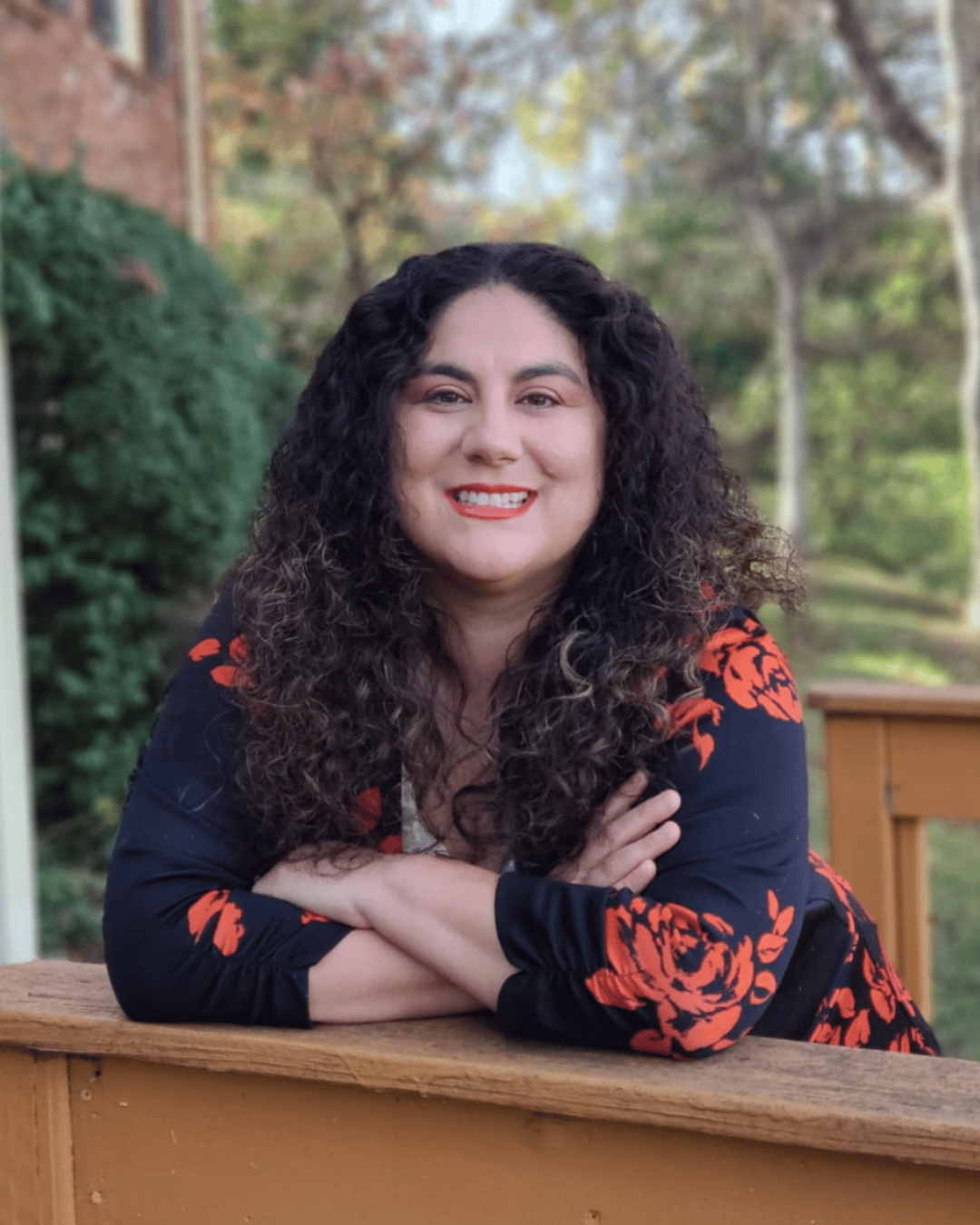
Victoria Valdez is a licensed marriage and family therapist, mental health educator, and founder of Tri-Synergy Counseling, with over 15 years of clinical experience supporting children, families, and adults.
She is Mexican and raised in the United States, bringing both lived and professional insight into the bicultural experiences, systemic barriers, and resilience within Latinx communities. Her work is grounded in culturally responsive, evidence-based care that honors identity, family systems, and lived experience.
Victoria specializes in anxiety, trauma, and family-based interventions and is known for translating complex clinical concepts into practical, immediately applicable tools for clinicians.
Credentials & Training Highlights:
Victoria integrates culturally adapted approaches including CBT, TF-CBT, Family Therapy, ACT, and Motivational Interviewing, with an emphasis on trust, empowerment, and cultural humility.
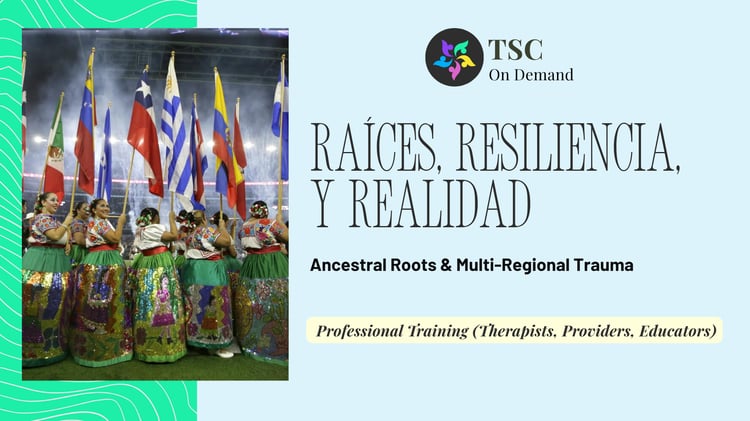
This webinar is part of the Raíces, Resiliencia, y Realidad training series—a comprehensive professional development program designed to help mental health professionals provide culturally responsive, trauma-informed care to Latine children, adolescents, adults, and families.
While each module can be purchased and viewed independently, they are designed to build upon one another, providing a deeper understanding of Latine history, cultural values, immigration experiences, family systems, clinical interventions, and culturally responsive treatment strategies.
To gain the full learning experience, explore the complete four-part series below:
Part 1: Raíces, Resiliencia, y Realidad: 120 Years of Latine History & Modern Systems
Part 2: Raíces, Resiliencia, y Realidad: The 2026 Atmosphere of Fear: Effects of Current Deportations and Latinx Fear
Part 3: Raíces, Resiliencia, y Realidad: Understanding Latinx Children, Teens, & Families Dynamics
Part 4: Raíces, Resiliencia, y Realidad: The Clinical Latine Toolbox & Modalities
Each module expands your clinical knowledge while providing practical tools you can immediately integrate into your work with Latine individuals and families.
This targeted training builds directly on what you’ve learned today, giving you the precise, advanced interventions needed to drive lasting healing for your clients. Click below to continue your professional growth!
Learn from Victoria Valdez, LMFT, a culturally responsive therapist dedicated to supporting Latinx individuals, children, adolescents, and families through trauma-informed and community-centered care.
The more clinicians understand these realities, the better equipped they are to provide meaningful support, build trust, and foster resilience in the families they serve.
Enroll today and gain the knowledge, clinical tools, and culturally responsive strategies needed to support Latine children, teens, and families navigating the 2026 atmosphere of fear.
Purchasing any resource from TSC Learning On-Demand also gives you access to our monthly newsletter, where you’ll receive updates, helpful resources, and new learning opportunities. You can unsubscribe from the newsletter at any time.