
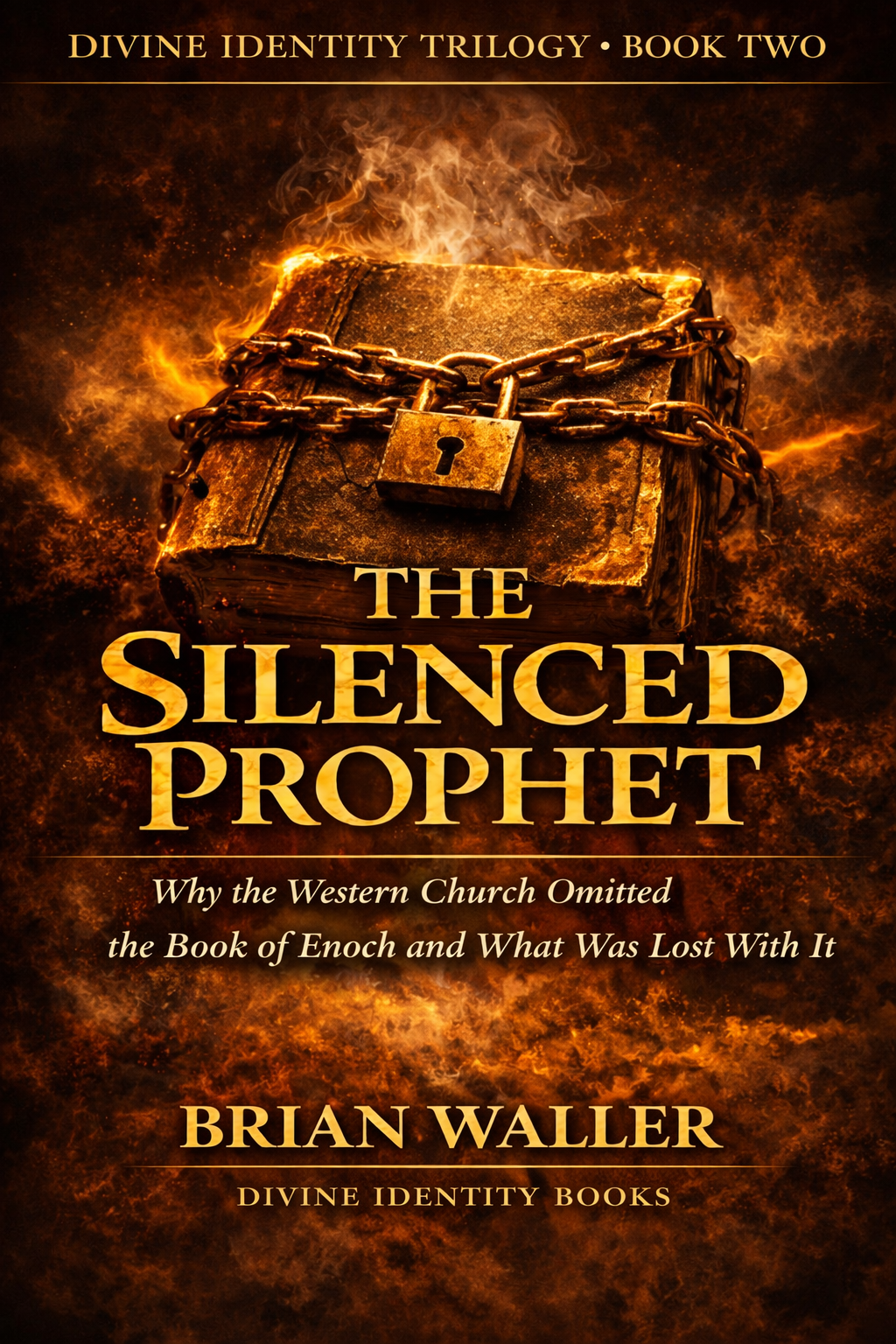
The Silenced Prophet: Why the Western Church Omitted the Book of Enoch and What was Lost With It
What if the Bible you've been reading is complete — but the framework you were given to understand it is not?
You've felt it before, even if you couldn't name it. Passages that don't quite connect. A flood that feels severe but never fully explained. Verses in the New Testament that speak in categories you were told to treat as metaphor.
So you moved past them. You were taught the gaps were mystery.
But the gaps are not mystery. They are the shape of something that was removed.
In The Silenced Prophet, the second book of the Divine Identity Trilogy, Brian Waller follows a single line most readers skip — a New Testament writer quoting the Book of Enoch as prophecy, without hesitation, as though his audience already knew it. That one quote unravels a question the church has been quiet about for centuries: if Enoch was known, used, and preserved in the same world that produced the Bible, why does it now stand outside the framework most readers inherit?
Tracing the evidence from the Dead Sea Scrolls to the New Testament to the Ethiopian tradition that never let it go, Waller restores the context Genesis assumes but does not explain — and watches the fragments lock into place.
You are not reading a different Bible. You are about to read it with the framework it was always written in. And once that framework is restored, the silence breaks.