


Beginner Kubernetes Interview Questions
1️⃣ What is Kubernetes?
Answer:
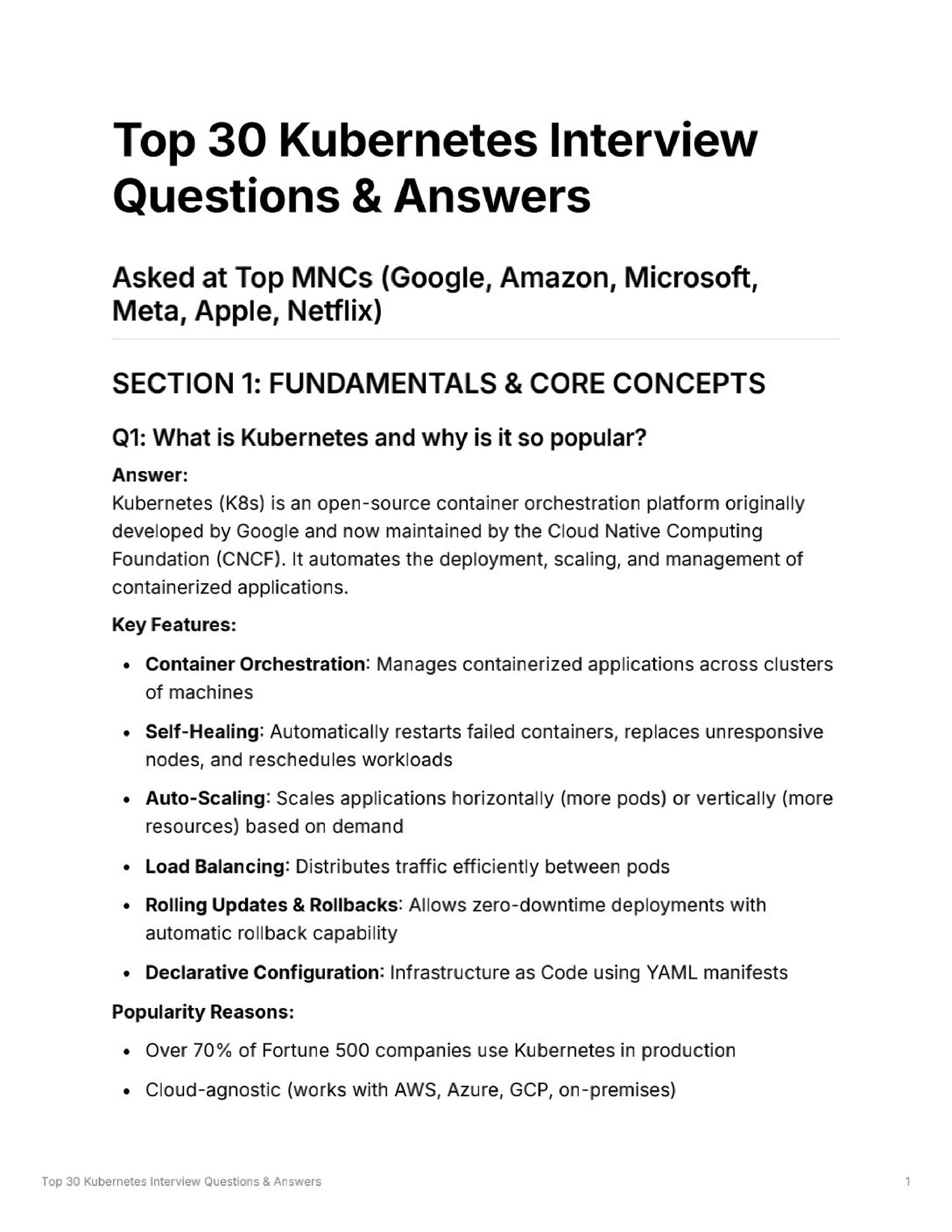
Kubernetes (K8s) is an open-source container orchestration platform used to deploy, scale, and manage containerized applications automatically.
2️⃣ What problems does Kubernetes solve?
Answer:
- Container scheduling
- Auto-scaling applications
- Self-healing (restart failed containers)
- Load balancing
- Rolling updates & rollbacks
3️⃣ What is a Pod?
Answer:
A Pod is the smallest deployable unit in Kubernetes.
It can contain one or more containers that share:
- Network
- Storage
- Lifecycle
4️⃣ What is a Node?
Answer:
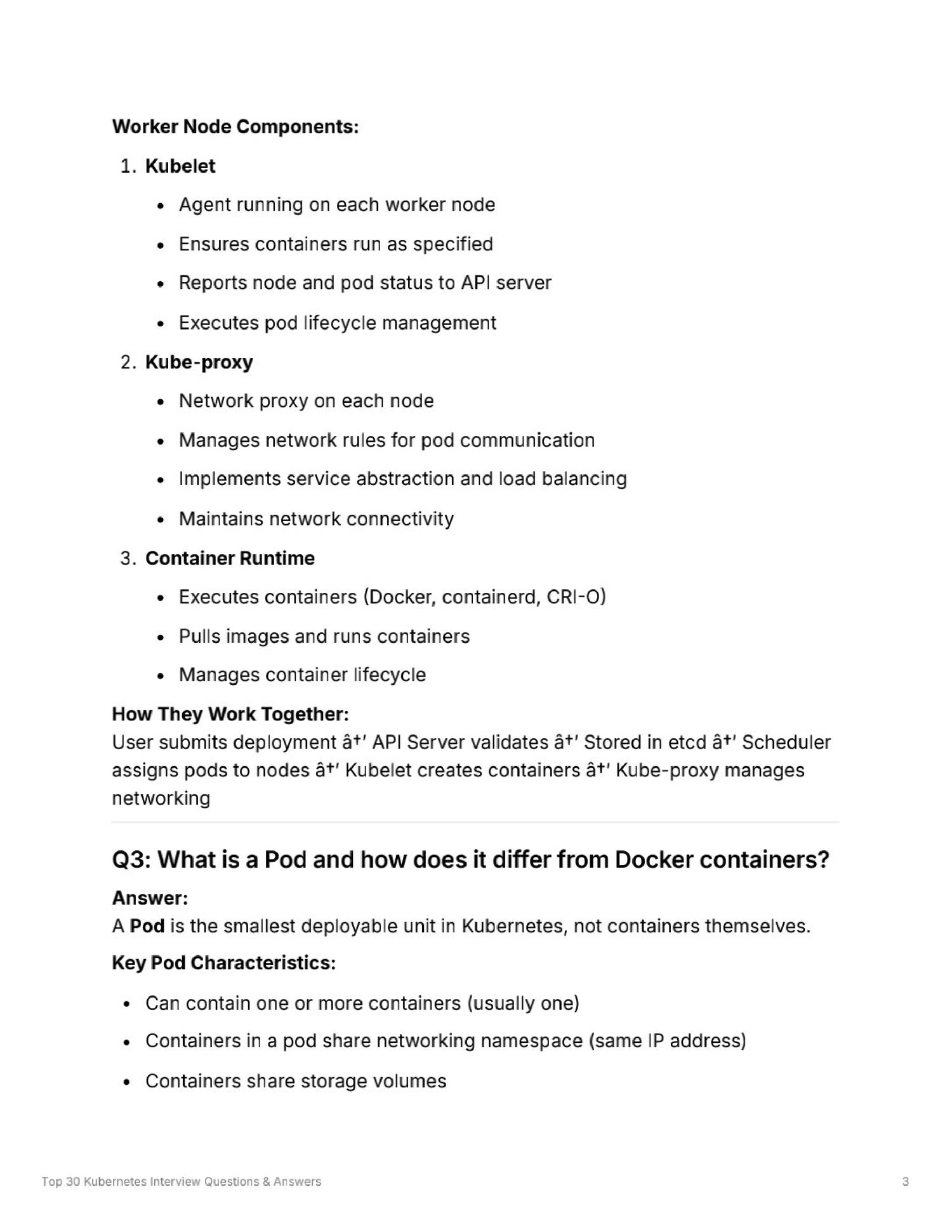
A Node is a worker machine (VM or physical) that runs Pods.
Each node runs:
- kubelet
- container runtime (Docker/containerd)
- kube-proxy
5️⃣ What is a Cluster?
Answer:
A Kubernetes cluster consists of:
- Control Plane (master components)
- Worker Nodes
🔹 Control Plane Components
6️⃣ What is the Control Plane?
Answer:
It manages the cluster and makes global decisions.
Main components:
- API Server
- Scheduler
- Controller Manager
- etcd
7️⃣ What is etcd?
Answer:
etcd is a distributed key-value store that stores:
- Cluster state
- Configuration data
- Secrets & metadata
8️⃣ What is kube-apiserver?
Answer:
The API Server is the entry point to the cluster.
All requests (kubectl, UI, automation) go through it.
🔹 Intermediate Kubernetes Questions
9️⃣ What is a Deployment?
Answer:
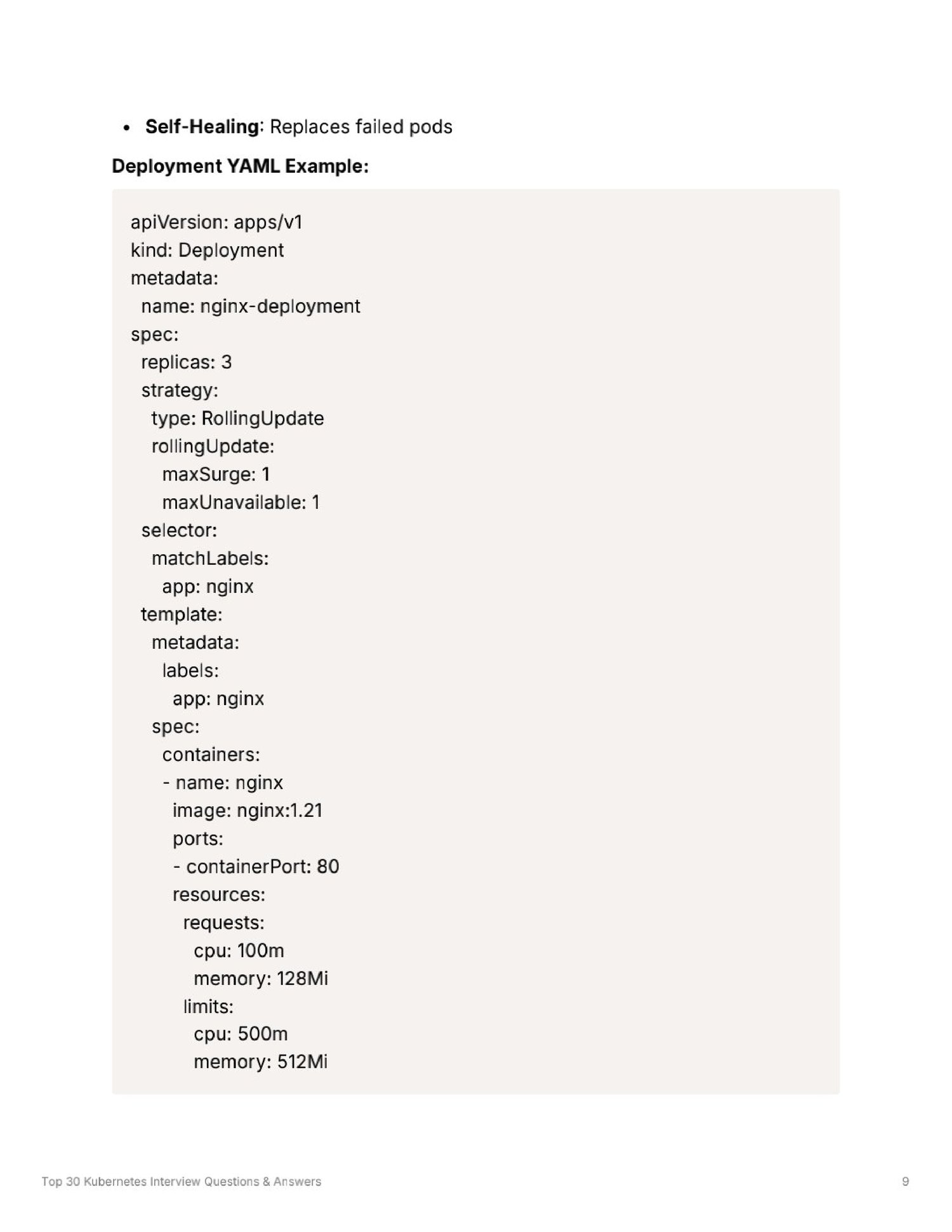
A Deployment manages:
- ReplicaSets
- Pod updates
- Rolling updates & rollbacks
It ensures the desired number of Pods are running.
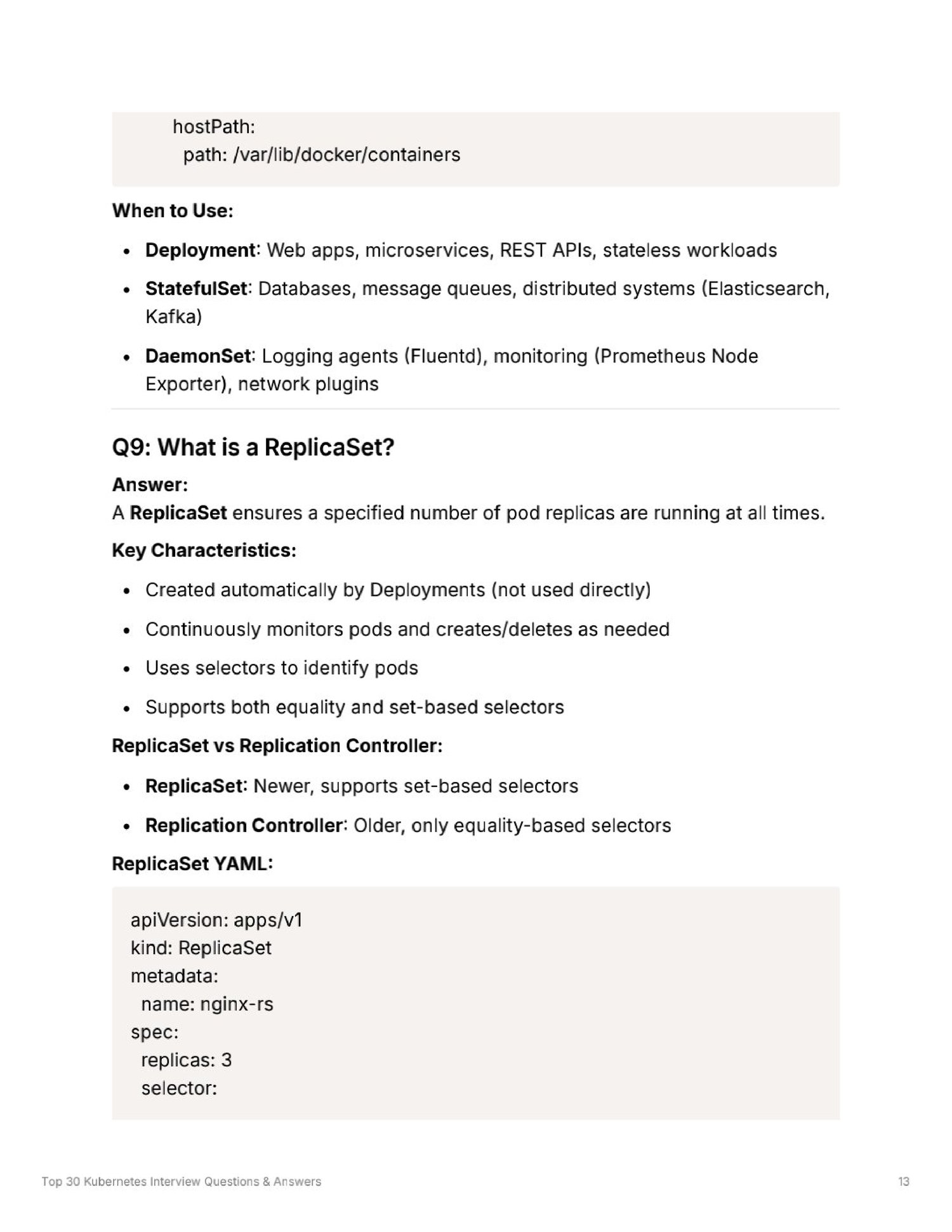
🔟 What is a ReplicaSet?
Answer:
A ReplicaSet ensures a specific number of Pod replicas are running at all times.
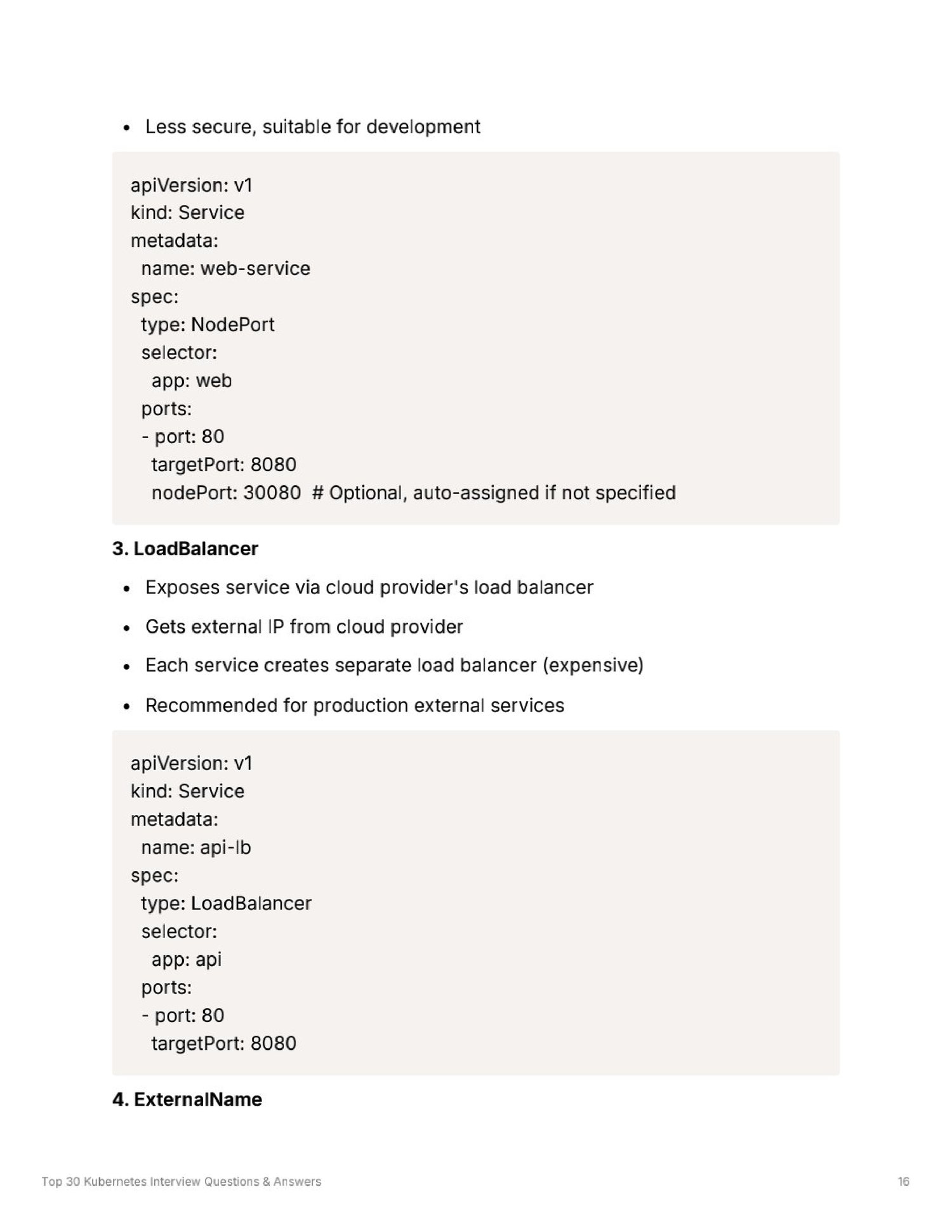
1️⃣1️⃣ What is a Service?
Answer:
A Service provides a stable IP and DNS name for Pods.
Types:
- ClusterIP
- NodePort
- LoadBalancer
- ExternalName
1️⃣2️⃣ Difference between NodePort and LoadBalancer?
Answer:
FeatureNodePortLoadBalancerExposureNode IP + PortCloud Load BalancerUse caseTestingProductionCloud neededNoYes
1️⃣3️⃣ What is Namespace?
Answer:
Namespaces logically separate resources within a cluster (e.g., dev, test, prod).
🔹 Storage & Configuration
1️⃣4️⃣ What is a ConfigMap?
Answer:
ConfigMap stores non-sensitive configuration data like environment variables.
1️⃣5️⃣ What is a Secret?
Answer:
Secrets store sensitive data such as:
- Passwords
- Tokens
- API keys
(Base64 encoded)
1️⃣6️⃣ What is Persistent Volume (PV)?
Answer:
PV is cluster storage provisioned by an admin or cloud provider.
1️⃣7️⃣ What is Persistent Volume Claim (PVC)?
Answer:
PVC is a request for storage by a Pod.
🔹 Advanced Kubernetes Interview Questions
1️⃣8️⃣ What is HPA (Horizontal Pod Autoscaler)?
Answer:
HPA automatically scales Pods based on:
- CPU usage
- Memory
- Custom metrics
1️⃣9️⃣ What is Ingress?
Answer:
Ingress manages external HTTP/HTTPS access to services using rules and routing.
2️⃣0️⃣ Difference between Ingress and Service?
Answer:
- Service exposes apps internally
- Ingress handles external routing and SSL termination
2️⃣1️⃣ What is Helm?
Answer:
Helm is a package manager for Kubernetes using charts to deploy applications easily.
2️⃣2️⃣ What is DaemonSet?
Answer:
DaemonSet ensures one Pod runs on every node (e.g., logging, monitoring).
2️⃣3️⃣ What is StatefulSet?
Answer:
Used for stateful applications like databases.
- Stable network identity
- Persistent storage
2️⃣4️⃣ What is Rolling Update?
Answer:
Rolling update updates Pods gradually without downtime.
2️⃣5️⃣ How does Kubernetes provide self-healing?
Answer:
- Restarts failed containers
- Replaces failed Pods
- Reschedules Pods on healthy nodes