


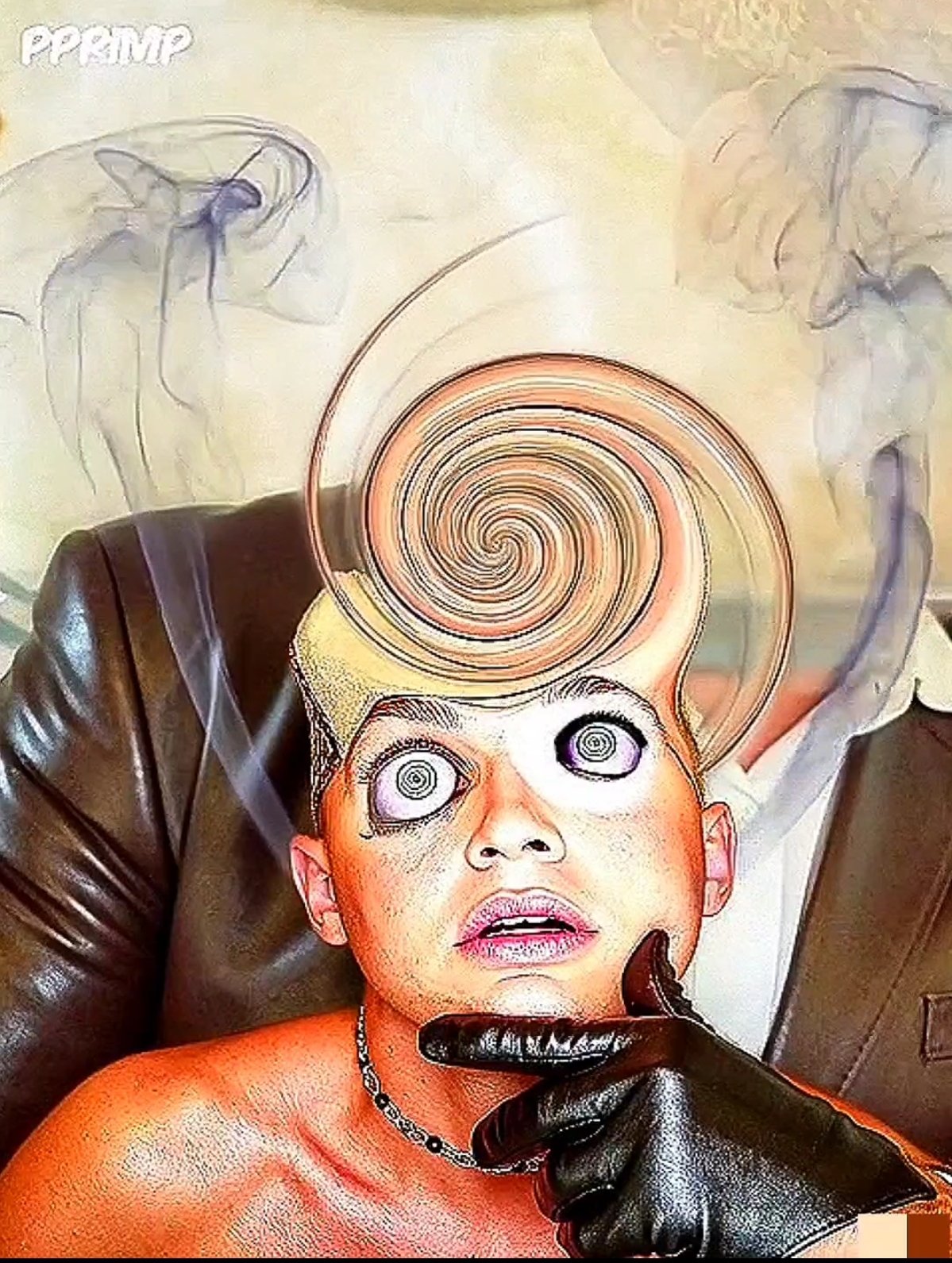






Cowboy Cubensis Kink Cult Coma
Cowboy Cubensis Kink Cult Coma
Created by Oregonleatherboy
Cowboy
A cowboy is traditionally a livestock herder associated with the American West, symbolizing independence, rugged labor, frontier masculinity, and mythic self-reliance. Culturally, the term has expanded to represent freedom, stoicism, rebellion, and romanticized masculinity rather than just an occupation.
Cubensis
Cubensis most commonly refers to Psilocybe cubensis, a species of psychoactive mushroom containing psilocybin and psilocin. It is associated with altered states of consciousness, perception shifts, introspection, and spiritual or psychological experiences. The word itself simply means “from Cuba” in Latin.
Kink
Kink refers to unconventional sexual interests, desires, dynamics, or practices that fall outside mainstream sexual norms. It emphasizes consent, intentional power exchange, sensation, role-play, or psychological elements rather than pathology. In modern usage, kink is framed as a spectrum of erotic expression rather than deviance.
Cult
A cult is a social group defined by high levels of devotion, ideological conformity, and often charismatic authority. Cults may employ psychological influence, ritual, boundary control, and identity reshaping. The term can be neutral (religious studies) or pejorative (coercive control), depending on context.
Coma
A coma is a prolonged state of deep unconsciousness in which a person cannot be awakened and does not respond meaningfully to stimuli. Medically, it reflects severe disruption of brain function. Metaphorically, the word is often used to describe psychological numbness, suspension, or disengagement from reality.
“Cowboy Cubensis Kink Cult Coma”
A composite phrase
evoking a
mythic
or
symbolic state
In which
rugged individualism (cowboy),
altered consciousness (cubensis),
transgressive desire (kink),
collective ideology
or
authority (cult),
and
suspended awareness (coma)
converges.
- A psychological
or
- cultural trance-state
- A ritualized identity
- collapse
- or transformation
A narrative of
- dominance
- surrender
and
- altered perception
Or a critique of how
- mythology
- substances
- desire
and
- group dynamics
can override agency
It does not inherently describe a
real group
practice
or
pathology
— it functions best as
symbolic language
poetic shorthand
or analytical metaphor.