
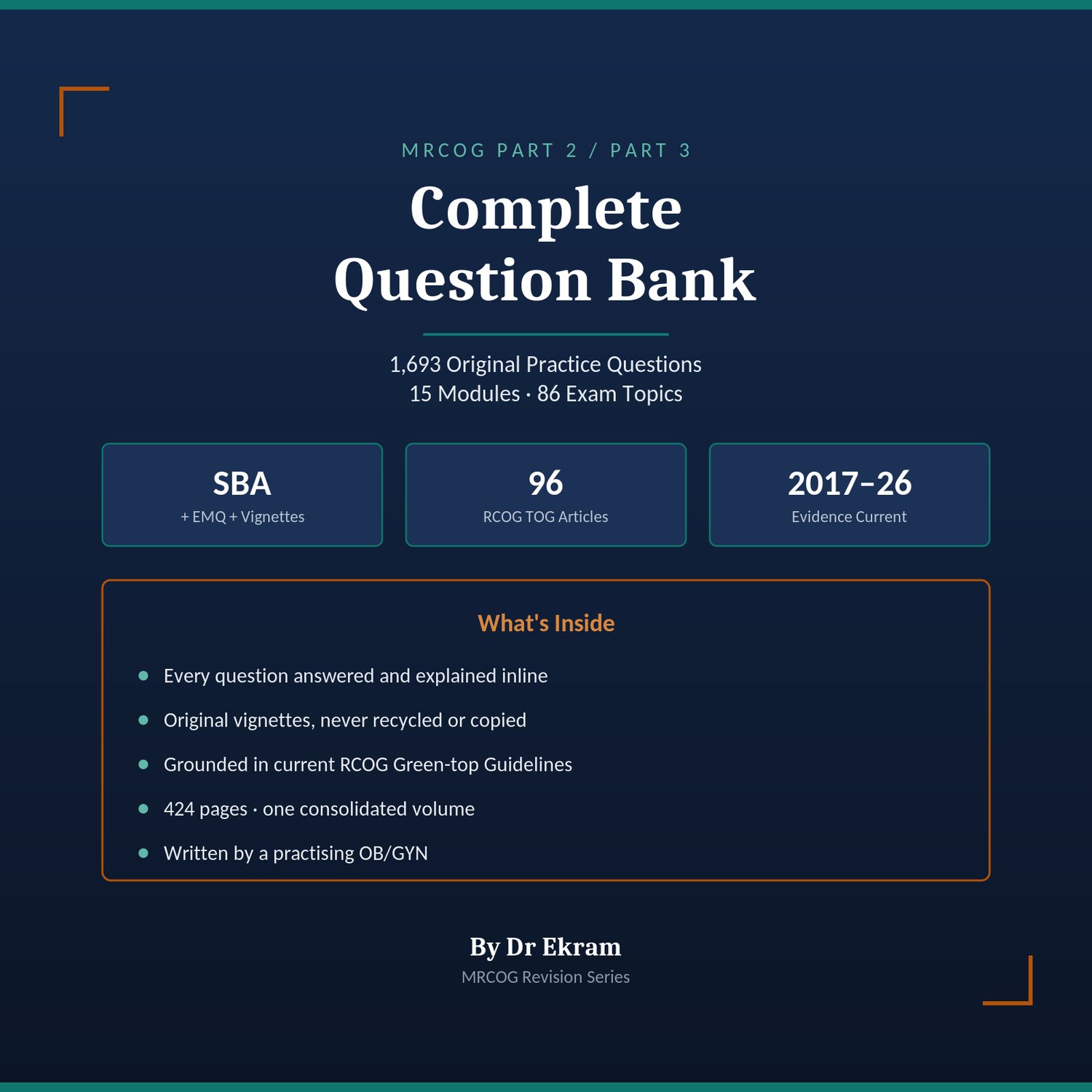
Every MRCOG Part 2/3 Topic. One Question Bank. 1,693 Questions.** 2. **Built From 96 RCOG TOG Articles
Most MRCOG Part 2/3 candidates end up stitching their revision together from scattered sources: old mock sites, forum-shared PDFs, question banks that never say which guideline year they're built on. The alternative is an expensive subscription qbank full of generic questions, or hours spent digging through TOG articles, Green-top Guidelines, and SIPs yourself to build something exam-current. This bundle is that work already done. It's built from 96 RCOG TOG review articles (2017 to 2026), converted into original practice questions, organised the way the exam itself is structured.
## What's included
- **1,693 original practice questions** across 15 modules and 86 exam topics: SBAs, EMQs, and short clinical vignette cases.
- **Every question answered and explained inline**, directly underneath the question. No flipping to a separate answer key, no losing your place.
- **Exam-relevant numbers bolded throughout** (gestational ages, dosages, percentages, follow-up intervals), so you can scan for the figures examiners actually test.
- **Full curriculum coverage**, from antenatal and maternal medicine through gynaecological oncology, benign gynaecology and urogynaecology, reproductive medicine, sexual and reproductive health, and professional skills, safety and leadership.
- **A working index with page references** for every module, so you can jump straight to the topic you're revising.
- **424 pages**, one consolidated volume, instant download.
## Who it's for
MRCOG Part 2 and Part 3 candidates who want one exam-current source to revise from, instead of assembling their own from scattered material. Works whether you're going through the curriculum in order or targeting specific weak topics before exam day.
## Why it's different
Written by a practising OB/GYN, built directly from RCOG TOG review articles rather than secondhand summaries or recycled mock-exam questions. Every vignette and every distractor is original. Every explanation names its source article by name and year, so you can check it yourself against current RCOG guidance instead of taking it on faith.