
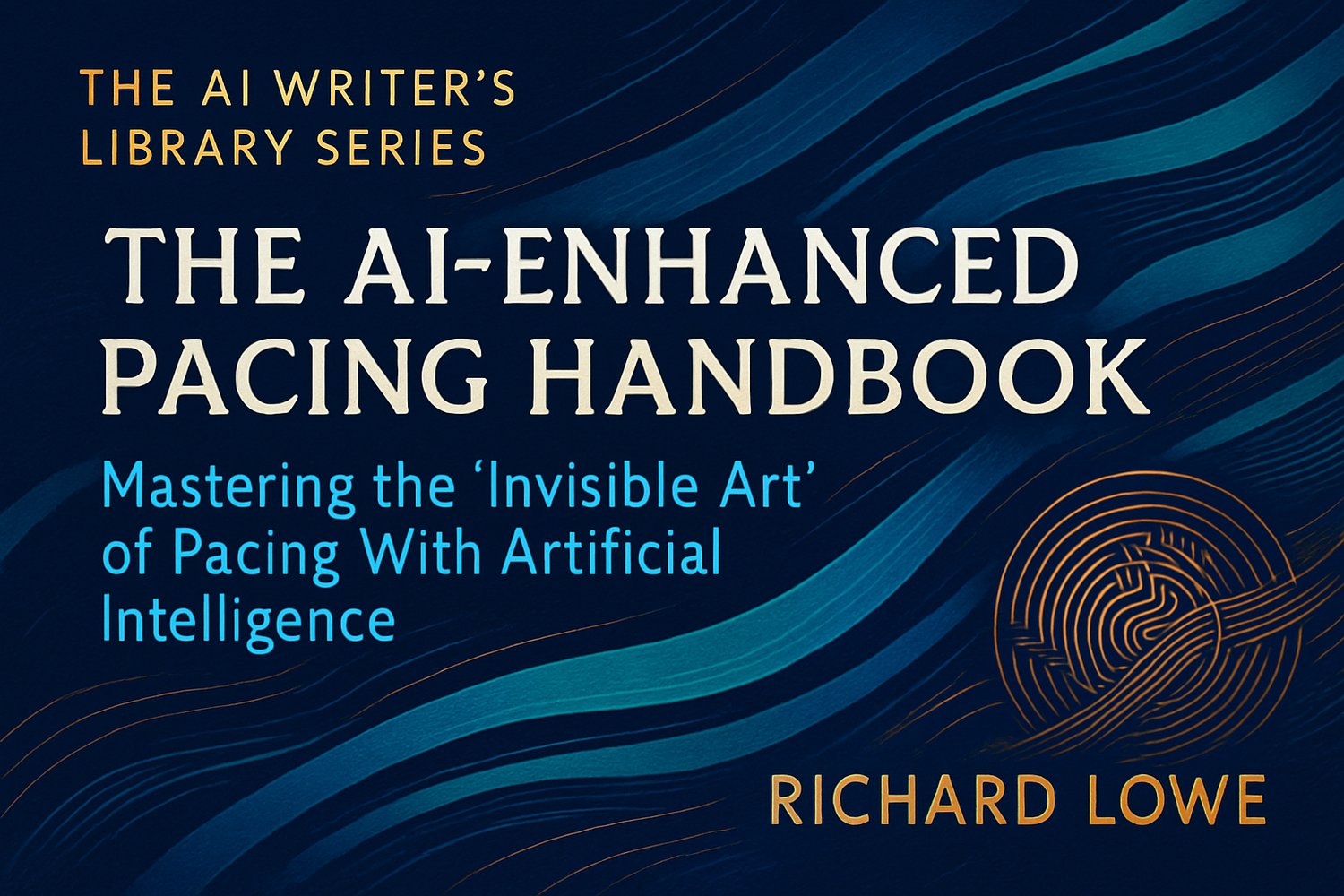
Ai-Enhanced Pacing Handbook
Stop Guessing Why Readers Abandon Your Story at Page 50
Your plot is solid. Your characters are compelling. Your prose is beautiful. Readers still bail around page fifty saying it "felt slow" or "couldn't hold my attention." Even when exciting things were happening.
You've tried adding action scenes to "speed things up." Inserting description to "slow things down." Neither worked because you were treating symptoms instead of diagnosing the disease.
Pacing isn't about what happens in your story. It's about how your readers' brains process what happens. And those brains evolved to track survival-relevant information in complex environments. Stories that fight against natural attention patterns feel like work, regardless of their content quality.
Your pacing fails because you're ignoring how human brains process stories. Information density, emotional intensity, and cognitive load create reading friction that kills engagement no matter how good your content is. Master these mechanics, and your stories become impossible to put down.
Six Measurable Elements of Pacing
Pacing isn't mysterious. It's six elements you can measure, adjust, and optimize.
Information density controls how much readers must process per page. When it fails, you get cognitive overload or boredom. Emotional intensity controls how much readers must feel per scene. When it fails, you get exhaustion or emotional flatline. Cognitive complexity controls how hard readers must think. When it fails, you get confusion or disengagement. Temporal progression controls how time moves in the story. When it fails, you get disorientation or drag. Tension escalation controls how stakes build across scenes. When it fails, you get sagging middle or rushed climax. Energy variation controls how intensity rises and falls. When it fails, you get monotony or whiplash.
The handbook teaches you to diagnose which elements are failing and how to fix them without destroying what's working.
Genre-Specific Pacing Psychology
Different readers have different attention patterns. What works in thriller destroys literary fiction. What romance readers expect would kill mystery momentum.
Thriller readers expect systematic tension escalation that never lets them fully relax. The handbook covers how to maintain urgency without exhausting attention spans. This is the balance Breaking Bad mastered while other shows crashed.
Romance readers need gradual emotional intimacy building that follows realistic relationship progression. You'll learn to create romantic tension that develops at psychologically believable pace without feeling artificially prolonged.
Mystery readers want systematic clue revelation that maintains suspense without confusion. The handbook addresses how information architecture affects puzzle satisfaction differently than other genres.
Fantasy readers accept gradual world-building that would kill momentum in other genres, but only when distributed correctly. Learn how Tolkien introduced Middle-earth without overwhelming cognitive processing.
Literary fiction readers prefer contemplative development that would destroy thriller momentum. The handbook covers how different optimization strategies serve different reading experiences.
What's Inside
The handbook covers reader psychology fundamentals, explaining how attention works, what creates engagement, and the neurochemistry of being "hooked." Systematic pacing control teaches six measurable elements you can learn, adjust, and optimize. Scene-level mechanics covers entry momentum, internal rhythm, information architecture, and exit velocity. Chapter and act-level architecture prevents middle sag while building systematic tension toward climax.
Genre-specific pacing patterns covers thriller, romance, mystery, literary, fantasy, and science fiction conventions. AI for objective pacing analysis provides prompts that reveal problems your subjective reading can't detect. Professional diagnostic tools help identify momentum killers, cognitive overload, and energy management failures.
Plus case studies showing why Breaking Bad works while Game of Thrones seasons five through eight crashed, how The Expanse manages technical exposition without losing readers, and how Better Call Saul transforms mundane legal proceedings into compelling television.
Built for Writers Who Use AI
AI can analyze your manuscript for pacing problems you can't see due to emotional investment in your own work. It can also generate scenes without understanding how those scenes affect reader attention cycles.
The problem isn't the AI. It's what you're asking for. "Fix my pacing" produces generic advice. AI needs specific questions. Where does information density overwhelm processing capacity? Where does emotional intensity exhaust rather than engage? Where do sentence rhythms create reading friction?
The handbook shows you how to prompt AI for objective pacing analysis. Cognitive load distribution mapping. Information density tracking. Emotional intensity patterns across chapters. Momentum sustainability testing.
AI is your diagnostic partner, not your pacing instinct.
From an Author With 113 Published Books
My ghostwriting clients have secured over $30 million in venture capital with books that held attention from first page to last. My brain doesn't accept "pacing is intuition" as methodology. When I realized readers abandoned good stories at predictable points for predictable reasons, I dug until I found the systems underneath.
My twenty years as Director of Computer Operations at Trader Joe's taught me that sustainable systems outperform quick fixes. Pacing works the same way. Systematic control beats intuitive guesswork every time. I studied why Breaking Bad works while Game of Thrones seasons five through eight crashed, why The Expanse holds attention through complex exposition while other science fiction loses readers in the first chapter.
127-page pacing handbook plus AI prompts and quick reference guide. Reader psychology fundamentals, scene mechanics, chapter architecture, genre-specific patterns, case studies, and diagnostic tools.
The invisible art separates page-turners from abandoned books. Master it.