
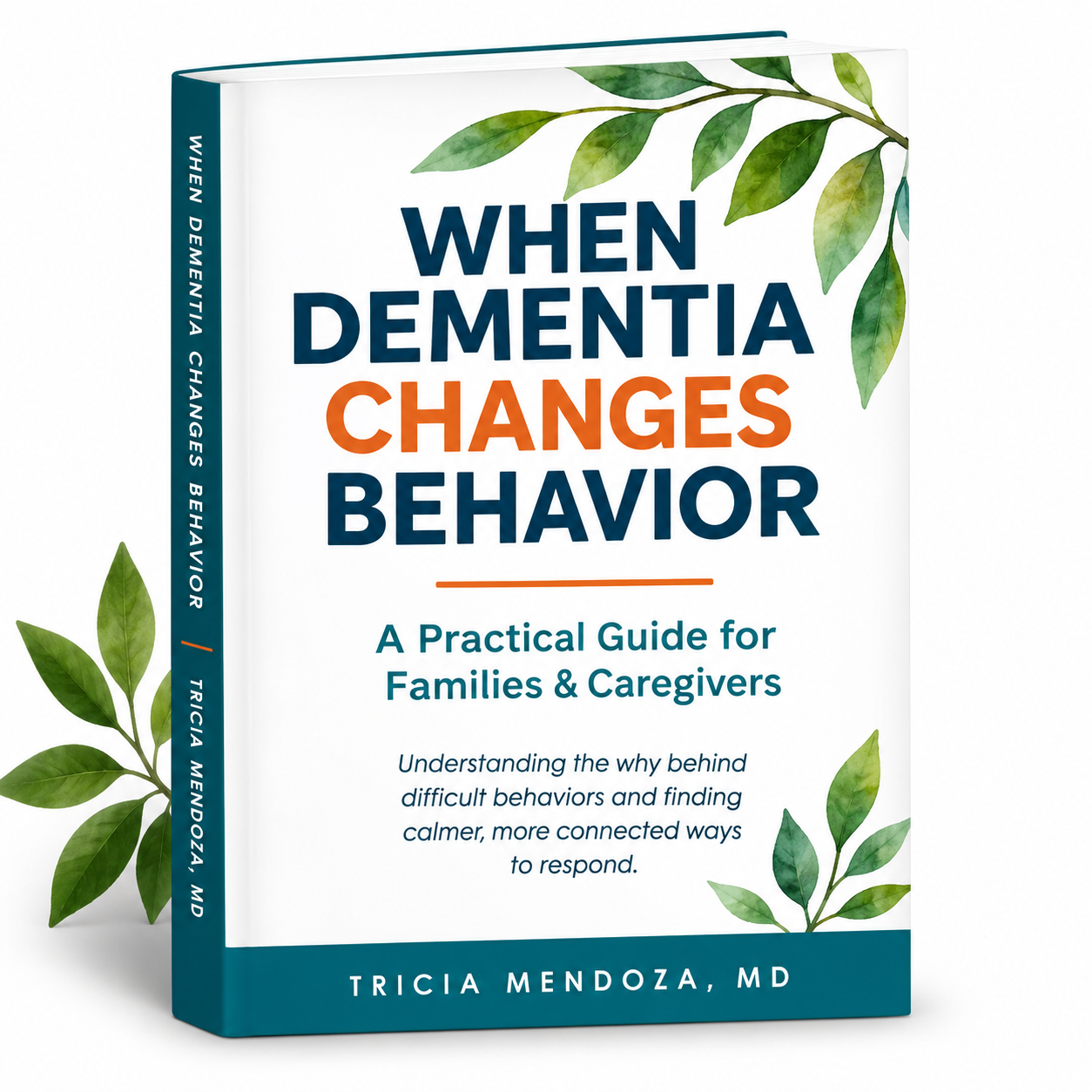
When Dementia Changes Behavior
When Dementia Changes Behavior
Caring for someone with dementia can become especially difficult when their behavior begins to change.
Repeated questions. Refusing a shower or medication. Agitation. Accusations. Hallucinations. Wanting to “go home.” Increased confusion later in the day.
These moments can leave families wondering:
Why is this happening—and what am I supposed to do?
When Dementia Changes Behavior is a practical guide designed to help families and caregivers look beyond the behavior and better understand what the person with dementia may be experiencing or trying to communicate.
Using the Behavior Detective approach, you’ll learn to look at five important areas:
BODY • ENVIRONMENT • TASK • APPROACH • EMOTION
Inside the guide, you'll learn practical ways to:
- Respond to agitation, anger, and irritability
- Handle repeated questions with less frustration
- Approach refusal of bathing, medication, food, and help
- Respond to accusations, suspiciousness, and hallucinations
- Manage late-day confusion and “sundowning”
- Know when a change in behavior may need professional evaluation
- Preserve dignity, connection, and as much independence as possible
Also included
The printable Behavior Detective Worksheet — a simple tool for identifying triggers, tracking what happened, recording what helped, and preparing useful information for healthcare appointments.
Created by Tricia Mendoza, MD, a board-certified geriatric psychiatrist.
Digital PDF • Immediate access after purchase • $19
For educational purposes only. This guide is not a substitute for individualized medical evaluation, diagnosis, or treatment.