
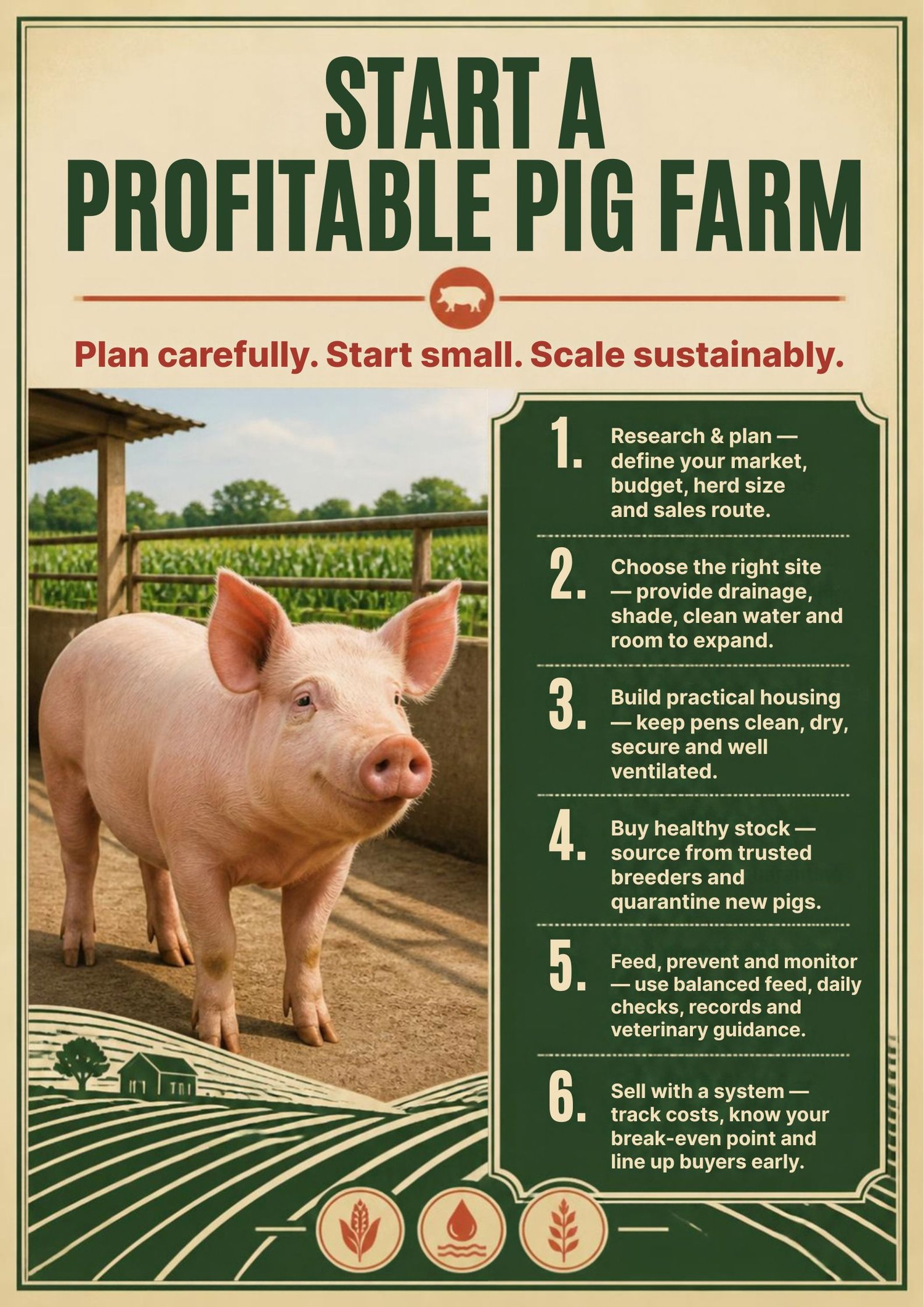
START A PROFITABLE PIG FARM
The pig farming business (piggery) is one of the most lucrative sectors in livestock farming due to the animal's rapid growth rate, high reproductive capacity, and strong global market demand. However, achieving long-term profitability requires overcoming critical operational hurdles, building consumer trust, and implementing sound structural planning.
Introduction & Overview
Pig farming involves rearing domesticated swine for meat (pork), breeding stock, and other valuable byproducts like compost.
High Prolificacy: Sows can give birth (farrow) up to 2.5 times a year, averaging 10 to 15 piglets per litter. This yields exponential herd growth compared to cattle or sheep.
Fast Return on Investment (ROI): Pigs have an excellent feed conversion ratio and can reach a commercial market weight of 70–100 kg within 5 to 6 months
Relatively Low Initial Entry Cost: Compared to other livestock options, a piggery requires comparatively less land and lower initial equipment setup costs when starting on a small scale.
The Core Problems & Vulnerabilities
Despite its financial promise, the sector faces distinct operational headwinds that frequently cause beginner operations to collapse:
Cultural and Market Hurdles: Pork faces strict religious and cultural dietary restrictions in many global regions, which limits local sales and requires complex, long-distance supply chains.
Environmental & Waste Barriers: Pigs produce substantial waste. Poorly managed manure leads to strict regulatory penalties, intense odors, and friction with neighboring residential zones.
Industry Credibility & Reputation Challenges
The commercial pig farming sector faces a widening disconnect between public perception and actual practice:
1. The Stereotype Trap: Public sentiment often associates pig farming with poor hygiene, environmental pollution, and low welfare standards.
2. Welfare Scrutiny: Consumers, regulatory bodies, and animal rights organizations are applying heavy pressure regarding controversial practices like sow confinement, tail docking, and castration.
3. The Misinformation Threat: In a hyper-connected digital landscape, unverified rumors regarding disease outbreaks or meat contamination spread quickly, causing rapid drops in market pricing and severely damaging producer reputations.