

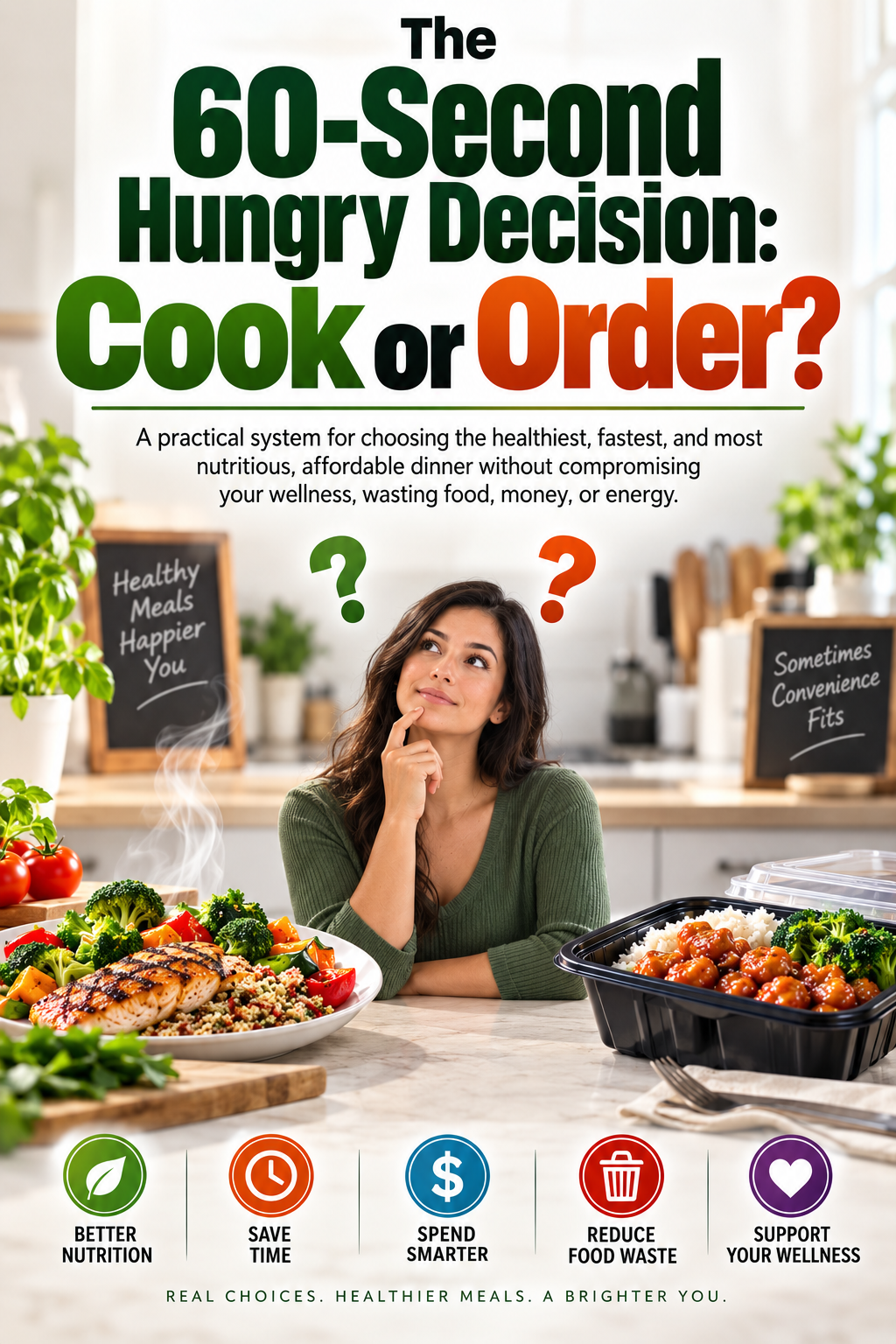
The 60 Second Hungray Decision Guide
Dinner decisions often happen at the worst possible moment. You are hungry, tired, short on time, and deciding whether to cook what you have or order something convenient. The 60 Second Hungry Decision: Cook or Order? provides a practical system for making that choice with greater confidence. Instead of automatically choosing the cheapest meal or fastest delivery, the guide places nutrition at the center of the decision, then helps you weigh affordability, preparation time, energy, food waste, satisfaction, and convenience.
This is more than a guide to cooking at home. It includes practical nutrition comparisons, cost calculators, meal decision scorecards, pantry and freezer planning tools, restaurant value assessments, a 30-meal bank, and a 30-day dinner tracker. The purpose is simple: help you eat more intentionally without making dinner another exhausting responsibility. Sometimes cooking wins. Sometimes ordering makes sense. What matters is having a system that helps you recognize the better choice for your circumstances tonight.
Dinner decisions become harder when hunger arrives before a plan does. A person may be balancing work, family, commuting, fatigue, a food budget, ingredients that need to be used, and a genuine desire to eat nutritiously. The question is rarely just what sounds good. It is what choice can satisfy hunger while protecting health, time, money, food, and energy.
This guide treats nutrition as a main decision factor rather than a decorative benefit. A cheap meal that repeatedly leaves nutrition behind is not automatically a smart bargain. A nutritious meal that requires more time or effort than a person can realistically give tonight may also fail. The useful answer is the best workable combination for the present situation.
The sixty-second system exists because hungry people should not need a twenty-minute planning meeting with themselves. The framework quickly checks nutrition needs, time, energy, ingredients, cost, waste risk, and satisfaction. Those inputs point toward one of several practical outcomes: cook, assemble, use leftovers, pick up food, or order delivery.
Home cooking can offer strong control over ingredients, portions, preparation methods, and cost. Yet the guide does not assume that cooking always wins. If cooking requires an unplanned grocery trip, creates waste, or demands energy that is simply unavailable, another option can be more rational. The decision should reflect the whole meal, not an idealized rule.
Ordering can also be handled intelligently. A restaurant meal can be selected for protein, vegetables, fiber-rich sides, sensible portions, total price, and leftover value. Pickup may avoid delivery charges. A larger balanced entrée may create tomorrow's lunch. Convenience becomes more useful when it is planned instead of purchased impulsively.
Food waste belongs inside the calculation because unused groceries are money already spent. The wilted vegetables, forgotten leftovers, duplicate ingredients, and aspirational purchases in a refrigerator change the economics of tonight's decision. A simple use-first habit can protect both household finances and the value of the food already available.
Energy is another legitimate constraint. Some evenings support chopping, cooking, and cleanup. Other evenings support only reheating or assembly. Matching the meal to available energy prevents an ambitious plan from collapsing into expensive last-minute ordering. The system therefore treats low-effort meals as a capability, not as a failure of cooking.
Nutrition is assessed through practical building blocks rather than rigid perfection. Readers will learn to look for a meaningful protein source, produce, fiber-rich foods when appropriate, hydration, portion satisfaction, and personal dietary requirements. These factors help compare home meals and restaurant choices on the same practical basis.
The calculators and charts turn vague intentions into visible tradeoffs. A dinner can be scored for nutrition, time, cost, food use, and energy fit. The score does not dictate what a person must eat. It exposes which choice best matches the priorities of that evening and helps identify recurring patterns worth changing.
The purpose is ultimately freedom from repeated dinner regret. A useful system should make healthy behavior easier while leaving room for real schedules, real budgets, family preferences, celebrations, cravings, and difficult days. Better dinner decisions are built through preparation and judgment. Sixty thoughtful seconds can be enough to change what happens next.
Core promise: Choose the most nutritious, practical dinner you can afford and complete tonight, while considering time, energy, ingredients, waste, and satisfaction.