
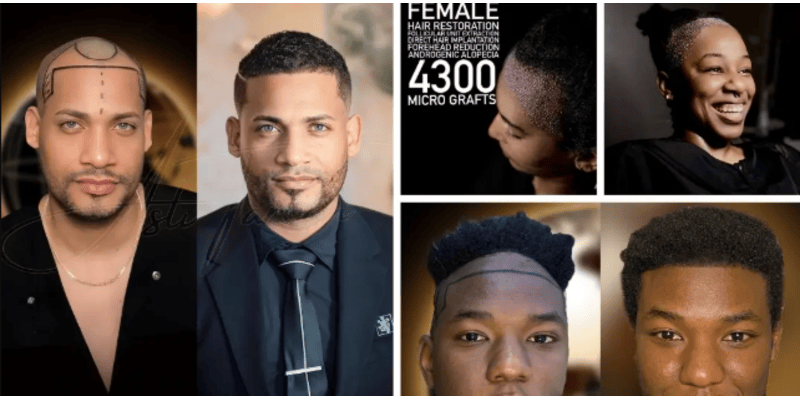
The Importance of Curl Pattern and Follicle Anatomy in Afro Hair Transplants
Afro-textured hair is celebrated for its rich diversity in curl patterns, ranging from loose coils to tight zigzags. However, these unique characteristics also present specific challenges during hair transplant procedures. In Turkey, where hair restoration has become a refined art, understanding the anatomy of Afro hair follicles and curl behavior is essential to achieving successful, natural-looking results.
The curl pattern of Afro hair is not just a surface trait—it’s rooted in the follicle’s shape and orientation beneath the scalp. Unlike straight hair follicles, which are typically round and grow vertically, Afro hair follicles are elliptical and curved. This curvature causes the hair to grow in a spiral or coiled fashion, often at an angle to the scalp. These anatomical differences mean that standard hair transplant techniques must be adapted to avoid damaging the follicles during extraction and implantation.
Turkish clinics specializing in Afro hair transplants have developed modified approaches to accommodate these complexities. During Follicular Unit Extraction (FUE), for example, surgeons use customized punches with flared or trumpet-shaped tips that follow the natural curve of the follicle. This reduces the risk of transection—where the follicle is accidentally cut or damaged—and improves graft survival rates. The angle of extraction is also adjusted to match the follicle’s growth direction, ensuring that the hair continues to grow in its natural pattern after transplantation.
Implantation is equally nuanced. Afro hair tends to grow in clusters and at varying angles, especially around the hairline and temples. Turkish surgeons with experience in Afro hair restoration carefully design the recipient area to mimic these patterns. Each graft is placed with attention to curl direction, density, and spacing, resulting in a hairline that looks authentic and blends seamlessly with existing hair.
Curl pattern also influences the aesthetic outcome. Afro hair provides more coverage per graft due to its volume and texture, which can be advantageous for patients with limited donor areas. However, this also means that fewer grafts may be needed to achieve a full look, provided they are placed strategically. Turkish clinics often conduct detailed assessments to determine the optimal number of grafts based on the patient’s curl type and hair loss severity.
Another consideration is the variability within Afro hair types. Patients may have mixed curl patterns across different areas of the scalp, requiring a customized approach. Surgeons in Turkey are trained to recognize these variations and adjust their techniques accordingly. This level of personalization is crucial for achieving results that not only restore hair but also honor the natural beauty of Afro-textured hair.
In conclusion, the success of an Afro hair transplant in Turkey hinges on a deep understanding of curl pattern and follicle anatomy. Clinics that specialize in Afro hair bring both technical skill and cultural sensitivity to the table, ensuring that each procedure is tailored to the individual. By respecting the unique structure of Afro hair, Turkish surgeons deliver results that are not only medically sound but also aesthetically empowering.