
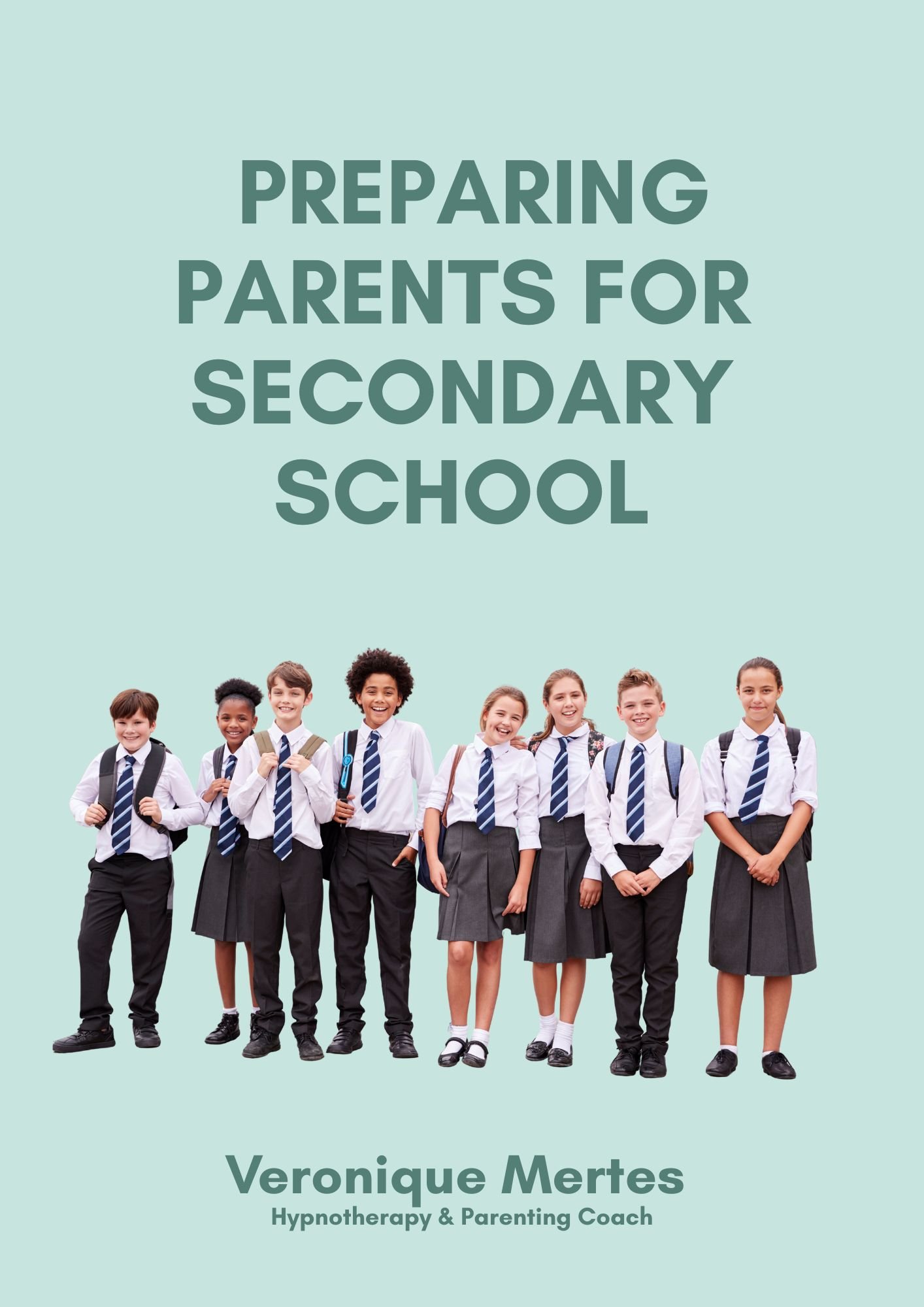
Preparing For Secondary School Ebook
When children reach the end of year 6, parents are confronted with a cocktail of emotions. From sadness that this part is over to fear of ‘losing’ our child by being excluded from a big part of their life. It can feel like a door shuts, and your child is on the other side. Many parents simply don’t feel ready for this next chapter or are overwhelmed by emotions.
We are somehow aware that we might not know the teachers, the other children, and their parents at Secondary, their morals and ethics, and fear that we no longer have any influence. School, peers, and the digital world are now all competing with us for attention and influence.
Most parents reach out for help when they hit rock bottom, when things feel really hard, and when the relationship with their teen feels like it has crumbled already.
Why leave it this late? We don’t wait till the house has burned down entirely to call for help. Why wait until the relationship with our child has fallen apart and a feeling that you’ll never get through to them again?
Better yet, you don’t have to get to a point of no return, because the time you put in now will help prevent your relationship from getting to this point in the first place. Like we prepare during pregnancy for the upcoming birth and our baby’s needs, we can prepare for this phase of impactful changes. Like with the birth, many are willing to tell you the trickiest parts of teenage years, scaring us even more, but what about those families where things work out well?
What about the beautiful side of raising teens, their fascinating minds and endless humour?
This sunny side is hardly spoken about. As a child moves into teenage years, there are a few changes parents can make to enable a smoother transition. Simple, but important knowledge and understanding that will not only reassure us parents but also set us up to be the most reliable and steady support for our teens.
This eBook will prepare you by:-
- Learning about the physical changes within your child’s body (including the brain changes)
- Understanding how to talk differently to a teen in a way that is appropriate to their developing brain and developmental stages
- Getting insight into the reasons behind the emotional roller coasters and changing behaviors
- Managing expectations following their development
- Find out why none of their behaviour is personal, so you can stay your loving and caring self.
Educating ourselves at this stage is the best guarantee for an ongoing, solid connection with your ever-changing child.