

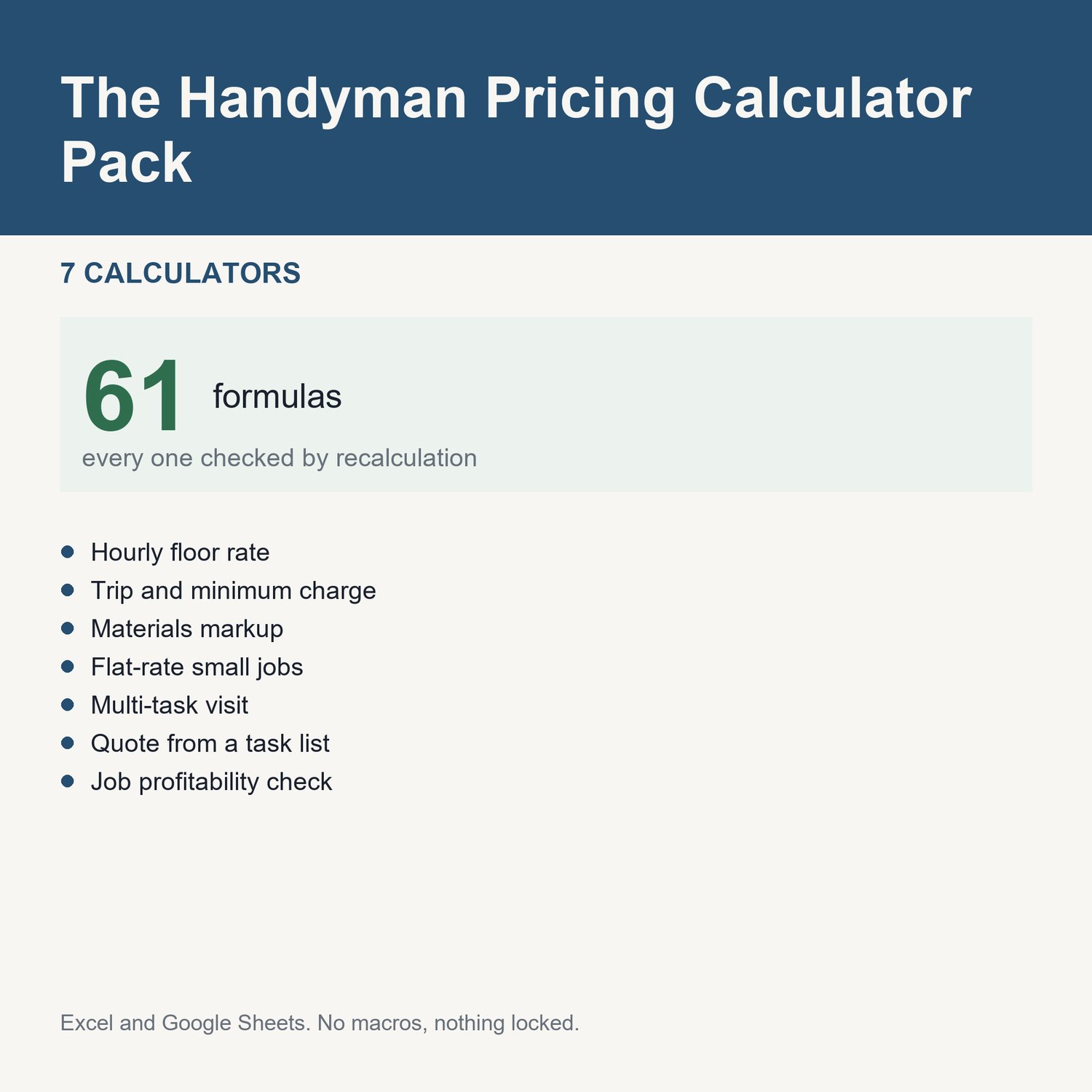

The Handyman Pricing Calculator Pack: Seven linked calculators, every formula checked by recalculation
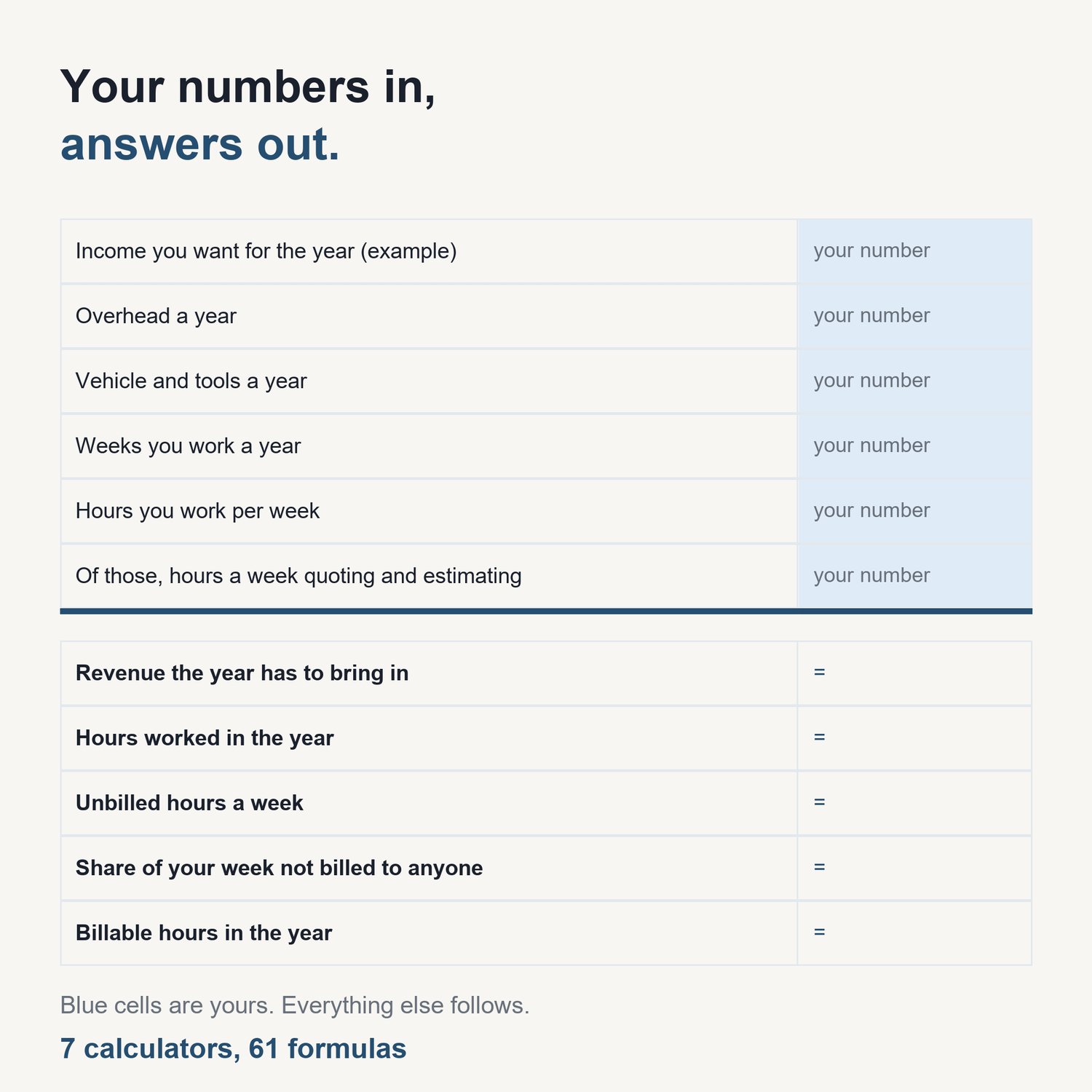
Seven calculators for pricing handyman work from your own year, not from someone else's rate card: the hourly floor once the unbilled quotes, supply runs and driving are counted, a trip charge and a minimum, what a materials markup has to cover, flat prices for small jobs from your estimated minutes, what bundling several tasks into one visit saves, a quote from a customer's task list, and a check of estimated against actual hours once the job is done. Start with sheet 1. In the worked example the floor is $50.00 a billed hour. Every figure is an example for you to overwrite; none of it is a claim about what handyman work sells for. These are estimates, not financial advice. Every formula was recalculated and checked against an independent implementation before this shipped.
What is in it
7 calculators, one per sheet. Overwrite the blue cells with your own numbers and everything else follows. Nothing is locked, there are no macros, and it opens in Excel, Numbers, LibreOffice and Google Sheets.
- Hourly floor rate: What must a billed hour bring in once quotes, supply runs and driving are counted?
- Trip and minimum charge: What does showing up cost you, and what is your minimum?
- Materials markup: What does your materials markup have to pay for, and does it?
- Flat-rate small jobs: What flat price covers a small job from your estimated minutes?
- Multi-task visit: What does doing several tasks on one visit save, and what can you offer for it?
- Quote from a task list: What should the quote be for this customer's list of tasks?
- Job profitability check: Did the job pay your floor rate once the real hours were in?
Every formula was checked
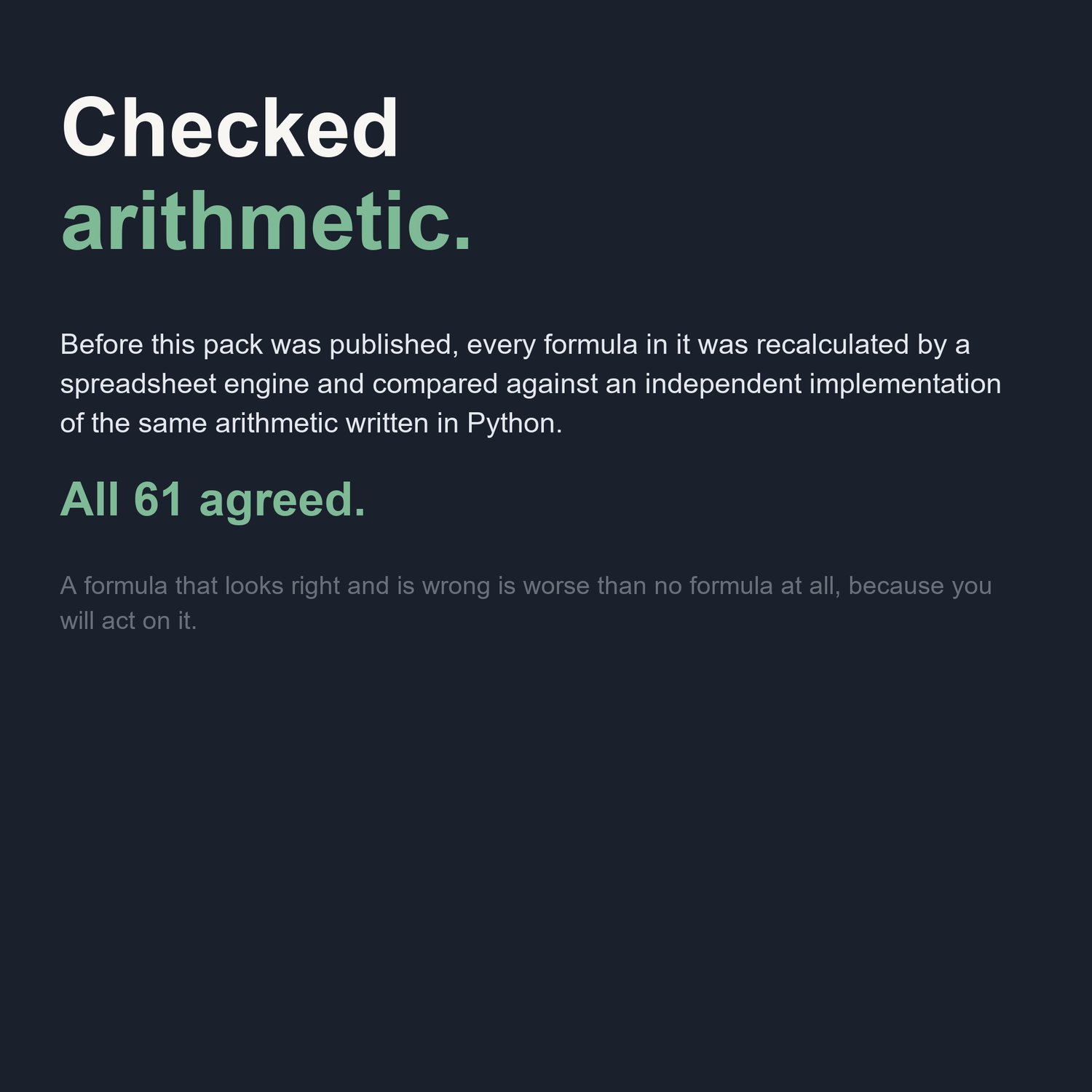
This pack contains 61 formulas. Before it was published, every one of them was recalculated by a spreadsheet engine and compared against an independent implementation of the same arithmetic written in Python. All 61 agreed to within a cent, and the workbook carries a Verification sheet saying so.
That is an unusual thing to be able to claim about a spreadsheet, and it is the main reason to buy this one rather than download a free template. A formula that looks right and is wrong is worse than no formula at all, because you will act on it.
What each calculator assumes
There is a sheet listing this, because a calculator that hides its assumptions is just a number generator:
- A floor, not a market price: it is what you need, not what a customer will pay. Income tax and self-employment tax are not computed; include them in the income figure if you want them covered. The unbilled hours are the same every week.
- One job per trip. When two customers share a trip, divide the miles and drive minutes between them. The driving here is the same driving counted as unbilled on sheet 1; charging a trip fee lets you bill some of it back.
- One supply run per job. A run that serves several jobs: divide its minutes and miles between them. Markup is added to cost; a trade discount at the store lowers your cost, so enter what you actually pay.
- The flat price covers the task, not the trip; the trip charge or minimum from sheet 2 is added when the task is the whole visit. The allowance is one figure for every task of this kind; set it from your own overruns on sheet 7.
- Every task is the same length, and the separate-visit figure is priced at your floor rate. Tasks that need different materials may still need a second supply run; cost it on sheet 3.
- Tasks are done back to back on one visit with one setup. A list too long for one day needs a second trip charge. The task names in the example are placeholders; the minutes are yours to estimate.
- The trip cost is the same as estimated. Extra work the customer agreed to pay for should be added to the quoted price before comparing, or it shows up as an overrun.
What this is not
Not financial, tax or legal advice, and not a recommendation to buy, sell, borrow or sign anything. These are calculators: they show what a choice costs, not which choice is right for you. Where a published rate or threshold is used it is the one current when the pack was built; those change, the arithmetic does not.
Honest about the format
One .xlsx workbook, 7 calculator sheets plus Start Here, Assumptions and Verification. Not a PDF, not a physical product, not a Notion template. Available immediately after purchase; nothing ships.
Refunds
If this isn't what you expected, email me within 30 days and I'll refund you in full. No need to explain. Because it's an instant download I can't take the file back, so I'd rather you just had your money back.