

Talking to Colleagues: A Graduated Skills Ladder
Talking to Work Colleagues: A Graduated Skills Ladder
For anyone who can chat easily with a peer but goes quiet the moment hierarchy enters the room - a manager, a senior leader, a meeting with people watching.
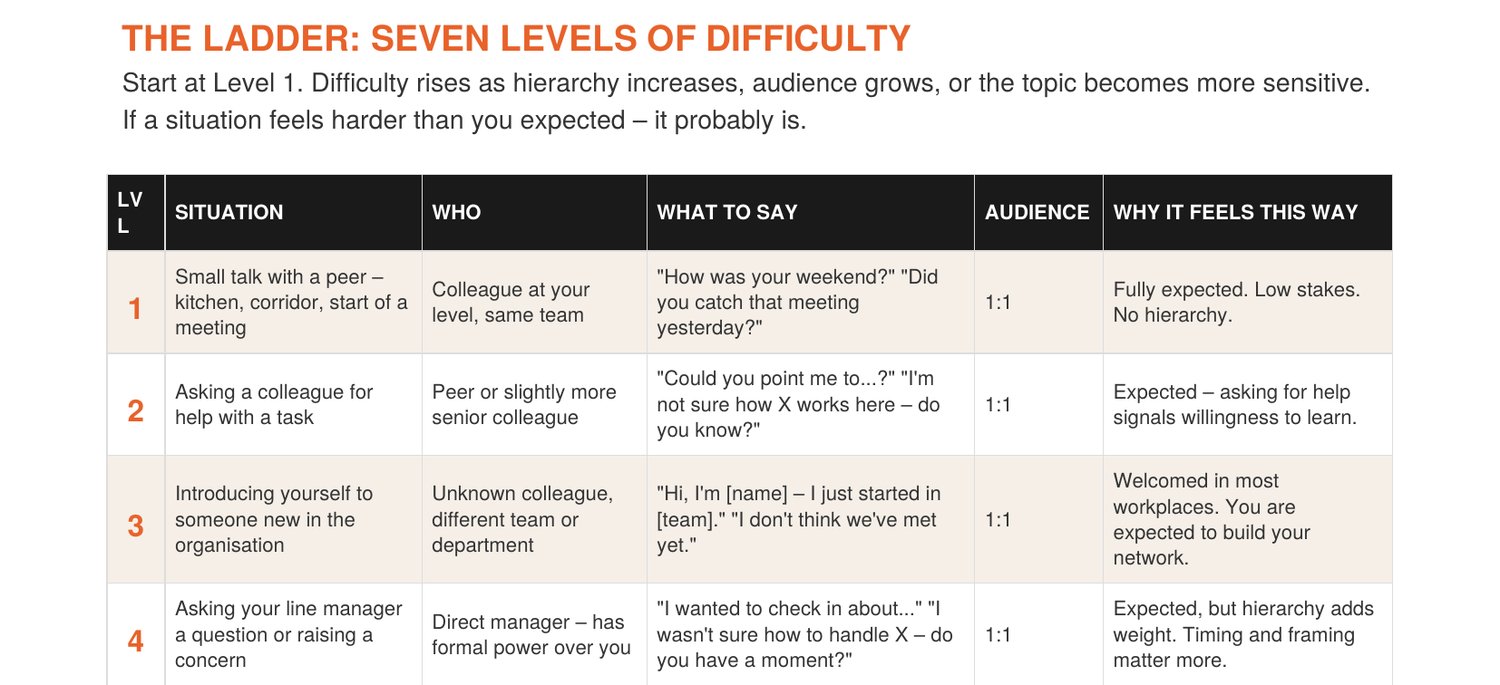
The problem: You can't opt out of workplace relationships the way you might avoid a stranger. Yet most advice about "speaking up at work" treats every interaction as the same challenge, when asking a colleague for help and pushing back on your manager's idea are genuinely different situations - not because one requires more confidence, but because hierarchy, audience, and how well you know the unwritten rules all shift the difficulty in real, predictable ways.
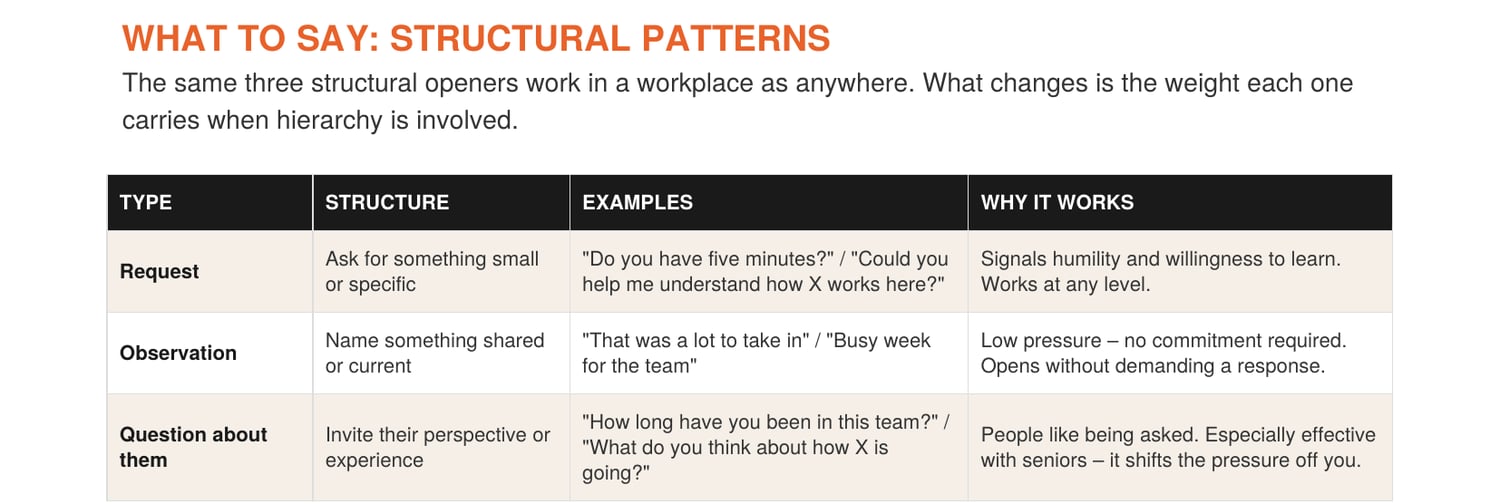
What this guide does: It maps workplace conversation across seven graduated levels - from small talk with a peer in the kitchen, all the way up to speaking in a senior meeting. Each level names who's involved, what to actually say, and why that specific situation carries the weight it does. It also covers the three structural patterns behind every good opener, and a note on the other factors - timing, complexity, energy - that can make a situation feel harder than its level suggests.
By the end, you'll be able to:
- Identify which specific variable (hierarchy, audience, or the unwritten rules) is making a given conversation feel hard
- Use ready-made openers that carry the right weight for peers, managers, and senior leaders alike
- Recognise when a conversation felt harder than expected because of something real - not because you're bad at this
- See that Level 7 isn't a ceiling - and have the language to understand what's adding difficulty when a situation goes beyond it
Part of the Quiet in Class Skill Ladder Series. By Joanne Whitlock.