

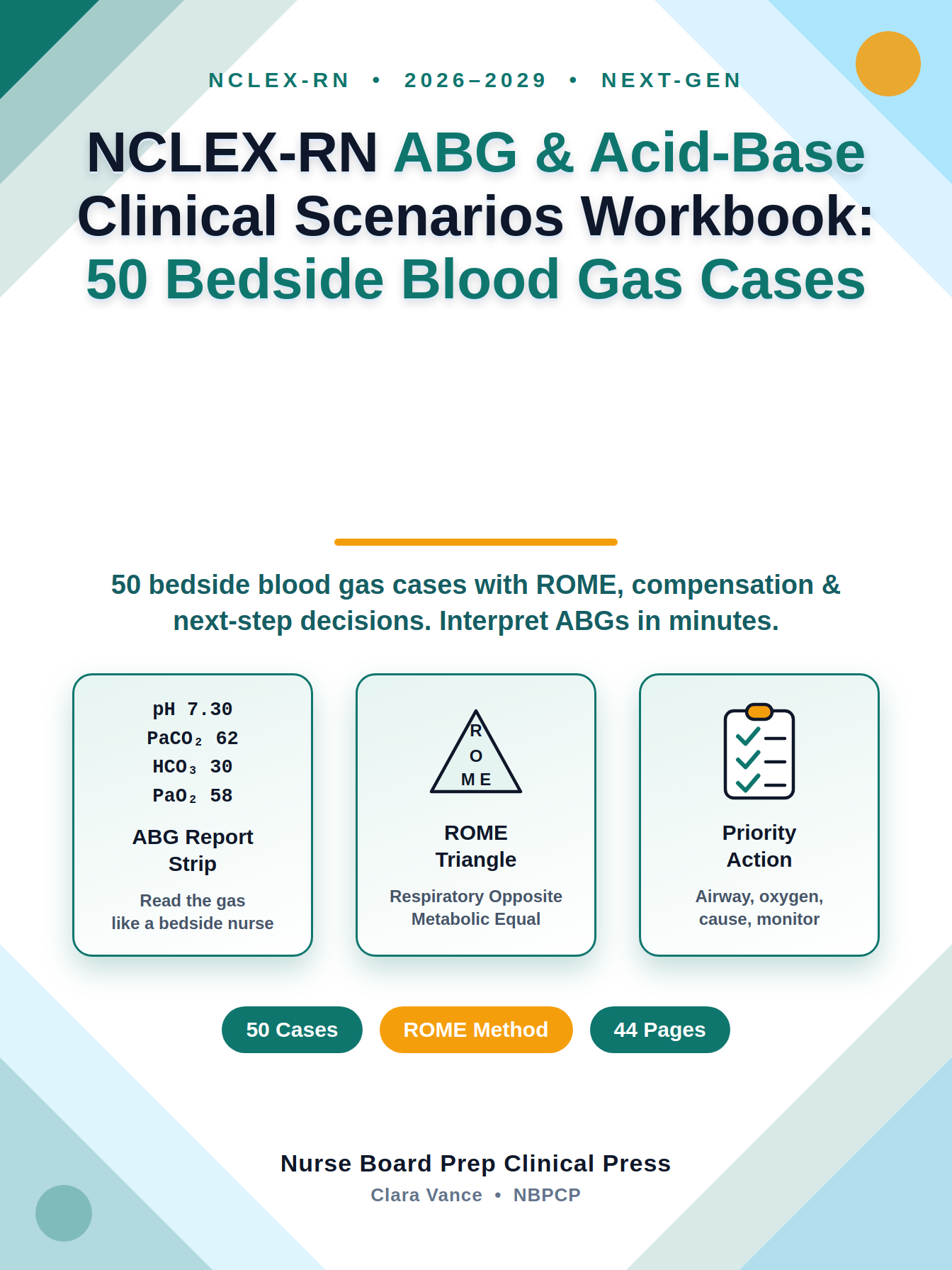
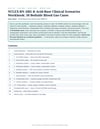
NCLEX-RN ABG & Acid-Base Clinical Scenarios Workbook: 50 Bedside Blood Gas Cases
ABG interpretation for the Next-Gen NCLEX-RN — every disorder with its exact exam scope, its ROME pattern, its compensation check, and its priority action.
Inside:
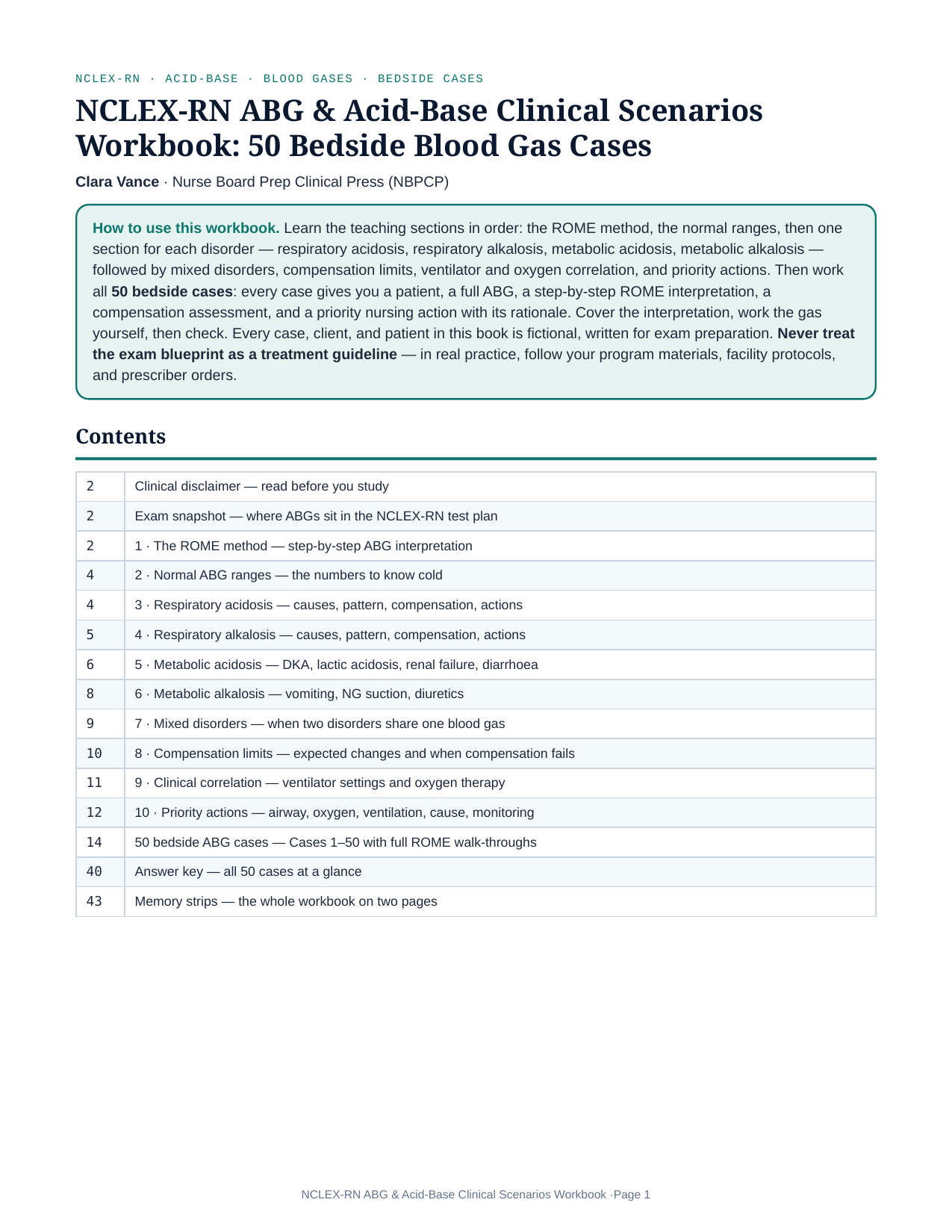
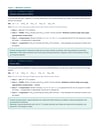
- The ROME method step by step: pH, ROME, compensation, oxygenation — plus the two traps the exam sets with it (the normal pH that hides a disorder, and the compensation that is too big to be compensation)
- Normal ABG ranges: pH 7.35–7.45, PaCO2 35–45, HCO3 22–26, PaO2 80–100, SaO2 95–100%, anion gap 8–12
- Respiratory acidosis: COPD, opioids, sedation, pneumonia, flail chest, post-operative hypoventilation, ventilator underventilation — acute vs chronic compensation rules
- Respiratory alkalosis: anxiety, pain, pulmonary embolism, sepsis, pregnancy, high altitude, ventilator overventilation — and why to check the PaO2 before calling it anxiety
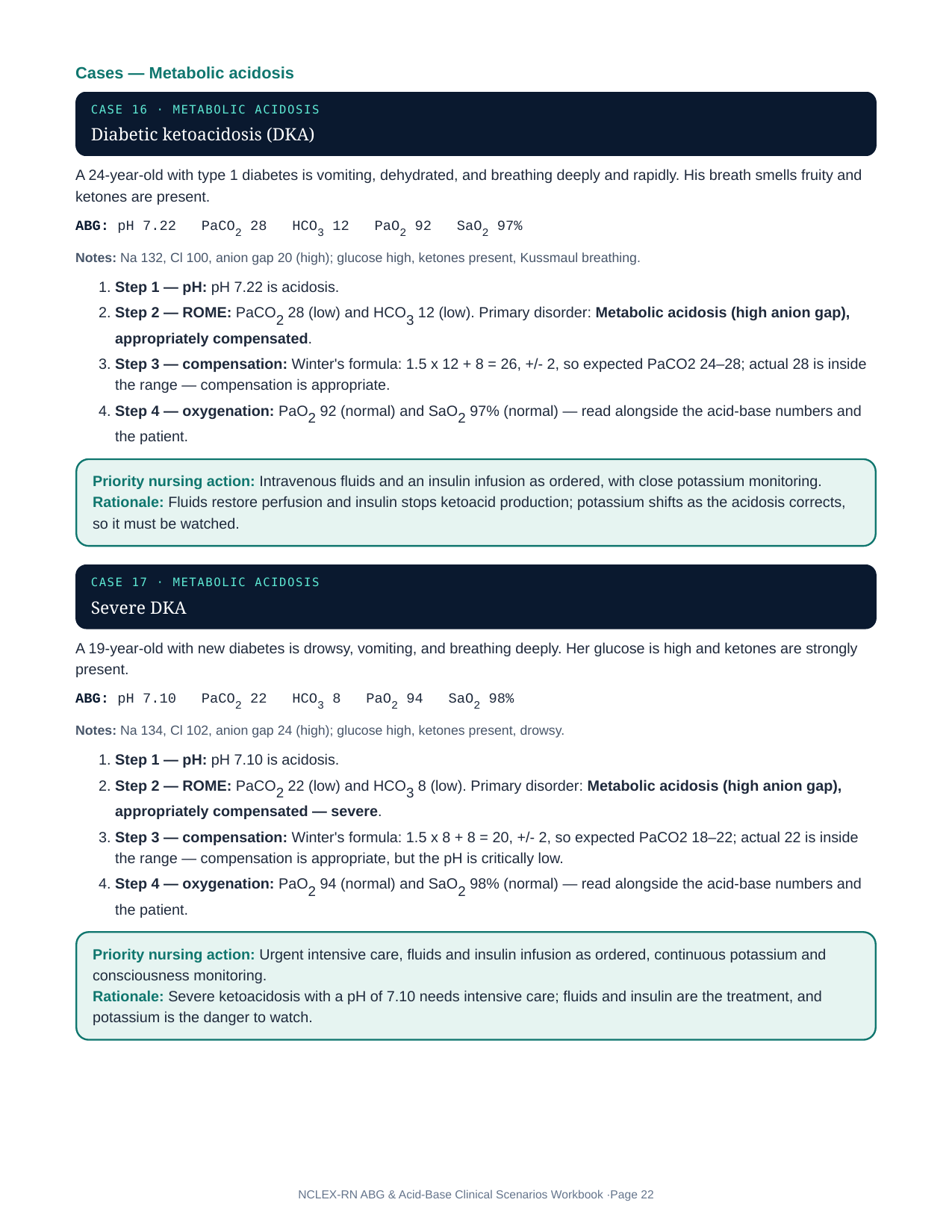
- Metabolic acidosis: DKA, lactic acidosis, renal failure, diarrhoea — high-gap vs normal-gap, with Winter's formula (expected PaCO2 = 1.5 × HCO3 + 8 ± 2)
- Metabolic alkalosis: vomiting, NG suction, diuretics, antacids — with the low chloride and low potassium signature
- Mixed disorders: how to spot two disorders sharing one blood gas, including the salicylate trap (pH 7.44 hiding a mixed disorder)
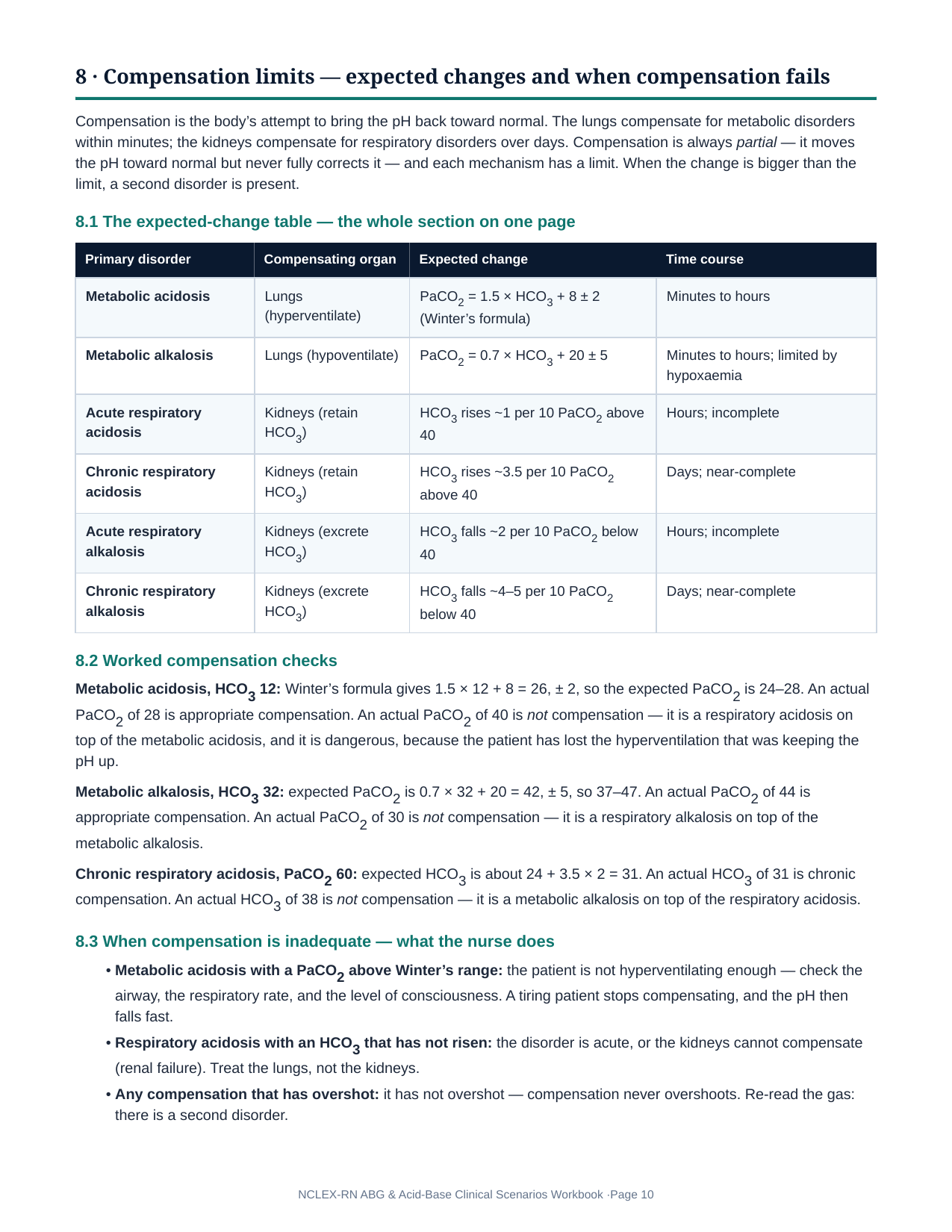
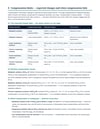
- Compensation limits: the full expected-change table, and what to do when compensation fails
- Clinical correlation: ventilator settings (rate, tidal volume, minute ventilation, FiO2, PEEP) and oxygen therapy targets (94–98% most patients, 88–92% chronic CO2 retainers)
- Priority actions: airway, breathing, oxygenation, treat the cause, monitor and re-check
- 50 bedside ABG cases (Cases 1–50), each with a patient, a full ABG, a step-by-step ROME interpretation, a compensation assessment checked against Winter's formula, and a priority nursing action with its rationale — plus a full answer key and memory strips
No real medicine doses are asserted in this book — dosing is prescriber-ordered and product-specific. Original teaching cases written for exam practice. This guide is not affiliated with NCSBN and does not guarantee a pass. If you find an error, a corrected version will be sent free.