
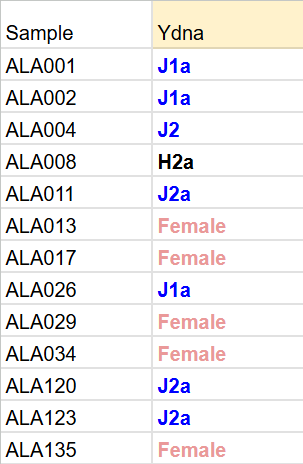
Alalakh MLBA Amorite Samples from Hatay, 23andme format
The Amorites were a Northwest Semitic people who rose to prominence in the ancient Near East during the late 3rd and early 2nd millennium BCE. In Mesopotamian sources, they are known as the Amurru, originally described as semi-nomadic pastoralists coming from the western deserts of Syria. Over time, they transitioned from tribal groups into rulers of major city-states. By around 2000 BCE, Amorite dynasties had taken control of key Mesopotamian cities such as Babylon, Larsa, Mari, and Eshnunna—most famously producing Hammurabi of Babylon, whose law code became one of the foundational legal texts of the ancient world.
Biblical sources portray the Amorites as one of the dominant peoples of Canaan prior to the Israelite settlement. In the Hebrew Bible, they are described as formidable highland warriors, occupying territory east and west of the Jordan River. Israelite texts recount conflicts with Amorite kings such as Sihon of Heshbon and Og of Bashan, whose defeat is presented as a key step in Israel’s expansion. The Amorites are often grouped with other Canaanite peoples, such as the Hittites, Jebusites, and Perizzites, and symbolized resistance to Israelite settlement, while also representing the older urbanized societies of the Levant.
Historically, the Amorites fought and interacted with a wide range of powers, Sumerians, Akkadians, Elamites, Assyrians, and later the Egyptians and Hittites in the Levant. Their political structure evolved from tribal confederations into centralized monarchies, blending nomadic traditions with urban administration. Although the Amorites eventually disappeared as a distinct ethnic group, they left a lasting legacy through the states they founded, the laws they codified, and the prominent role they played in both Near Eastern history and biblical tradition.
For this video, I gathered the raw genomes of 13 Amorites from Alalakh, in Turkey. I used academic tools, such as admixtools 2, but also amateur tools, such as my Trait Predictor, to analyze these DNA samples.