
Three Good Things
The 3 Good Things Journal: A Science-Backed Tool for Cognitive Reframing
Cultivate resilience and rewire your brain’s "negativity bias" with this evidence-based gratitude practice.
As an Educational Psychologist, I see firsthand how easily our brains can become stuck in loops of stress, academic pressure, and "what went wrong" thinking. Research consistently shows that our brains are evolutionarily wired to scan for threats—but we can actively train them to scan for the good.
This digital journal is based on the "Three Good Things" intervention (originally developed by Martin Seligman and colleagues), a practice proven to significantly increase long-term happiness and decrease symptoms of depression.
Why It Works (The Science)
- Neuroplasticity: By consistently identifying three positive moments, you strengthen the neural pathways associated with reward and satisfaction.
- Broaden-and-Build Theory: Positive emotions broaden our sense of possibility and build our psychological, intellectual, and social resources.
- Cognitive Reframing: It shifts the focus from "deficit-based" thinking to "asset-based" thinking—essential for educators, students, and busy professionals alike.
What’s Inside?
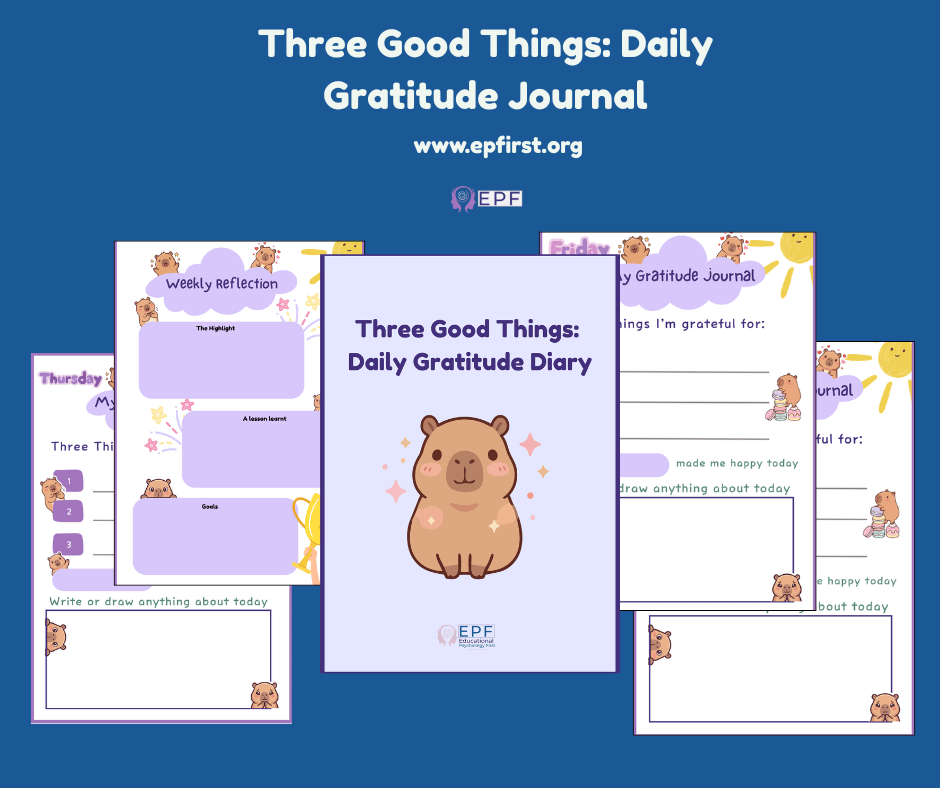
This minimalist, high-impact journal is designed to be completed in less than five minutes a day, making it a sustainable habit for even the busiest schedules.
- Daily Prompting: Space to record your three "wins," no matter how small.
- The "Why" Factor: Reflective prompts to help you identify why these things happened, increasing your sense of agency and self-efficacy.
- Weekly Check-ins: Brief sections to spot patterns in your well-being over time.
- Psychologist’s Guide: A quick introduction written by me, explaining how to get the most out of this practice using psychological principles.
Perfect For:
- Students & Educators looking to combat burnout.
- Parents wanting to model emotional regulation for their children.
- Individuals seeking a low-barrier, high-reward mental health habit.
"It’s not just about being happy; it’s about building the psychological capital to handle the hard days."