
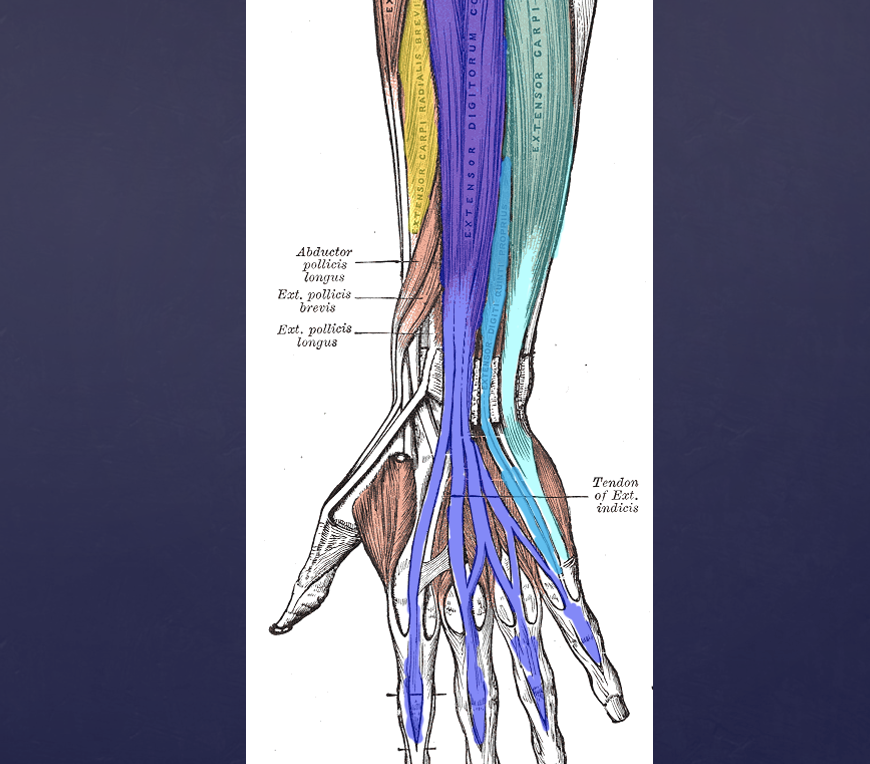
Pain-free and Anatomically Correct: The Wrist and Forearm
At the top of this session, you'll hear me say: "I've spent many happy anatomical years blowing off everything from the elbow down. No longer."
Relatable? You’ll love this session, then.
Phone culture has turned the wrist, forearm, and thumb into a clinical priority nobody was fully trained for, and your clients are suffering for it. They've got carpal tunnel diagnoses, De Quervain's, thumb capsulitis, forearm pain that won't quit, and a wrist brace they've been wearing for three months with zero improvement. This session gives you the anatomy info to understand what's actually happening in there so you can do something useful about it.
You'll learn why the radius rotates and the ulna doesn't (and what a life lived in chronic pronation does to the whole forearm chain); what is actually inside the carpal tunnel and why not every tingly hand is carpal tunnel syndrome (the median nerve has opinions all the way from the neck to the fingertips, and compression anywhere along that route can mimic it); and how thumb opposition works at the joint level, including why losing it is such a profound functional problem.
Plus: the anatomical snuff box and the one physical finding that means "possible scaphoid fracture, stop everything and get imaging"; the rib position cue that underpins all of it; and the exercise that reorganizes a chronically pronated forearm in about 30 seconds.
What you get: approximately 75 minutes of live instruction with anatomical imaging, tape demonstrations, palpation guidance, and clinical pathology breakdowns.
What your clients get: a practitioner who understands why their wrists hurt, what's actually compressed and where, and how to help them use their hands again without pain.
© Somatic Anatomy. This content may not be used to train, fine-tune, or develop AI or machine learning models. Period.