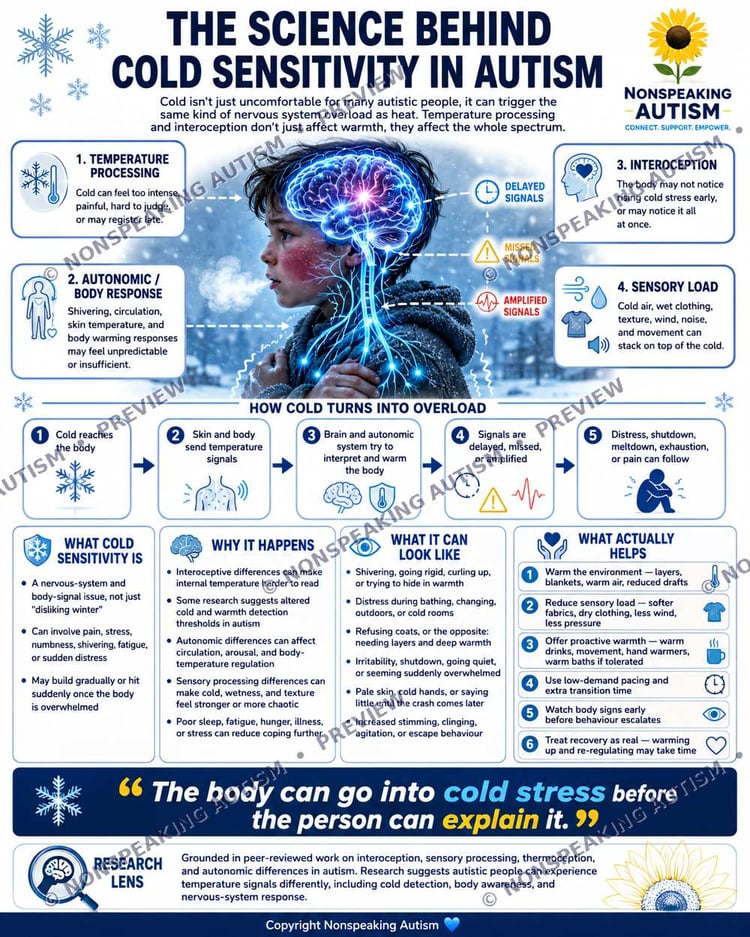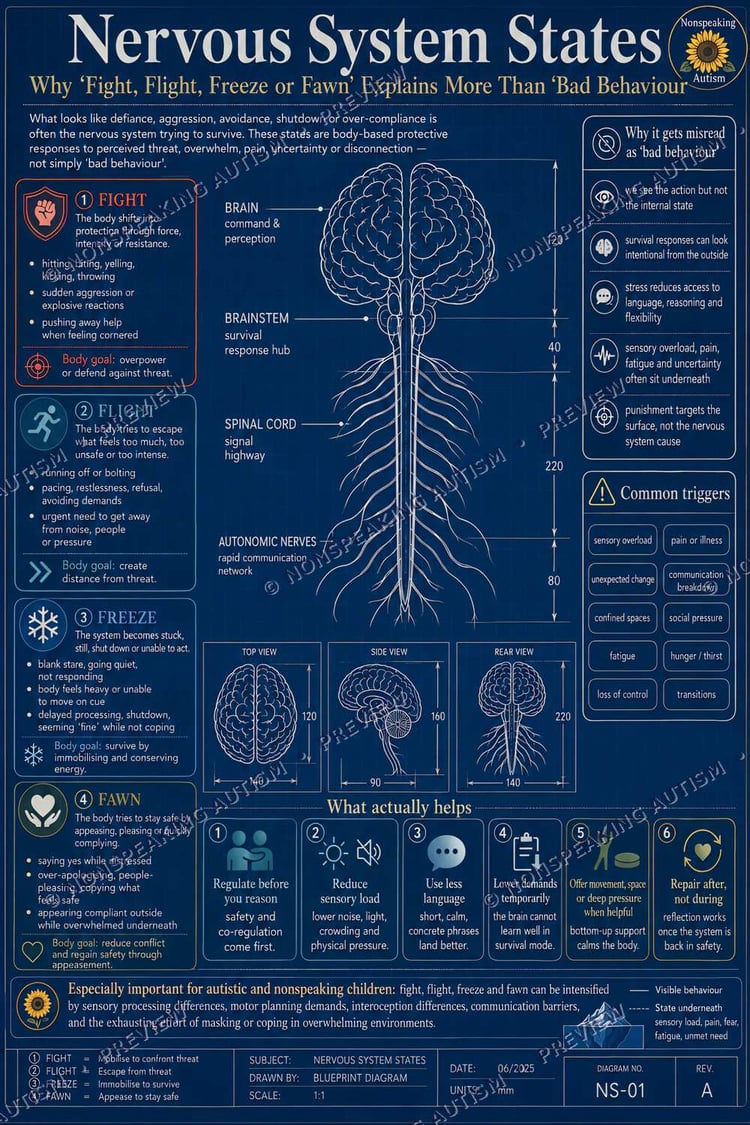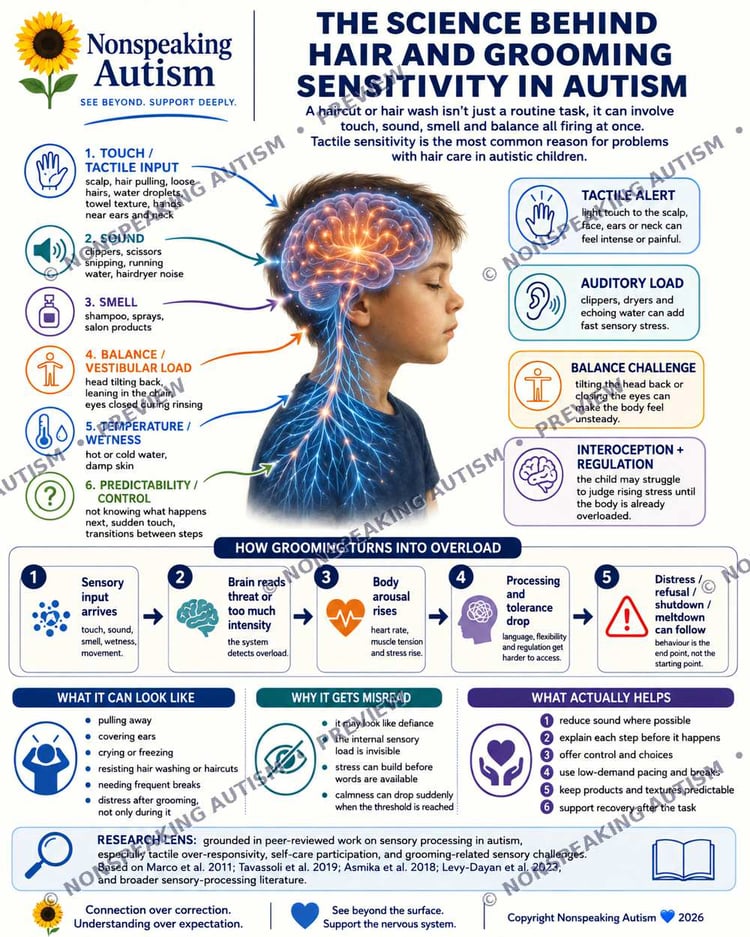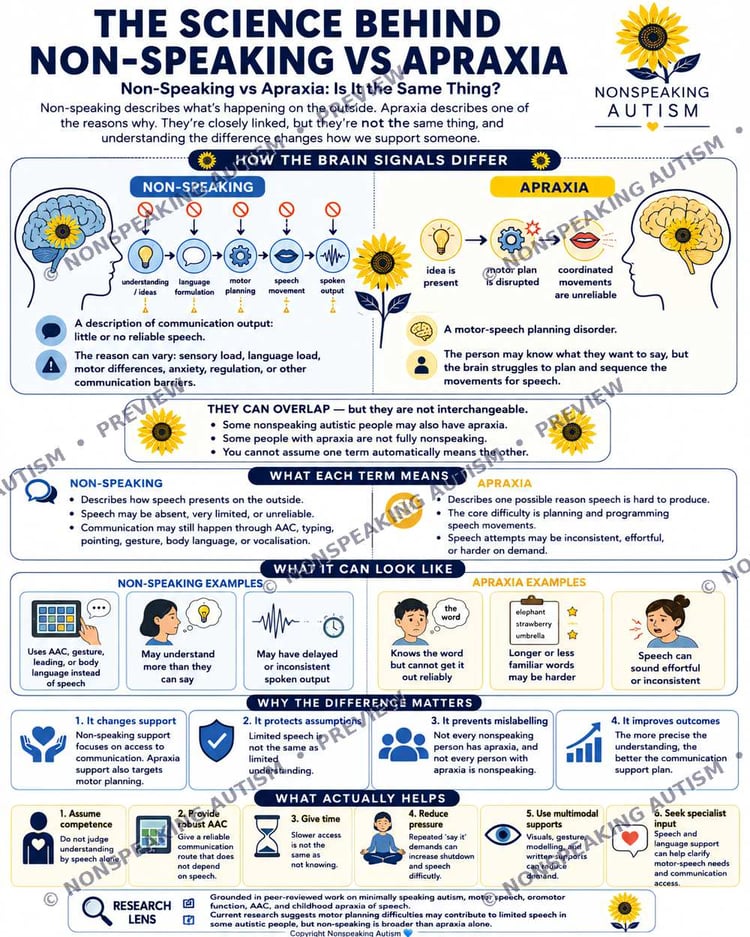

The Science Behind Autistic Sleep & Nighttime Regulation
The Science Behind Autistic Sleep & Nighttime Regulation
Circadian timing, sensory load, arousal and why settling may be difficult
Sleep difficulties in autistic children and young people are often much more complex than simply “not wanting to sleep” or having a poor bedtime routine.
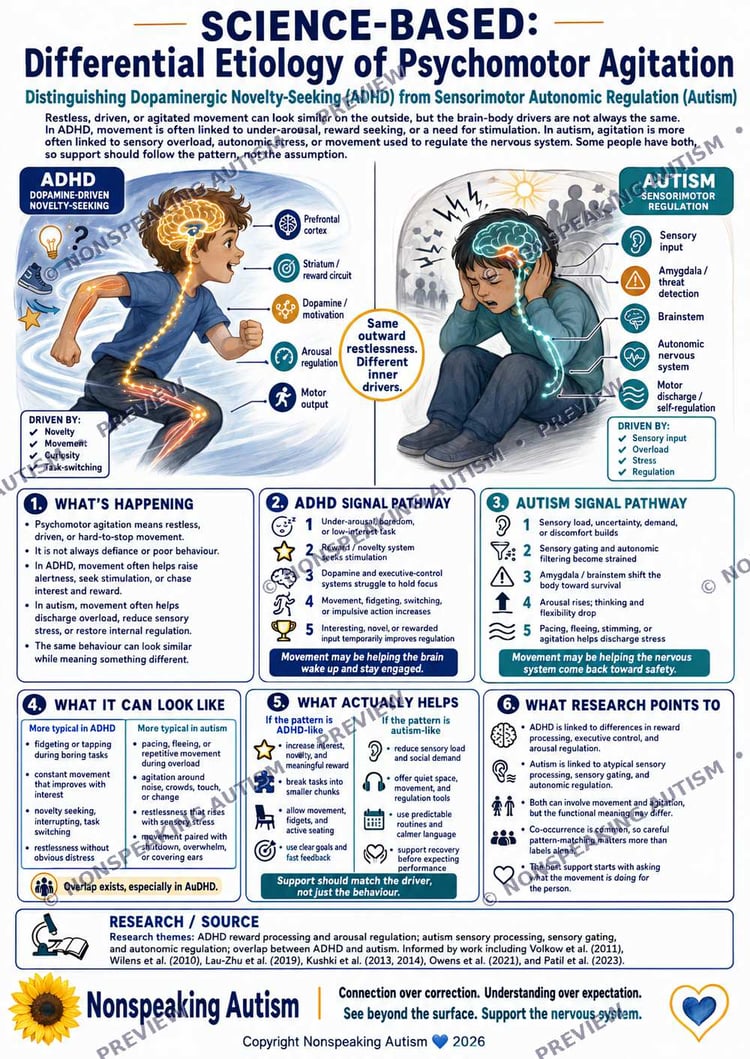
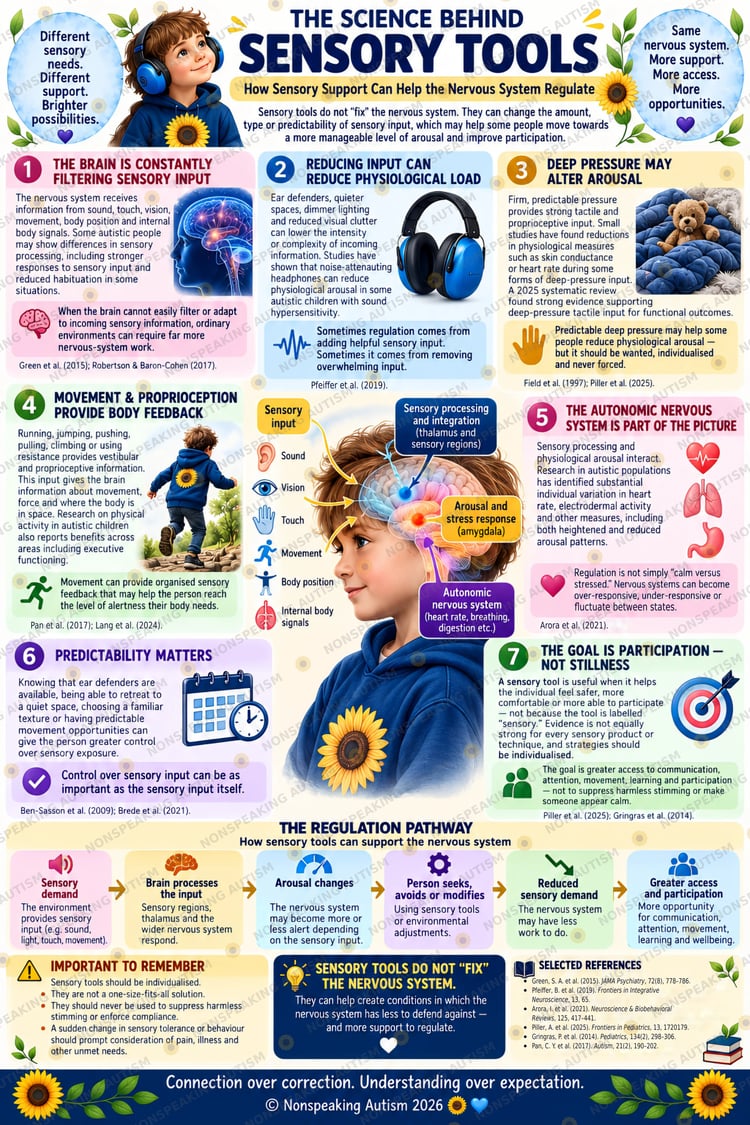
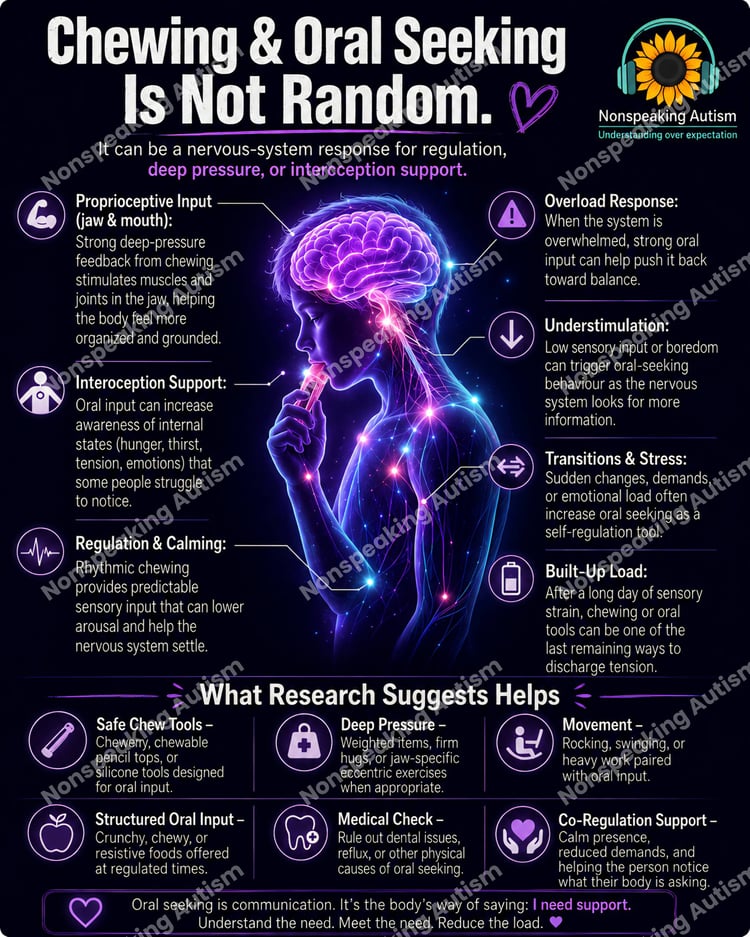
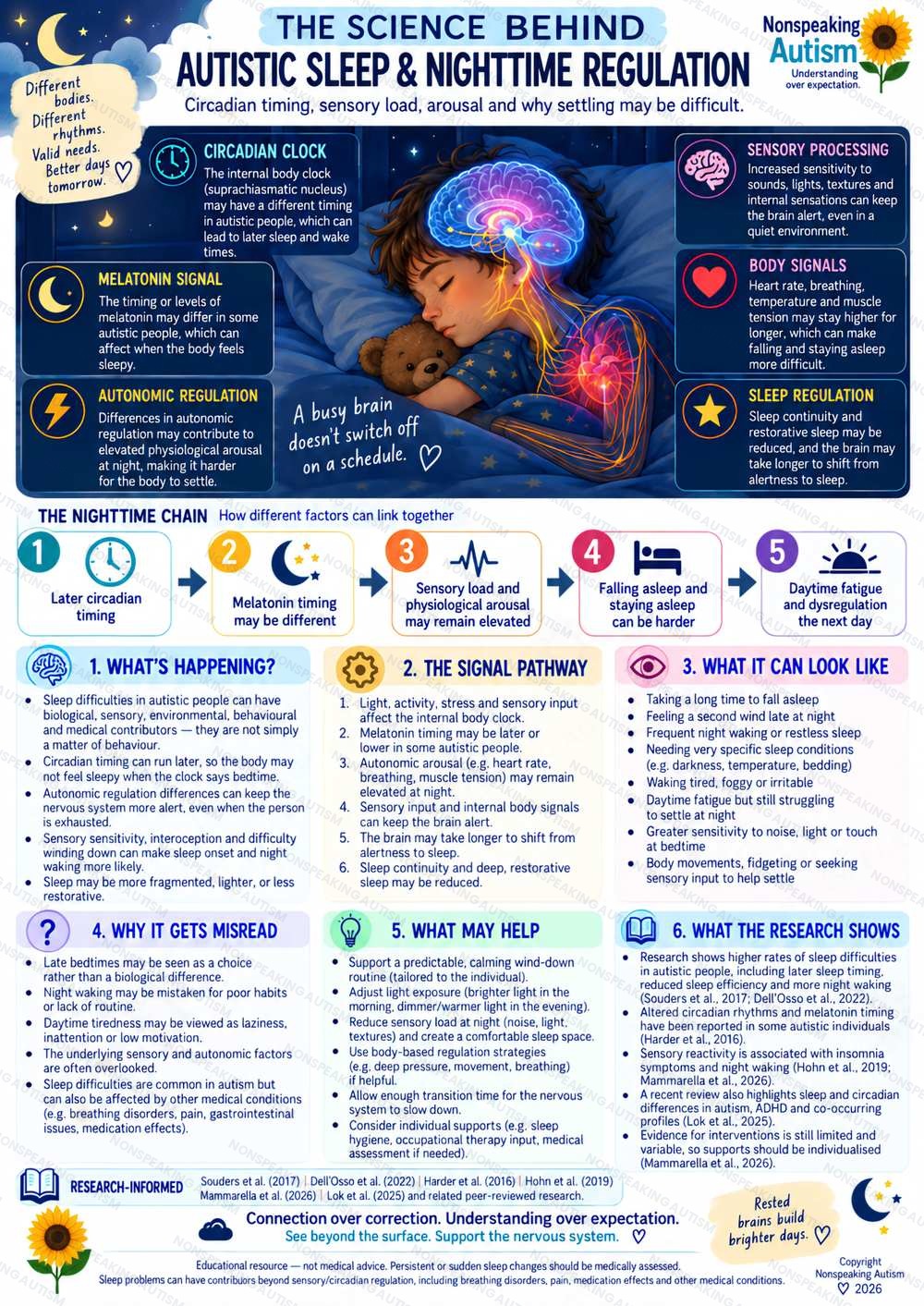
The Science Behind Autistic Sleep & Nighttime Regulation is a research-informed educational poster designed to help families, educators and professionals understand some of the biological, sensory and nervous-system factors that can make falling asleep, staying asleep and waking rested more difficult for autistic people.
Rather than viewing nighttime difficulties as behaviour or non-compliance, this resource looks beneath the surface at circadian timing, melatonin signalling, autonomic regulation, sensory processing, internal body signals and sleep regulation.
The central message is simple:
A busy brain doesn’t switch off on a schedule.
Understanding what may be happening underneath the behaviour can help us move away from blame and towards practical, individualised support.
🌙 What This Poster Explores
The poster provides an accessible visual explanation of several factors that may contribute to autistic sleep differences, including:
- Circadian clock differences — why the internal body clock may run later or differently
- Melatonin signalling — how timing or levels may differ for some autistic people
- Autonomic regulation — why physiological arousal may remain elevated at night
- Sensory processing — how sounds, lights, textures and internal sensations may keep the brain alert
- Body signals and interoception — including heart rate, breathing, temperature and muscle tension
- Sleep regulation — why shifting from alertness into sleep may take longer and why restorative sleep may be reduced
The poster also introduces a clear “nighttime chain”, showing how these factors can interact:
Later circadian timing → different melatonin timing → continued sensory/physiological arousal → difficulty falling or staying asleep → daytime fatigue and dysregulation.
🧠 What’s Included on the Poster
The resource is divided into clear educational sections covering:
1. What’s Happening?
An overview of the biological, sensory, environmental, behavioural and medical factors that may contribute to autistic sleep difficulties.
2. The Signal Pathway
A step-by-step explanation of how light, activity, stress, sensory input, melatonin timing and autonomic arousal can influence the transition from wakefulness to sleep.
3. What It Can Look Like
Examples include taking a long time to fall asleep, experiencing a “second wind,” restless or frequent waking, needing very specific sleep conditions, waking tired and experiencing increased sensory sensitivity at bedtime.
4. Why It Gets Misread
Explores how late bedtimes, night waking and daytime tiredness can sometimes be incorrectly interpreted as choice, poor habits, laziness or lack of routine.
5. What May Help
Practical ideas including predictable wind-down routines, adjusting light exposure, reducing sensory load, creating a comfortable sleep environment, allowing transition time and considering individual sensory, communication and medical needs.
6. What the Research Shows
A concise research-informed overview of autistic sleep differences, circadian rhythms, sensory reactivity and the importance of individualised support.
💙 Who Is This Resource For?
This poster may be useful for:
- Parents and carers
- Autistic young people and their families
- Teachers and teaching assistants
- SENCOs and SEND teams
- Autism and inclusion teams
- Speech and language professionals
- Occupational therapists
- Support workers
- Social care professionals
- Healthcare and allied-health settings
- Training and staff-development sessions
It can be displayed at home, in schools, SEND spaces, clinics, therapy rooms or professional settings, or used as a visual discussion aid when talking about sleep and regulation.
📦 What You Receive
Your purchase includes:
1 × The Science Behind Autistic Sleep & Nighttime Regulation
This is a digital educational poster from Nonspeaking Autism, supplied as a PDF file.
The purchased version is supplied clear and without the promotional preview watermark. Watermarks visible on Payhip listing images are used for preview and copyright-protection purposes.
Digital download only — no physical product will be shipped.
📚 Research-Informed
This educational resource draws on selected peer-reviewed research relating to autism, sleep, circadian regulation and sensory processing, including work by Souders et al. (2017), Dell’Osso et al. (2022), Harder et al. (2016), Hohn et al. (2019), Mammarella et al. (2026) and Lok et al. (2025).
The poster is designed to make complex research easier to understand visually while recognising that autistic people are individuals and sleep experiences can vary considerably from person to person.
⚠️ Important Disclaimer
This resource is provided for educational and informational purposes only and is not medical advice, diagnosis or a substitute for assessment or treatment from a qualified healthcare professional.
Sleep difficulties can have causes beyond sensory or circadian regulation, including breathing disorders, pain, gastrointestinal difficulties, medication effects and other medical conditions.
Persistent, severe or sudden changes in sleep should be discussed with an appropriate healthcare professional.
💛 The Message Behind the Resource
Sleep difficulty is not automatically a behaviour problem.
Sometimes the body is tired while the nervous system is still alert. Sometimes sensory input remains difficult to filter. Sometimes the internal clock simply isn't saying “sleep” at the time everyone expects it to.
Understanding these differences can help us replace pressure with curiosity and provide support that respects the individual.
Connection over correction.
Understanding over expectation.
See beyond the surface. Support the nervous system.
© Nonspeaking Autism 2026. All rights reserved.