
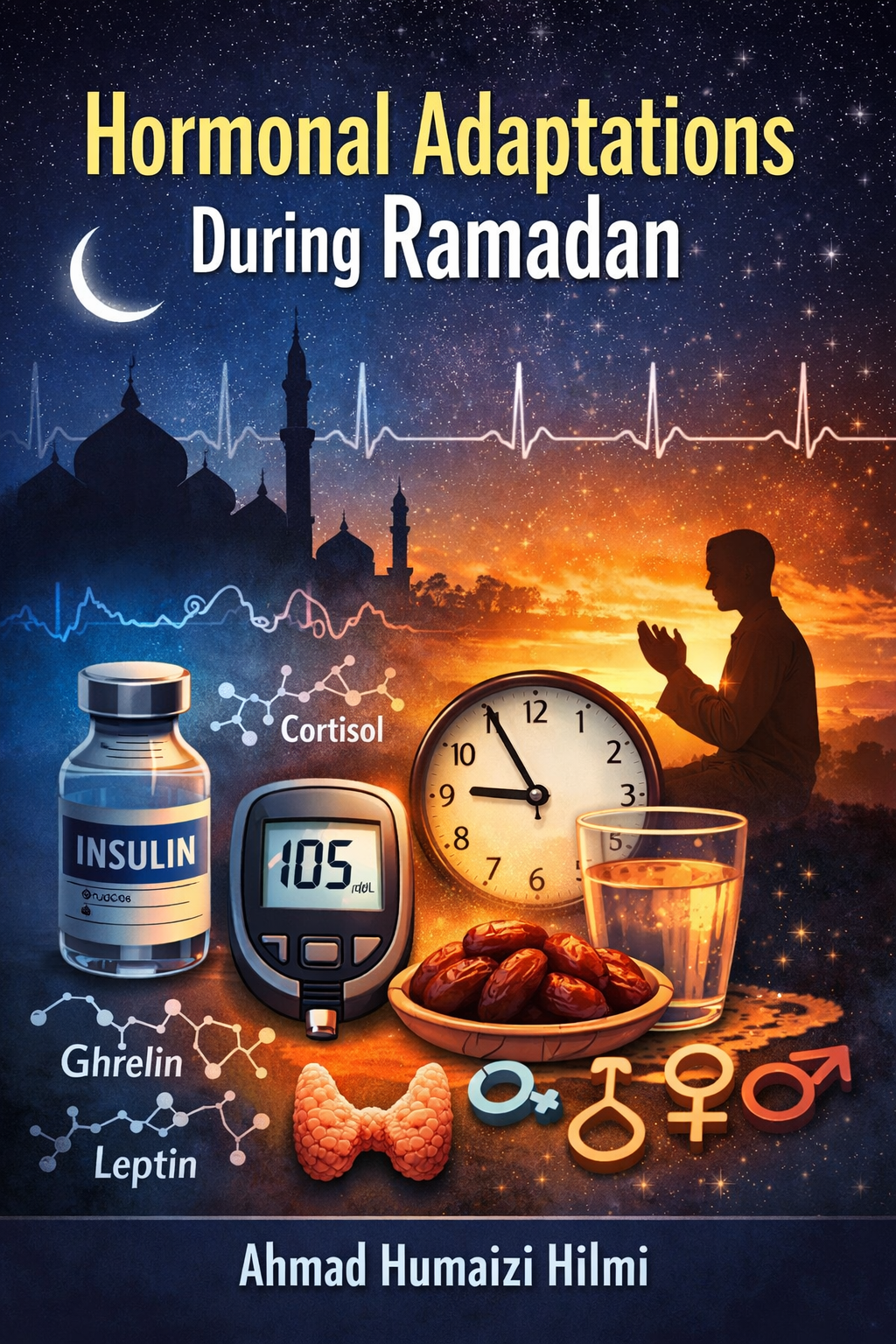
Hormonal Adaptations During Ramadan
Hormonal regulation is a key part of how the human body tolerates the Ramadan pattern of day-time abstinence with night-time eating. This fasting setting is special because the feeding window is moved to the night and daily routines (sleep, light exposure, activity) are frequently reorganised, which can influence endocrine rhythms. In Ramadan, homeostasis of blood glucose is mainly preserved by liver glycogen and by the timing of meals before dawn and after sunset (Azizi, 2010). At the same time, many studies describe that the largest physiological changes are not purely “metabolic averages”, but more on chronobiological timing, with measurable shifts in the daily rhythm of hormones and metabolic markers (Roky et al., 2004).
For insulin-related control, available evidence indicates that hepatic glucose output is central. Work in type 2 diabetes (T2D) shows that higher nocturnal gluconeogenesis can contribute to higher fasting endogenous glucose production, and that hepatic glycogen level interacts with this process (Unni et al., 2025). This supports the clinical view that the liver is a core organ for fasting glucose control, and that insulin resistance at hepatic level can be relevant in T2D (Unni et al., 2025). For people with diabetes, continuous glucose monitoring studies during religious dry fasting (including Ramadan evidence cited in a non-diabetes trial) suggest increased hyperglycaemia exposure and glucose variability especially in insulin-treated type 1 diabetes, while type 2 diabetes may show smaller or transient variability changes (Peters et al., 2024). This means clinical counselling should focus on glucose monitoring and medication adjustments in risk groups, rather than assuming fasting is endocrinologically “neutral” for all.
For circadian cortisol, Ramadan is linked with altered rhythm expression. A review of chronobiology during Ramadan reports decreased rhythm amplitude and shifted acrophase for cortisol (and also melatonin and glycaemia), suggesting timing disruption rather than large mean-level hormone changes (Roky et al., 2004). A systematic review comparing Ramadan fasting with other time-restricted eating patterns reports that two of three Ramadan papers observed an abolishment of cortisol circadian rhythm and all reported reduced melatonin (Chawla et al., 2021). These findings highlight that hormone timing (not only concentration) may be clinically important.
Appetite hormones (ghrelin, leptin) are also described as shifting with fasting/feeding schedule changes and circadian misalignment. Ramadan research in a sleep–circadian review reports significant shifts in leptin and ghrelin rhythms, consistent with the idea that meal timing can misalign circadian systems (Almeneessier et al., 2018). Sociocultural patterns such as late-night meals and early pre-dawn eating can disturb sleep–wake rhythm and may contribute to these endocrine timing changes (Ajibola et al., 2021).
For thyroid and reproductive hormones, findings are more mixed and sometimes limited. Some reviews suggest daily mean hormonal levels are not dramatically affected during Ramadan, although timing patterns can shift (Roky et al., 2004). A narrative review of 2017 literature reports no undesirable effects on thyroid hormones in healthy people and no significant changes in luteinising hormone, follicle-stimulating hormone, and prolactin during Ramadan fasting (Beshyah et al., 2018). A later narrative review summarising 2023 clinical literature notes no significant thyroid-stimulating hormone/free thyroxine changes related to levothyroxine timing and that many hypothyroid patients remain euthyroid after Ramadan fasting (Beshyah, 2025). Overall, the evidence base still shows heterogeneity and strong dependence on study design, timing of sampling, and participant health status (Roky et al., 2004; Peters et al., 2024).