
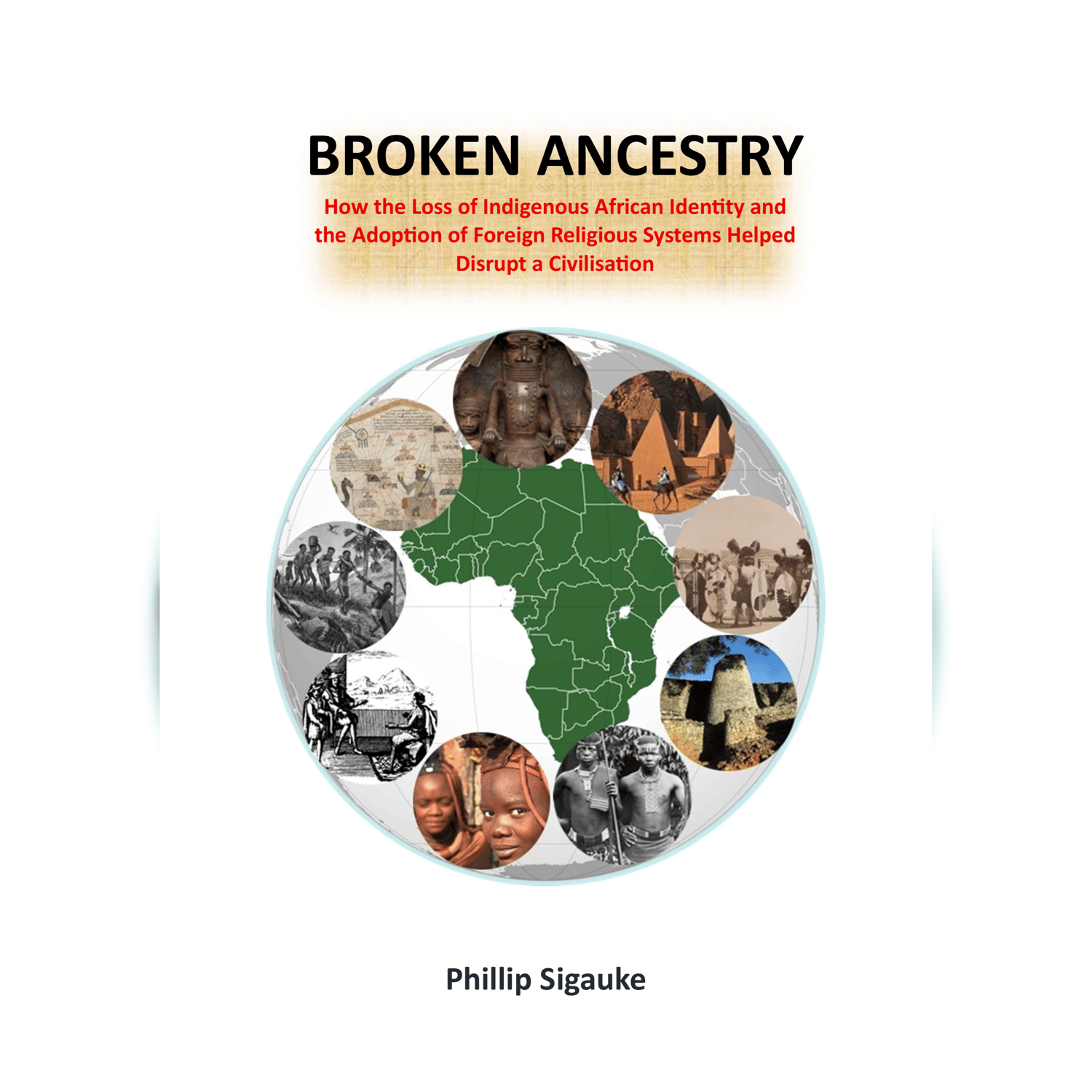
BROKEN ANCESTRY: How the Loss of Indigenous African Identity and the Adoption of Foreign Religious Systems Helped Disrupt a Civilisation
Broken Ancestry: How the Loss of Indigenous African Identity and the Adoption of Foreign Religious Systems Helped Disrupt a Civilisation
Africa is one of the world's most religious continents. Yet many nations continue to face political instability, economic dependency, environmental decline, and fractured identity. Why?
Broken Ancestry argues that the answer lies not in a failure of faith, but in a deeper crisis of civilisational dislocation.
For centuries, African societies developed sophisticated systems of governance, justice, land stewardship, morality, and spirituality rooted in indigenous worldviews. These systems provided social cohesion, ethical accountability, and cultural continuity. During slavery and colonialism, many of these institutions were dismantled or displaced before modern political and religious systems were meaningfully indigenised.
The result, the book argues, was a profound disconnect: societies that became deeply religious while losing ownership of the institutions that once reflected their own histories, values, and philosophies.
Through historical analysis and philosophical reflection, Broken Ancestry explores:
• How indigenous African societies organised governance, law, morality, and communal life
• The role of ancestral accountability in shaping ethical responsibility across generations
• How colonialism transformed relationships with land, authority, and cultural identity
• The long-term effects of replacing indigenous spiritual frameworks with imported religious systems
• Why development without cultural and institutional rootedness may leave societies structurally dependent
Rather than advocating a return to precolonial religion or rejecting Christianity or Islam, this book proposes a process of intellectual and moral re-centering by encouraging readers to:
• Reclaim ancestral dignity without romanticising the past
• Restore land as a moral trust rather than merely an economic resource
• Reconnect governance with indigenous ethical traditions
• Indigenise theological thinking conceptually as well as linguistically
• Build institutions that reflect local values, historical memory, and cultural confidence
At its heart, Broken Ancestry asks a question that extends beyond religion:
Who is Africa in history—and how does that understanding shape its future?
The book argues that lasting development is not only economic or technological. It is also moral, psychological, and civilisational. It depends upon shared meaning, institutional ownership, historical continuity, and responsibility to future generations.
Thought-provoking, carefully argued, and accessible to a broad audience, Broken Ancestry invites readers to reconsider Africa's past, engage critically with its present, and imagine a future grounded in dignity, autonomy, and cultural confidence.
Ideal for readers interested in:
• African History
• African Philosophy
• Indigenous Knowledge Systems
• Religion and Society
• Postcolonial Studies
• Pan-African Thought
• Development Theory
• Political Philosophy
• Cultural Identity