
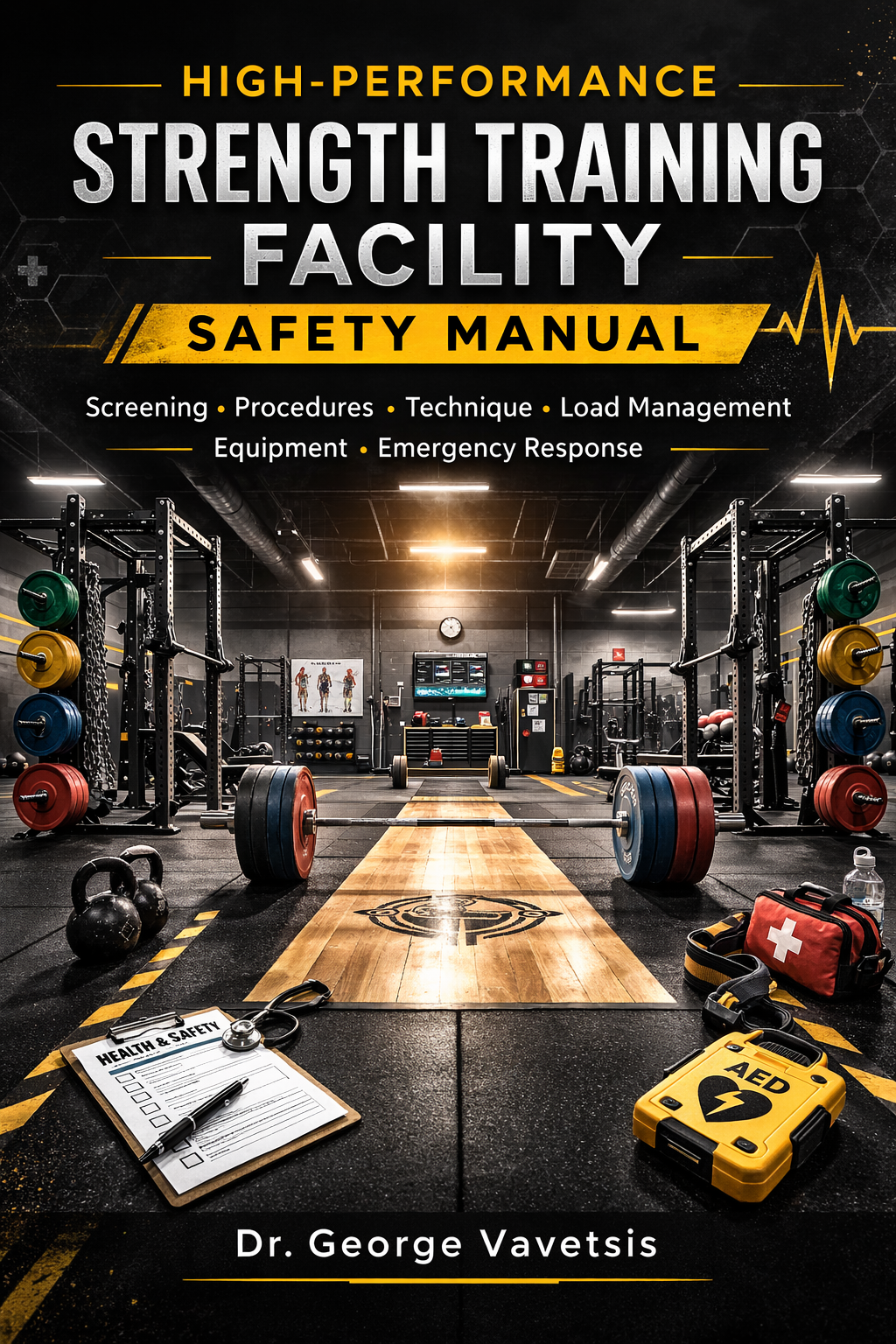
High-Performance Strength Training Facility Safety Manual
Pages: 1788
Strength training is a cornerstone of modern athletic development. From youth academies to Olympic high-performance centres, structured resistance training programs are essential for improving force production, injury resilience, neuromuscular coordination, and long-term athlete development. However, the very characteristics that make strength training effective—heavy external loads, high movement velocities, complex biomechanical patterns, and fatigue-inducing workloads—also introduce inherent risks. When poorly supervised or executed without structured safety systems, these risks can lead to serious musculoskeletal injury, medical emergencies, and long-term health consequences.
For this reason, safety must be treated not as an accessory to performance training, but as an integral pillar of the strength and conditioning profession.
This High-Performance Strength Training Facility Safety Manual has been developed to establish systematic operational standards for safe resistance training environments. It provides applied safety rules, decision frameworks, and procedural protocols that guide coaches, athletes, medical staff, and facility administrators in minimizing preventable risks while preserving the performance benefits of strength training. The manual is designed specifically for high-performance environments, where the intensity and complexity of training demand a higher level of procedural rigor than traditional recreational gym settings.
Modern strength and conditioning practice requires the integration of multiple disciplines: biomechanics, sports medicine, physiology, facility management, and emergency preparedness. Safety therefore emerges not from a single precaution, but from the interaction of multiple protective systems operating simultaneously. These systems include medical screening protocols, facility preparation procedures, technical execution standards, load management strategies, equipment maintenance practices, and emergency response capabilities.
The first layer of protection begins before an athlete ever touches a barbell. Proper medical screening and health history assessment are essential to identify cardiovascular risks, musculoskeletal limitations, and underlying medical conditions that may contraindicate intense resistance training. Comprehensive screening ensures that strength programs are built upon an accurate understanding of the athlete’s health status and physical readiness. Medical clearance and structured health questionnaires provide the foundation for safe participation in strength training environments.
Once athletes are cleared to participate, safety depends heavily on environmental control within the facility itself. Strength training environments contain numerous potential hazards: loose equipment, damaged flooring, misplaced plates, and obstructed lifting zones can all contribute to accidents before training even begins. Pre-session facility inspections and hazard-removal procedures are therefore essential components of daily operations. A safe training environment is not created passively—it requires proactive verification and systematic oversight before each session begins.
Technical execution represents another critical pillar of safety in resistance training. Proper bracing mechanics, stable bar paths, controlled tempos, and appropriate range of motion are not only performance factors—they are also fundamental injury-prevention strategies. When athletes lose trunk stiffness, spinal control, or movement coordination under load, the risk of injury rises dramatically. Coaches must therefore develop the ability to identify biomechanical faults, intervene immediately when safety is compromised, and modify loads or exercises accordingly. Safe lifting technique must be continuously reinforced through coaching cues, observation, and corrective feedback.
Equally important is the management of training loads and accumulated fatigue. Excessive loading, poorly planned microcycles, and repeated high-intensity sessions can overwhelm an athlete’s recovery capacity and increase injury risk. Effective load management requires the monitoring of training intensities, the use of individualized training maxima, and the strategic scheduling of heavy exposures throughout the training week. By controlling fatigue and maintaining technical execution quality, coaches can protect both performance development and athlete safety during demanding training cycles.
Safety also depends on the correct handling, organization, and maintenance of training equipment. Barbells, weight plates, lifting platforms, and other resistance-training implements must be properly stored, maintained, and secured. Seemingly minor oversights—such as unsecured barbell collars or poorly organized plate storage—can create serious hazards during high-intensity lifts. Structured equipment protocols ensure that training tools function as intended and that athletes can perform complex movements without unnecessary environmental risk.
Despite the most rigorous prevention systems, emergency situations may still occur in training environments. Sudden cardiac events, concussions, fractures, severe bleeding, or heat illness require immediate and coordinated response. Strength and conditioning facilities must therefore maintain a clearly defined emergency action plan, supported by staff trained in CPR, AED use, and first-aid procedures. Rapid recognition of medical emergencies, efficient communication with emergency services, and coordinated response roles among staff members are critical factors that can determine the outcome of life-threatening situations.
The purpose of this manual is not to eliminate risk entirely—such an objective is impossible in any high-performance sport setting. Instead, the goal is to systematically reduce preventable risk through professional standards, operational discipline, and evidence-informed coaching practices.
Ultimately, a safe training environment is the product of professional responsibility and organizational culture. Coaches must lead by example, athletes must respect safety procedures, and institutions must support structured protocols that prioritize athlete welfare. When these elements operate together, strength training facilities become environments where athletes can pursue maximal performance with confidence that their health and safety are protected.