
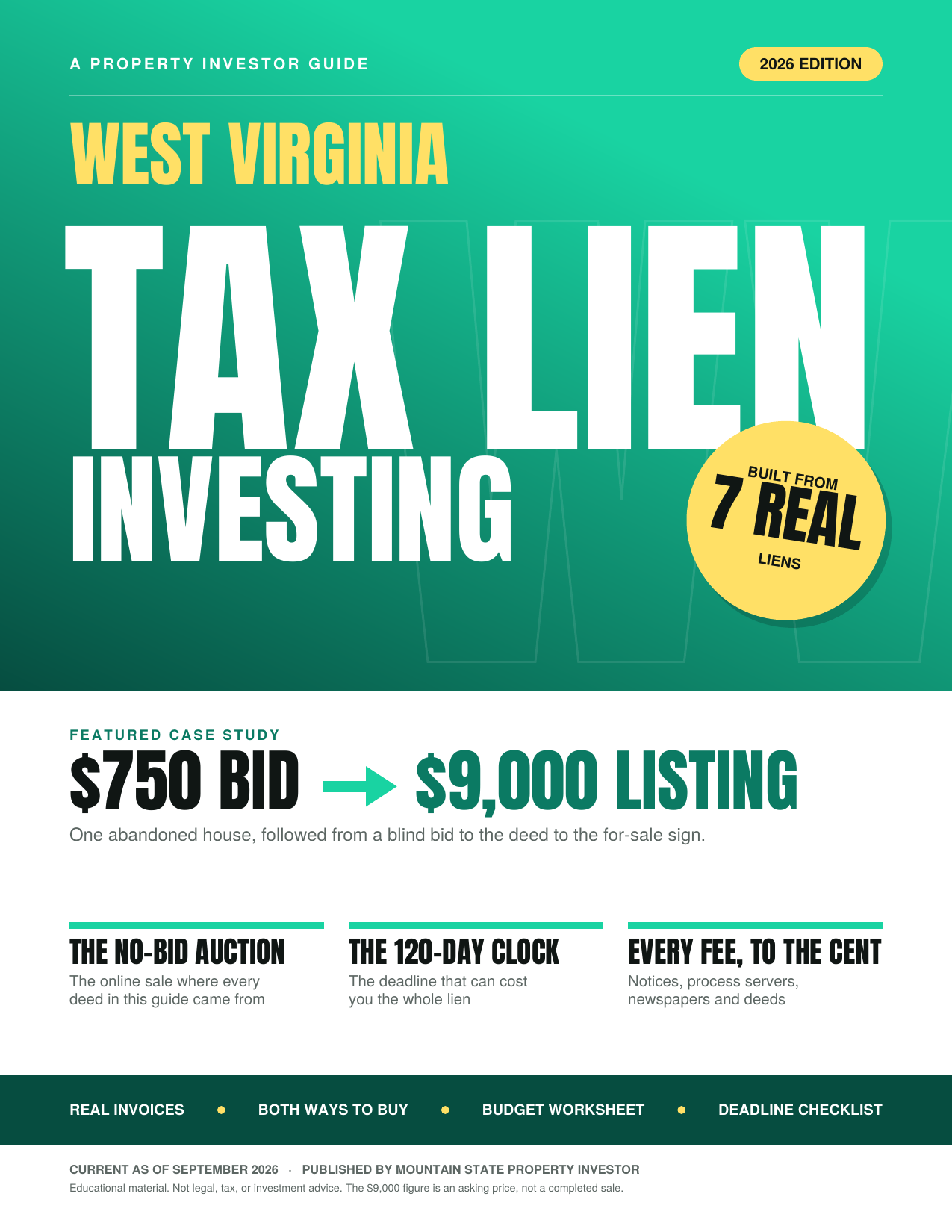



West Virginia Tax Lien Investing: 2026 Property Investor Guide
What If Your Next Property Cost Only the Taxes Owed?
In West Virginia, that is the real opportunity in tax liens. If a lien isn't paid off in time, you can get the deed.
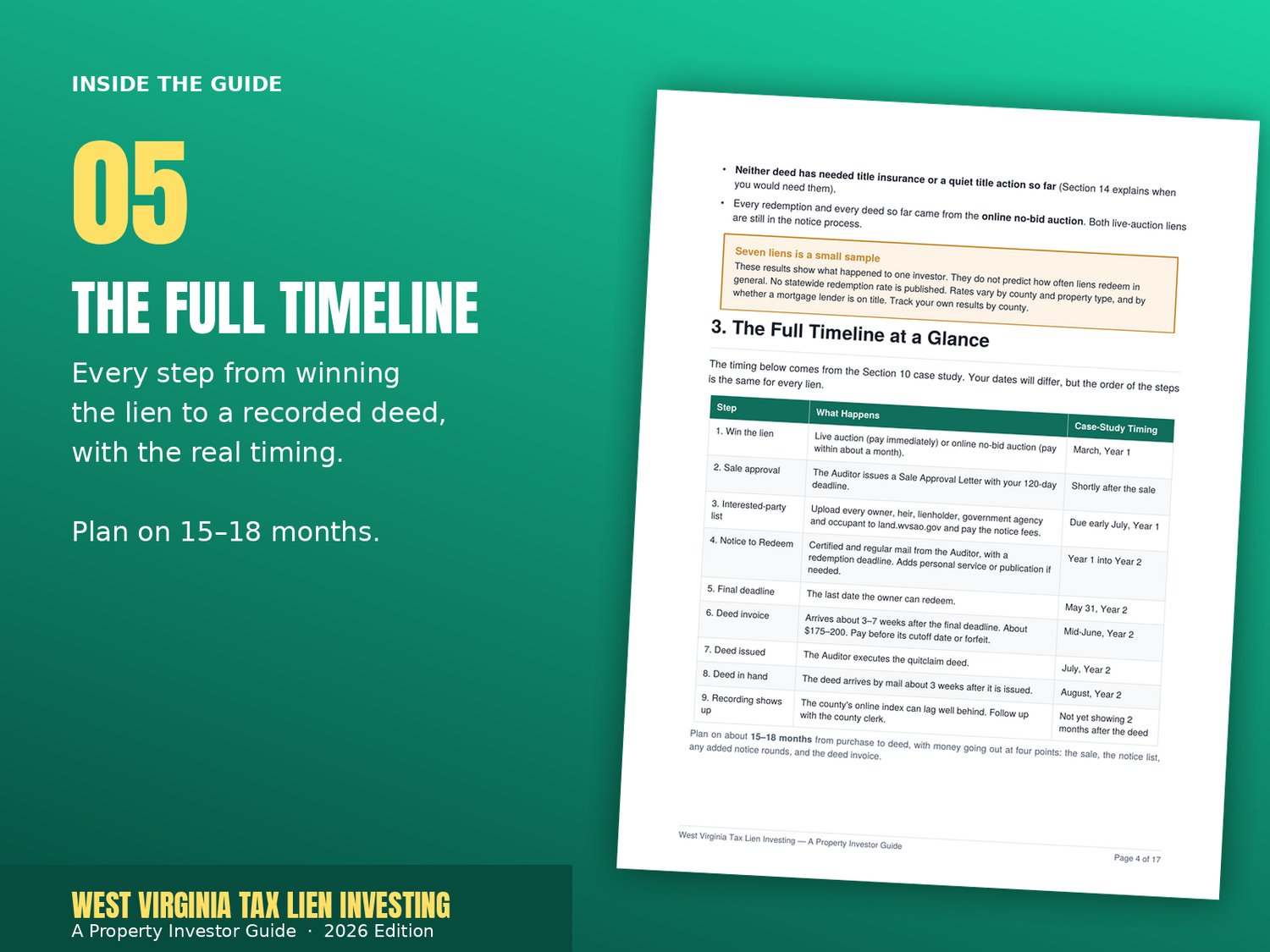
Getting there comes down to deadlines, notices and fees, the exact steps most guides skip. This guide walks through every one of them as the process actually runs in 2026. It is built from one investor's real paperwork on seven liens: sale approval letters, notices to redeem, a process server's affidavit, a newspaper publication affidavit and a deed invoice.
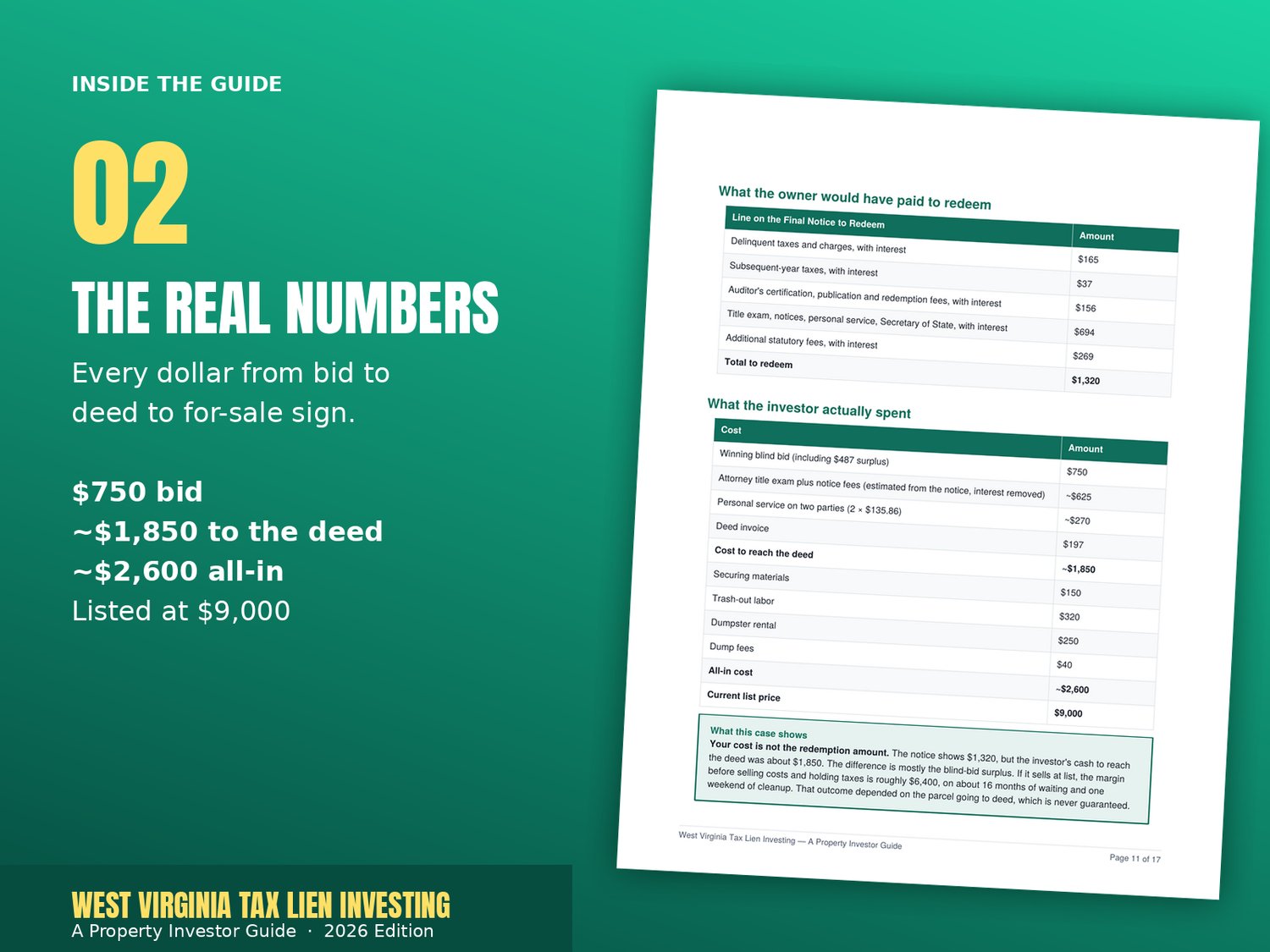
Featured case study: a $750 blind bid on an abandoned house, followed through notices and personal service to a deed, then cleanup and a listing at $9,000. Every cost is shown.
What's inside:
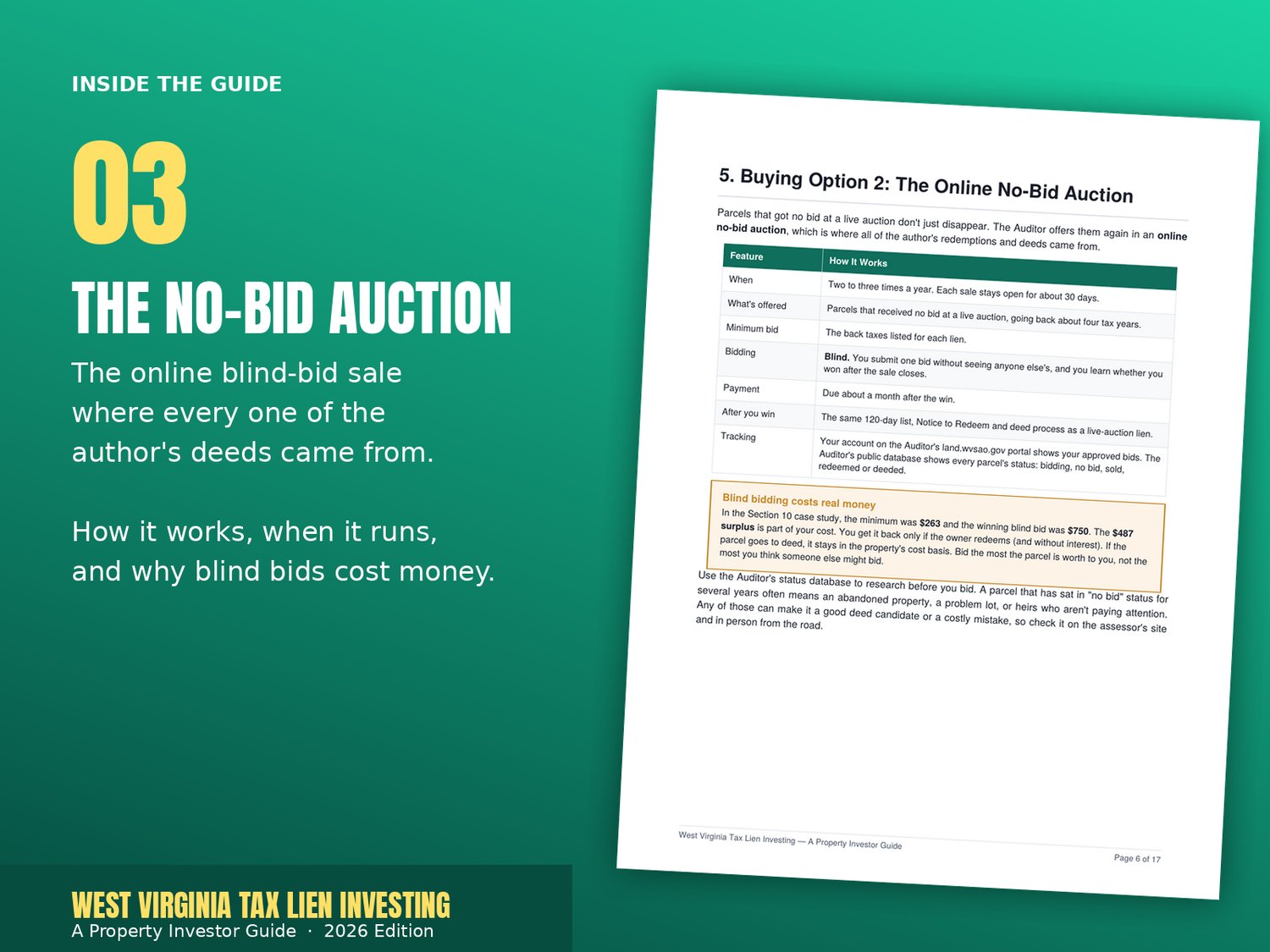
- Both ways to buy: the live county auction and the online no-bid auction
- The 120-day deadline that keeps your lien alive
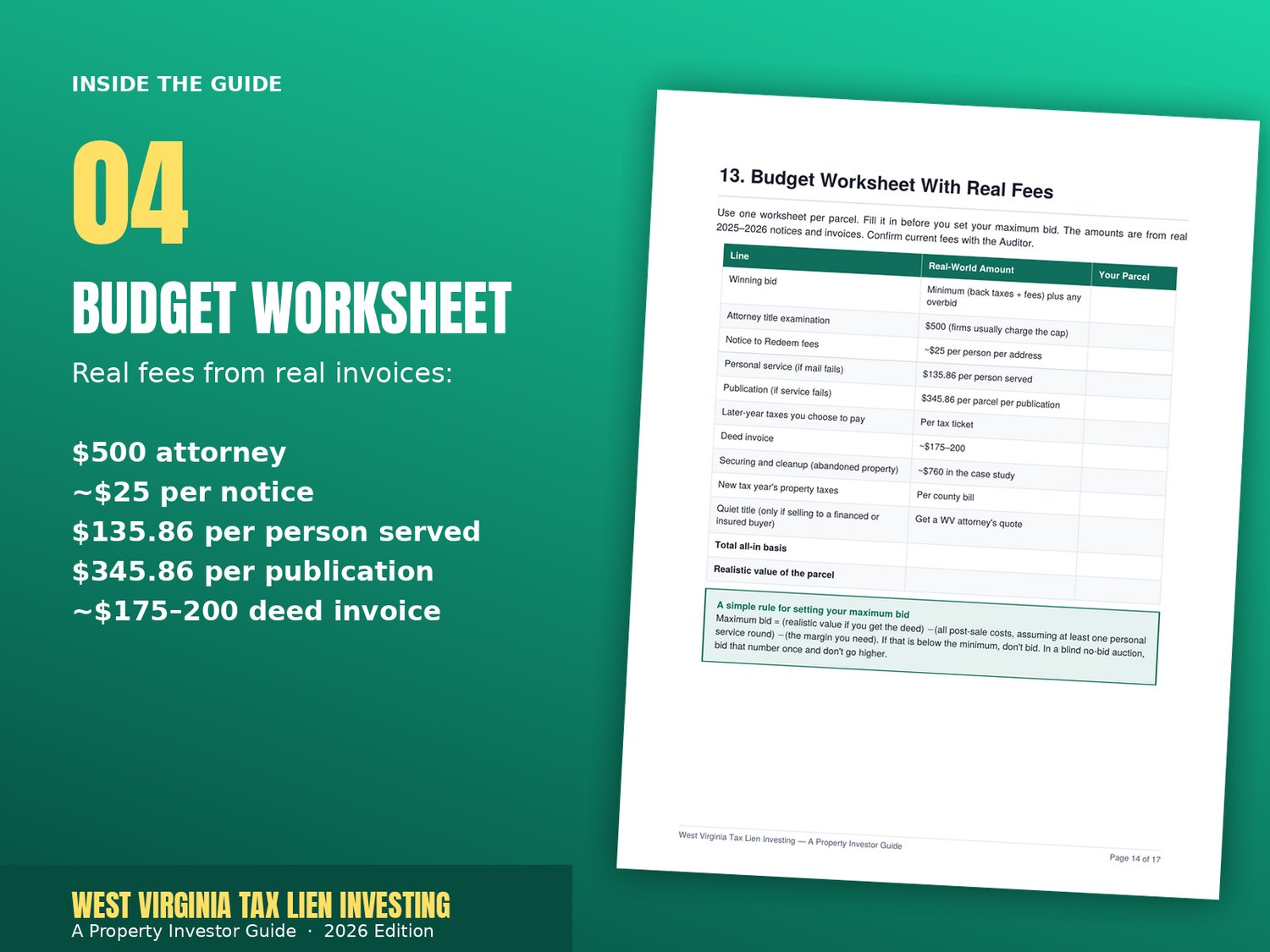
- Notice to Redeem step by step: certified mail, personal service ($135.86 per person) and newspaper publication ($345.86 per parcel)
- The deed invoice, its cutoff date, and how to track your deed into county records
- A second case study that went through all three notice rounds
- A budget worksheet with real fees and a maximum-bid formula
- Title risk after the deed, a deadline checklist and a glossary
Built for you if you can be patient for 15–18 months, like staying on top of deadlines, and want distressed property well below market.
Look elsewhere if you need fast returns or a move-in-ready house.
Format: PDF, 17 pages plus cover, instant download. Published by Mountain State Property Investor.
Educational material only; not legal, tax or investment advice. Results vary. Not every lien becomes a deed. Results are from one investor's seven liens and don't predict yours. The $9,000 figure is an asking price, not a completed sale. Current as of September 2026.