
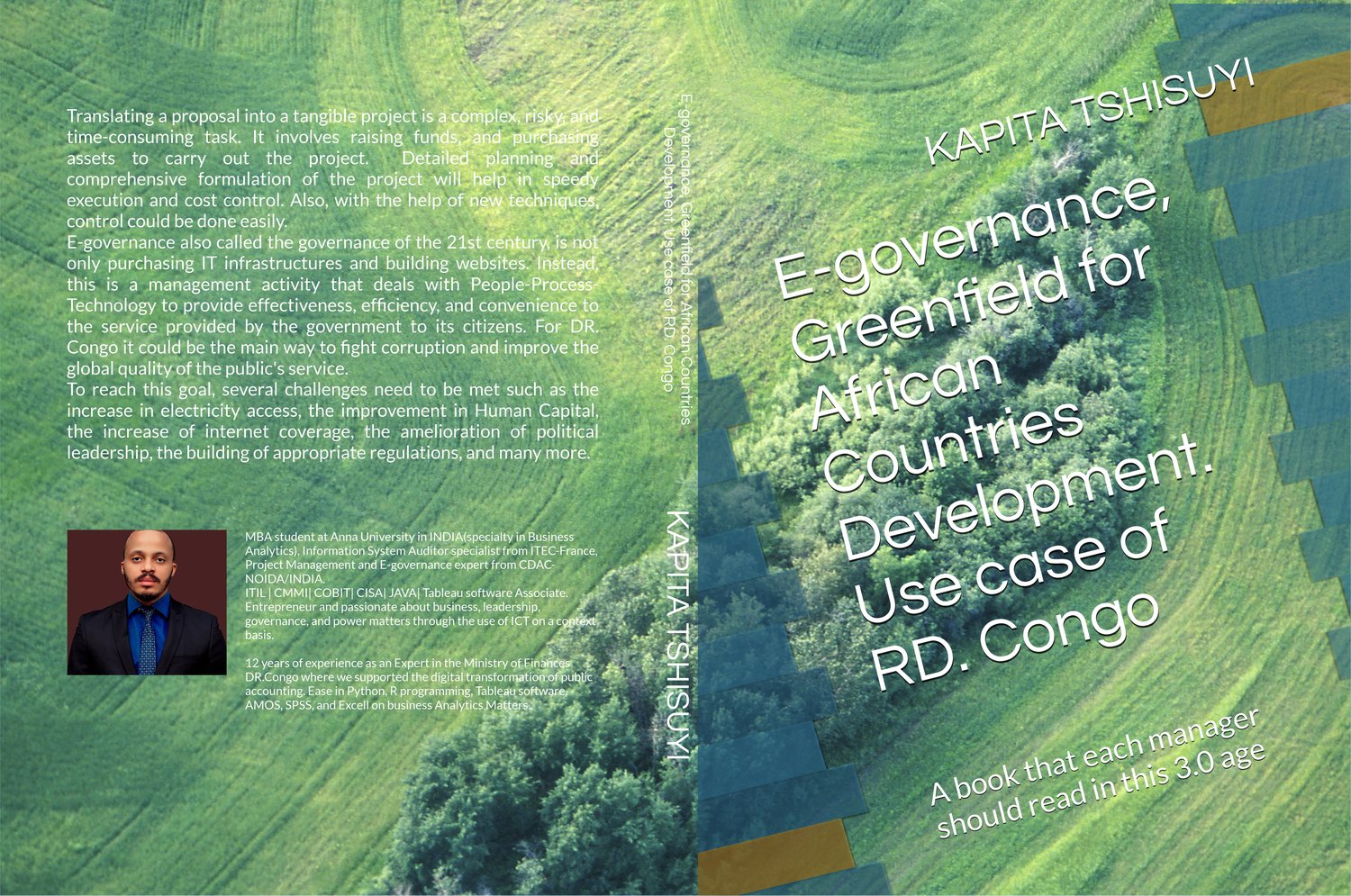
E-governance
Digital transformation is a transition to a new state where everything will be digital. It means that the economic wealth, the management of finances, the interactions, the business models, the identity, the ecosystems, the services, the distribution and the marketing, the leadership and governance, the management of the power, the responsibilities, the accountabilities, and the culture will be realized through the technology.
Nowadays, digital is a subject whose rapid evolution puts individuals, companies, and nations to the test. You have to adapt very quickly and adapt the uses otherwise disappear. Moreover, if you don't have an internet account (Facebook, Twitter, WhatsApp, Gmail, and others) it just means that you don't exist either.
We all know the benefits of technology for humans by making life easier and more entertaining. It prolongs life expectations through many use cases such as the ability to detect more rapidly infectious diseases, purification of water, food manufacturing and preservation, etc.
Thus, a country that is not able to provide online basic services to its citizens is considered undeveloped. United Nations introduced an indicator called the e-Governance Development Index (e-GDI) for ranking countries all over the world. The indicator measures Telecommunication Infrastructure penetration, Human Capital, and the Online presence of government services to its citizens.
To survive in this competitive and VUCA (Volatile, Uncertain, Complex, and Ambiguous) world, enterprises, individuals, and countries should look for opportunities for transformation. A Transformation on a contextual needs basis. Do not embrace technology just because others are doing so. Internet is no longer a simple way of distribution but, for enterprises and the global economy, it upset totally power and the role of economic actors, business models, mechanisms of value creation, and strength reports.
For occidental conception, Governance and Democracy go hand-in-hand. On the other side, oriental point of view an authoritarian government can be well-administrated and a democracy mal-administrated.
So what e-governance is? And why do we identify it as a greenfield? First, greenfield is used to refer to land that has not yet been built on or buildings built on land that has never been used before for building. It also refers to the land that has never been used or is undeveloped. In Africa, e-governance remains a vast land non correctly developed yet maybe because of the human capital, maybe because of lack of appropriate technologies, maybe because of the lack of political willingness, maybe because of the lack of financial investment.
E-governance is the use of Technology Infrastructures to ameliorate the manner that which services are administrated and rendered to the citizens, businesses, and to government employees by government structures and institutions. Currently, in Africa, we think that something is missing to improve the e-GDI as in the rest of the world.
Talking about this topic that was introduced in the mid-90s, many questions invade us such as: Why do we need it? Is it obsolete in the manner that we are working today? Is it important for African countries to go toward it? e-governance could -it able to fix our current challenges such as poverty, corruption, unemployment, ineffectiveness, and inefficiency.
As a response to the previous questions, the objective of this book is to understand the core principles of e-governance, why we need it, and how to correctly implement it in an organization and at a country level by respecting requirements and prerequisites.