
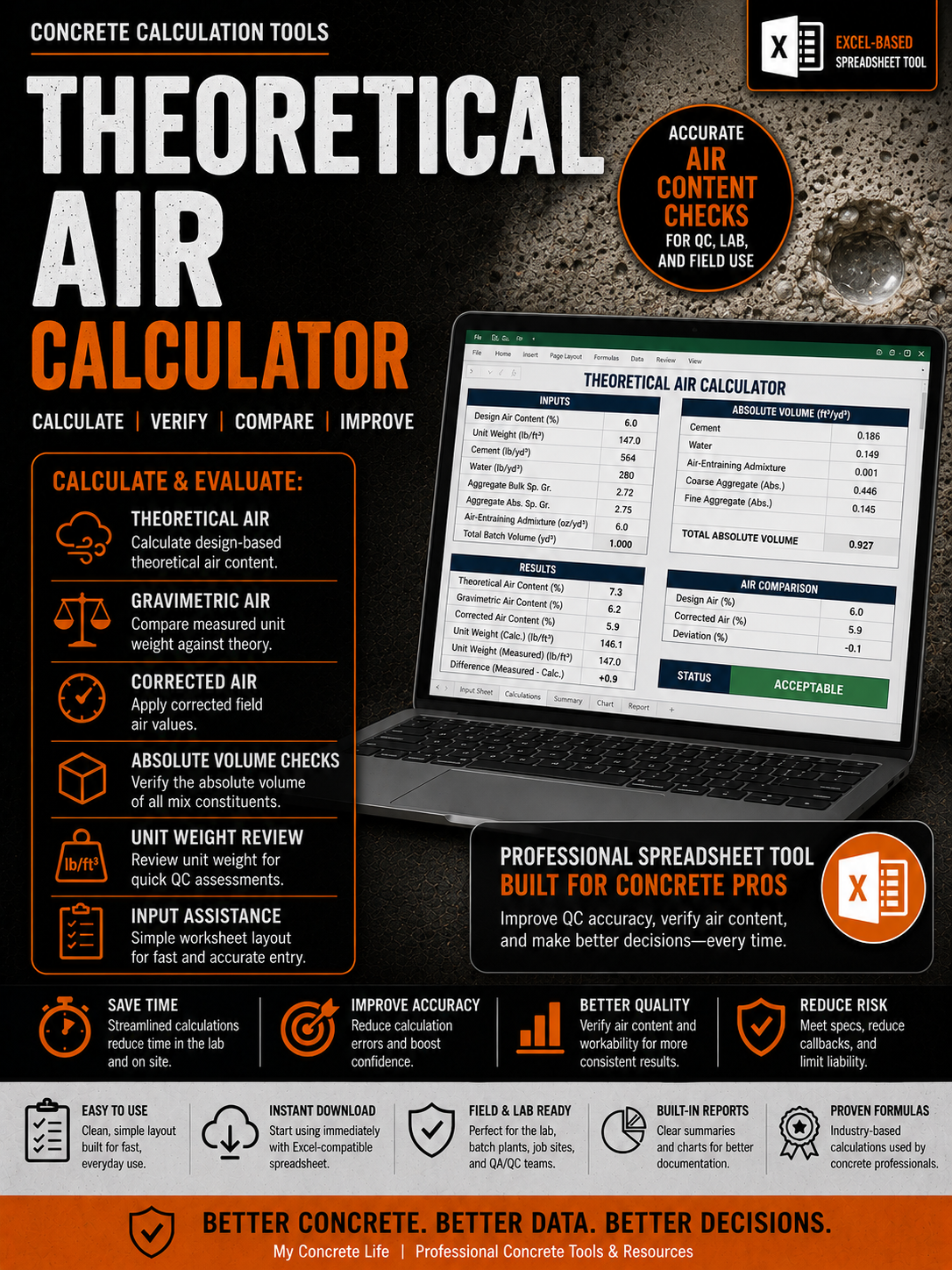
Concrete Theoretical Air Calculator – Excel Spreadsheet Tool
Concrete Theoretical Air Calculator – Excel Spreadsheet Tool
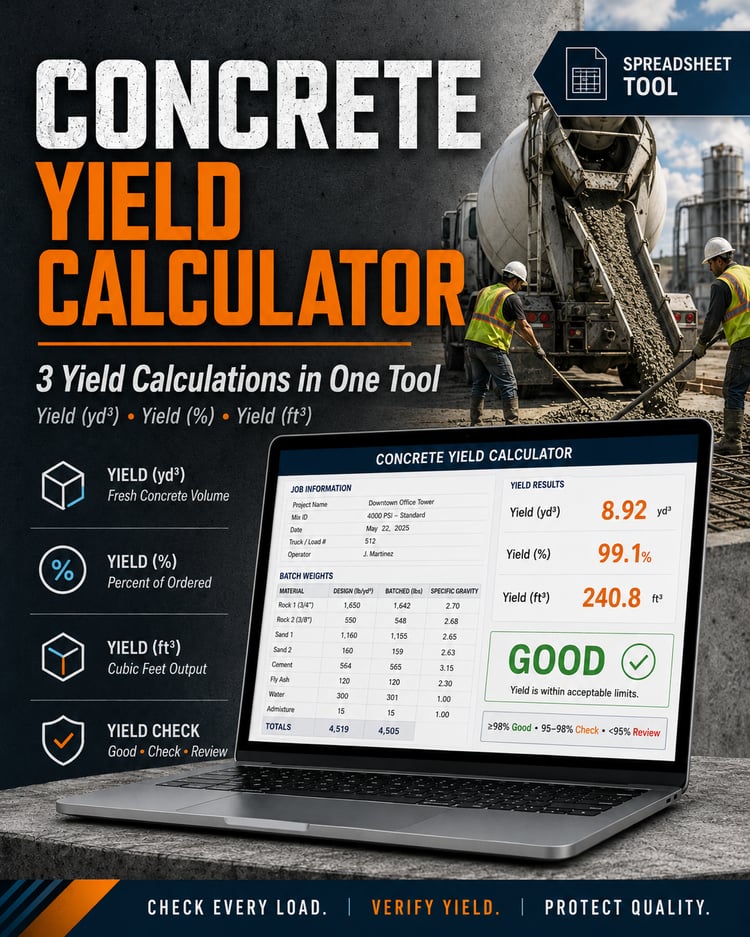
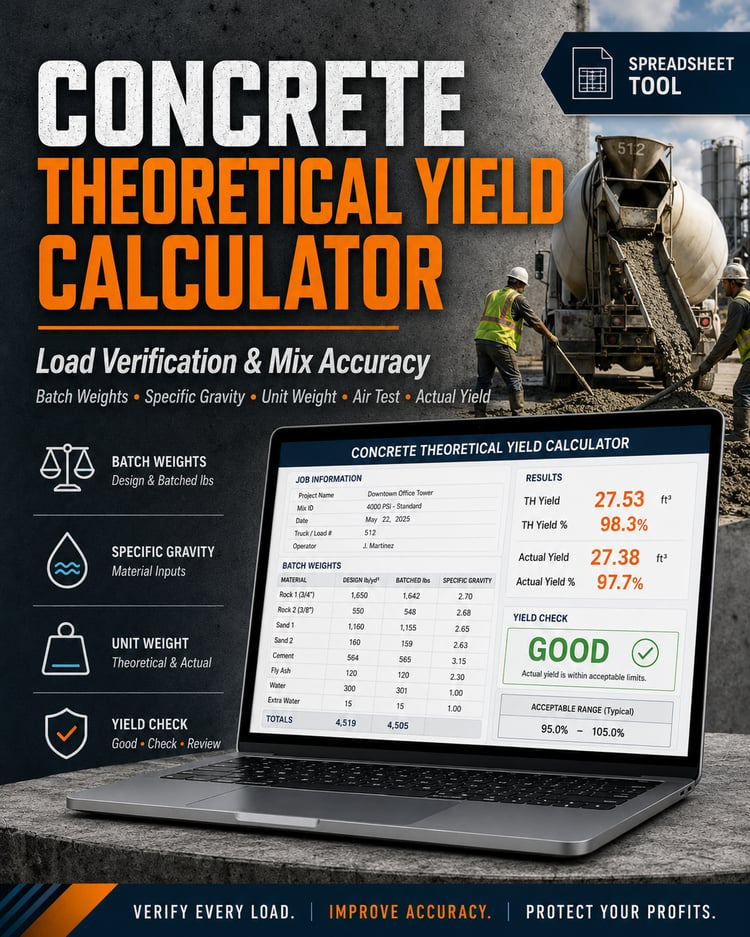
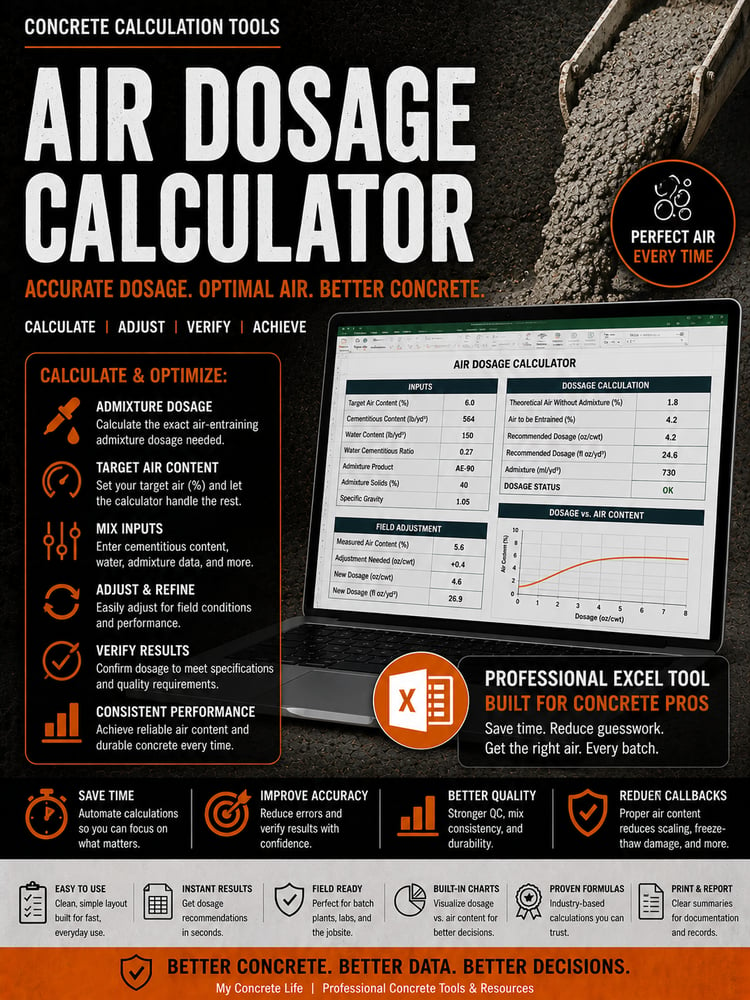
Quickly calculate theoretical air, gravimetric air, corrected pressure-meter air, and measured-vs-design air comparison with this professional Excel-based Concrete Theoretical Air Calculator.
Built for ready-mix producers, QC technicians, batch plant personnel, concrete inspectors, lab technicians, and field testers, this workbook helps evaluate concrete air content using batch design weights, specific gravity, absolute volume, unit weight, pressure meter readings, and correction factor inputs.
Simply enter the yellow input fields, including material design weights, specific gravities, design air, unit-weight pot data, K-factor, and pressure meter reading. The workbook automatically calculates theoretical solid volume, theoretical air volume, theoretical air percentage, theoretical unit weight, actual unit weight, corrected air percentage, gravimetric air percentage, and measured air variation from design.
Includes:
Concrete theoretical air calculation
Absolute volume by material
Specific gravity input by material
Theoretical solid volume
Theoretical air volume
Theoretical air percentage
Theoretical unit weight, no air
ASTM C138-style unit-weight support
ASTM C231 / C173 air test support
K-factor correction input
Corrected air percentage
Gravimetric air percentage
Measured-vs-design air comparison
Automatic air-status guidance
Protected formula layout
Simple yellow-cell input workflow
Clean professional Excel format
This tool is ideal for reviewing mix design air content, checking measured air against theoretical air, documenting QC results, troubleshooting air-content issues, and supporting field or lab quality-control workflows.
Best for: ready-mix producers, QC technicians, concrete field testers, batch plant operators, inspectors, lab personnel, project managers, and concrete quality professionals.
Digital Excel download. This workbook is a calculation and QC screening aid. Project specifications, ASTM test methods, agency requirements, and engineer direction should always govern final acceptance decisions.