
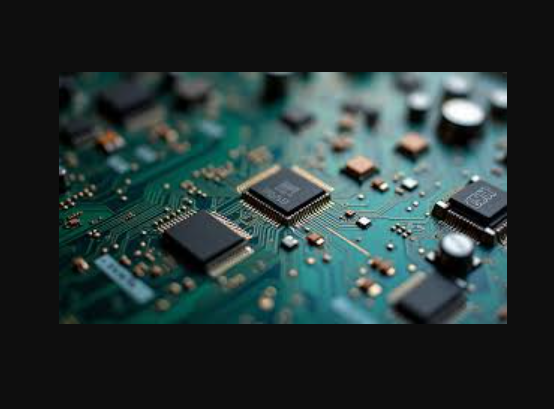
There is something slightly optimistic about the first PCB revision.
On paper, everything looks good. The layout checks out, the simulation behaves the way it should, and there is a sense that maybe, just maybe, this version will work perfectly.
Sometimes it does; however, more often than not, the first board teaches you something.
Maybe temperatures run higher than expected. The connector placement feels awkward once it's assembled. The board technically works, but not as cleanly as everyone hoped.
That is really why a prototype printed circuit board manufacturer matters.
It gives teams a chance to test ideas before moving into larger manufacturing runs where changes become slower and more expensive.
What Materials Are Commonly Used in Printed Circuit Board Fabrication?
Material choice tends to matter more than people expect.
For many standard applications, PCB fabrication manufacturers rely on FR-4. It is common because it strikes a decent balance between cost, durability, and electrical performance.
For plenty of products, that is enough.
But not every board lives in the same environment.
Some applications generate more heat. Others handle higher frequencies or operate in harsher conditions where standard materials may not perform particularly well.
That is when manufacturers start looking at alternatives.
Metal-core boards, high-frequency laminates, or specialty substrates sometimes make more sense depending on the product.
A lot of teams discover during prototyping that the original material choice looked fine during design, but behaves differently once the board is tested in real conditions.
That is fairly normal.
Testing tends to answer questions that theory cannot.
How Do Printed Circuit Board Manufacturers Handle Custom Orders?
Custom projects are pretty common.
In fact, many custom-printed circuit board manufacturers spend much of their time building boards that are unique to a customer rather than off-the-shelf designs.
The process usually starts with design files and production requirements.
Things like:
- Board dimensions
- Layer count
- Materials
- Surface finish
- Testing requirements
- Assembly preferences
From there, manufacturers review the files to see if anything stands out.
Sometimes small manufacturability concerns get flagged before production starts. Other times, everything moves fairly smoothly.
What makes custom work interesting is that no two projects are the same.
An industrial sensor board has different needs than a medical device. A consumer electronics prototype looks different from aerospace hardware.
That flexibility is one reason printed circuit board fabrication often feels more collaborative than people expect.
What Is the Difference Between a Prototype PCB and a Production PCB?
The short answer is scale.
A printed circuit board prototype is typically built for testing, learning, and revisions.
The goal is to validate the design before making bigger decisions.
Production boards, on the other hand, focus much more heavily on consistency.
By the time production starts, teams are usually trying to minimize risk and maintain repeatable quality.
That changes the priorities.
Prototype runs may tolerate small design changes between revisions. Production runs generally aim for stability.
There is also usually more testing and process control once manufacturing scales.
In reality, prototypes exist to answer questions.
Production exists once those questions are mostly solved.
Can Prototype Boards Be Used for Functional Testing?
Absolutely.
Actually, that is one of the main reasons prototypes get built.
A printed circuit board prototype gives teams something tangible to work with rather than relying entirely on simulations or assumptions.
Functional testing might involve:
- Power testing
- Signal verification
- Thermal performance checks
- Environmental testing
- Real-world operating conditions
Sometimes a board passes everything right away.
Sometimes testing reveals things nobody expected.
That part can feel frustrating in the moment, but it is usually better to uncover issues before larger production orders happen.
A failed prototype is often cheaper than a failed production run.
Why Real-World Testing Usually Changes the Design
People sometimes assume prototypes are mainly there to confirm everything works.
In reality, they often reveal opportunities to improve things.
A connector may need repositioning.
Routing may need to be cleaner.
Thermal performance might suggest moving components slightly farther apart.
None of those things necessarily means the original design was bad.
It just means real hardware behaves differently than design software sometimes predicts.
That is one reason experienced engineering teams rarely expect perfection from the first board.
They expect learning.
And honestly, that mindset tends to make product development much smoother.
Final Thoughts
There is only so much confidence software can give you.
Eventually, someone has to hold the board, test it, and see what happens in real conditions.
That is why a printed circuit board prototype still matters, even for experienced teams.
It gives engineers room to adjust, manufacturers room to improve processes, and businesses a better chance of avoiding expensive surprises later.
Most of the time, that extra step saves more time than it takes.
Visit: https://bayareacircuits.com/
FAQs
What is a printed circuit board prototype?
A printed circuit board prototype is an early version of a board used for testing before production begins.
What material is most commonly used in PCB fabrication?
FR-4 is one of the most widely used materials in printed circuit board fabrication.
Can printed circuit board manufacturers build custom boards?
Yes. Many printed circuit board manufacturers specialize in custom projects across different industries.
What is the difference between a prototype and a production PCB?
Prototypes are used for testing and making revisions, whereas production boards focus on consistency and scale.
Can prototype boards be tested in real conditions?
Yes, functional testing is one of the main reasons teams build prototypes.