
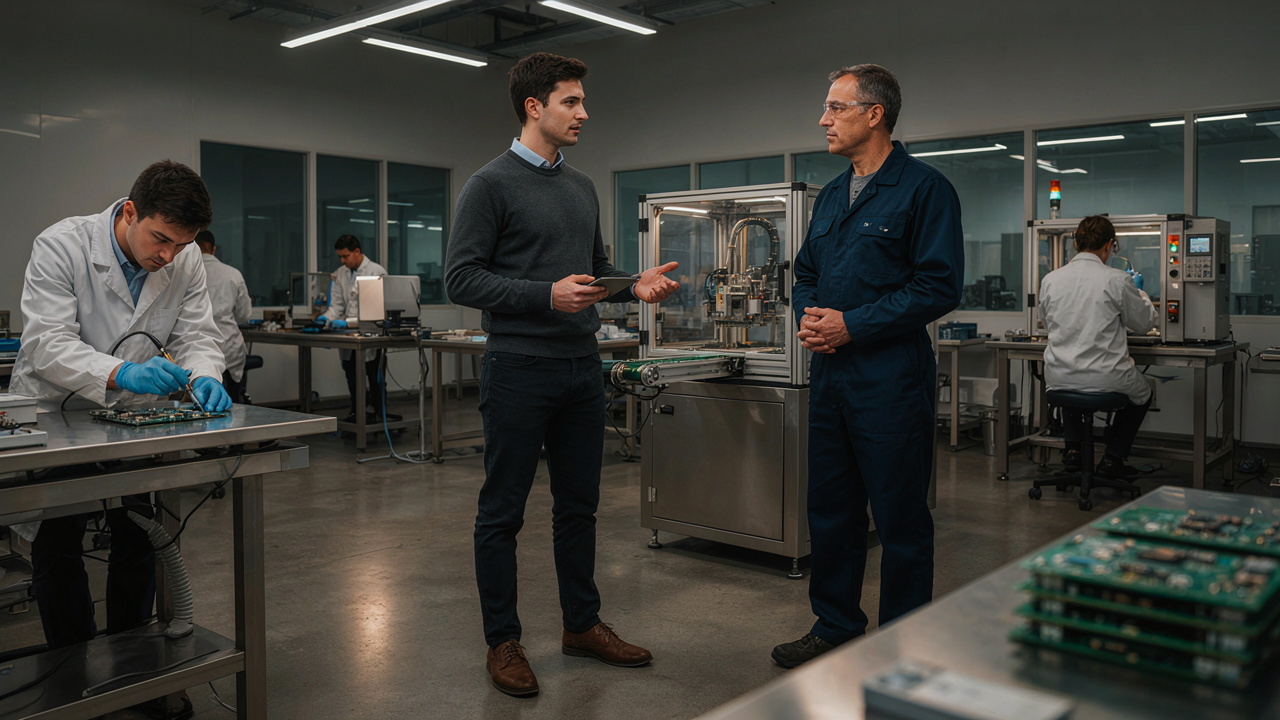
Choosing a PCB manufacturing partner is more than comparing prices. The right manufacturer can influence product quality, delivery schedules, production consistency, and the performance of the final electronic device. Whether a project needs a prototype or a larger production run, it helps to look at a manufacturer's capabilities, quality processes, technical support, and ability to handle changing requirements.
Check Fabrication Capabilities
A dependable manufacturer should have the equipment and experience needed to produce circuit boards according to the project's specifications. Before making a decision, review the types of boards supported, material options, layer configurations, tolerances, and finishing processes.
It is also useful to check whether the manufacturer can manage different stages of production under one roof. Combining fabrication and assembly can reduce coordination issues and make it easier to maintain consistency between the board design and the assembled product.
When comparing circuit board manufacturing companies, look beyond the basic service list. Consider production experience, technical capabilities, quality practices, and the ability to support the type of electronics being developed.
Look at Assembly and Production Support
PCB assembly involves placing components accurately and preparing the finished board for testing or integration. A manufacturing partner with strong assembly capabilities can help reduce the number of suppliers involved in a project.
When reviewing printed circuit board assembly services, consider whether the provider supports prototype builds, low-volume production, and larger orders. Component sourcing, automated placement, soldering, inspection, and testing are also worth reviewing. Having these services available through one manufacturing partner can simplify production management.
Review Quality Control
Quality problems can lead to rework, delayed launches, and unreliable products. For this reason, ask how a manufacturer checks boards throughout the production process rather than only inspecting the finished product.
A good quality process may include:
- Automated optical inspection for identifying assembly defects
- Electrical testing to check circuit performance
- Material and component verification
- Inspection at different stages of production
- Documentation and traceability for manufacturing records
Clear quality procedures give product teams greater visibility into how boards are produced and checked.
Consider Turnaround Times
A manufacturer may offer excellent technical capabilities, but slow production can create problems when deadlines are tight. Ask about standard production schedules as well as options for urgent requirements.
Quick-turn manufacturing can be useful during prototyping, product development, repairs, and situations where a production schedule changes unexpectedly. At the same time, turnaround should not come at the expense of board quality or manufacturing accuracy.
It is also worth asking how the manufacturer handles repeat orders. Consistent processes and predictable scheduling can make future production easier to plan.
Check Technical Communication
Manufacturing specifications can sometimes require clarification before production begins. A responsive technical team can help identify potential issues and reduce unnecessary back-and-forth.
Look for a partner that can review manufacturing files, communicate production requirements clearly, and provide practical feedback when a design or manufacturing detail needs attention. Good communication becomes even more valuable when projects involve complex boards, tight tolerances, or frequent revisions.
Think About Production Flexibility
Electronics projects rarely remain exactly the same from prototype to final production. Component availability, board revisions, order quantities, and delivery requirements can all change.
A flexible manufacturing partner should be able to support different production stages without creating unnecessary complexity. Services covering PCB fabrication and assembly can provide a more connected manufacturing process, particularly when a project requires both board production and component assembly.
Choose a Partner for Long-Term Needs
The best manufacturing relationship is based on more than a single successful order. Consider whether the manufacturer can support future prototypes, design changes, production increases, and recurring orders.
Reviewing fabrication capabilities, assembly services, quality control, turnaround times, technical assistance, and production flexibility provides a clearer picture of what a manufacturer can offer. These factors can help businesses select a partner that fits both immediate requirements and future production goals.
Conclusion
A reliable PCB manufacturing partner should provide more than basic board production. Strong fabrication capabilities, dependable assembly, quality checks, reasonable turnaround times, technical support, and production flexibility all contribute to a smoother manufacturing process.
For businesses looking for support across PCB fabrication and assembly, Bay Area Circuits offers manufacturing and quick-turn PCB assembly solutions designed to support different electronics production requirements.
Ready to move your next PCB project from design to production? Visit Bay Area Circuits to learn more about its PCB manufacturing and assembly services.