
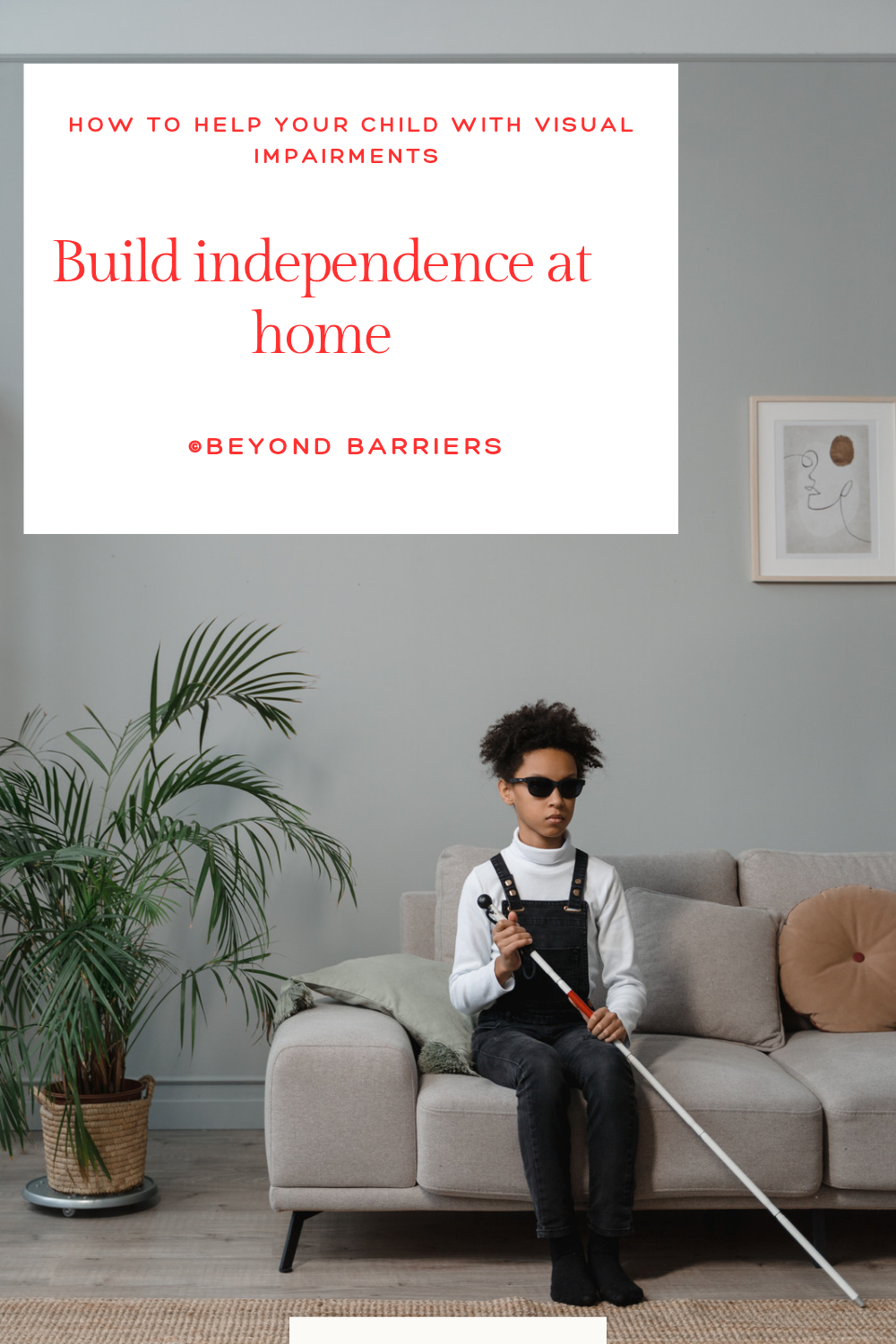
Parenting a child with visual impairment often comes with unique challenges but also with opportunities to nurture independence, confidence, and creativity right from home. While schools and professionals play an important role, parents are the first teachers and the home is the first classroom. With the right strategies, you can make everyday routines meaningful learning experiences.
Here are a few practical ways to support your child at home:
1. Create a Safe and Predictable Environment
Children with visual impairments thrive in spaces that are consistent and easy to navigate. Keep furniture in fixed places, remove obstacles, and use contrasting colors for safety (for example, placing a bright rug near doorways).
2. Encourage Orientation and Mobility Skills
Simple activities such as walking around the house, learning the layout of rooms, and practicing safe movement with or without a white cane build confidence. You can also encourage your child to use touch, hearing, and even smell to orient themselves.
3. Build Daily Living Skills
Support your child in daily tasks like dressing, organizing toys, or helping with simple chores. These not only foster independence but also strengthen problem-solving and motor skills.
4. Introduce Assistive Tools Early
Tactile labels, braille on household items, and audio cues (like talking clocks) can make routines easier. Even young learners benefit when they realize that there are tools designed just for them.
5. Encourage Social Interaction
Playdates, group activities, and family games help your child practice communication, cooperation, and social confidence.
6. Partner with Professionals and Resources
As a parent, you don’t have to do it alone. Seek guidance from Orientation and Mobility (O&M) specialists, teachers of the visually impaired, or support groups. Books and resources,like Let's Talk About Orientation and Mobility For Individuals with Visual Impairments ,offer a solid knowledge base you can apply at home.
Supporting your child at home isn’t about having all the answers,it’s about being consistent, creative, and encouraging. Small steps lead to big growth.
If you’d like a simple, easy-to-read resource on Orientation and Mobility, I’ve created a short ebook that summarizes key concepts from the Foundations of Orientation and Mobility (3rd & 4th editions) and makes them practical for parents, caregivers, and practitioners.
Check it out in my Payhip store, Beyond Barriers!