
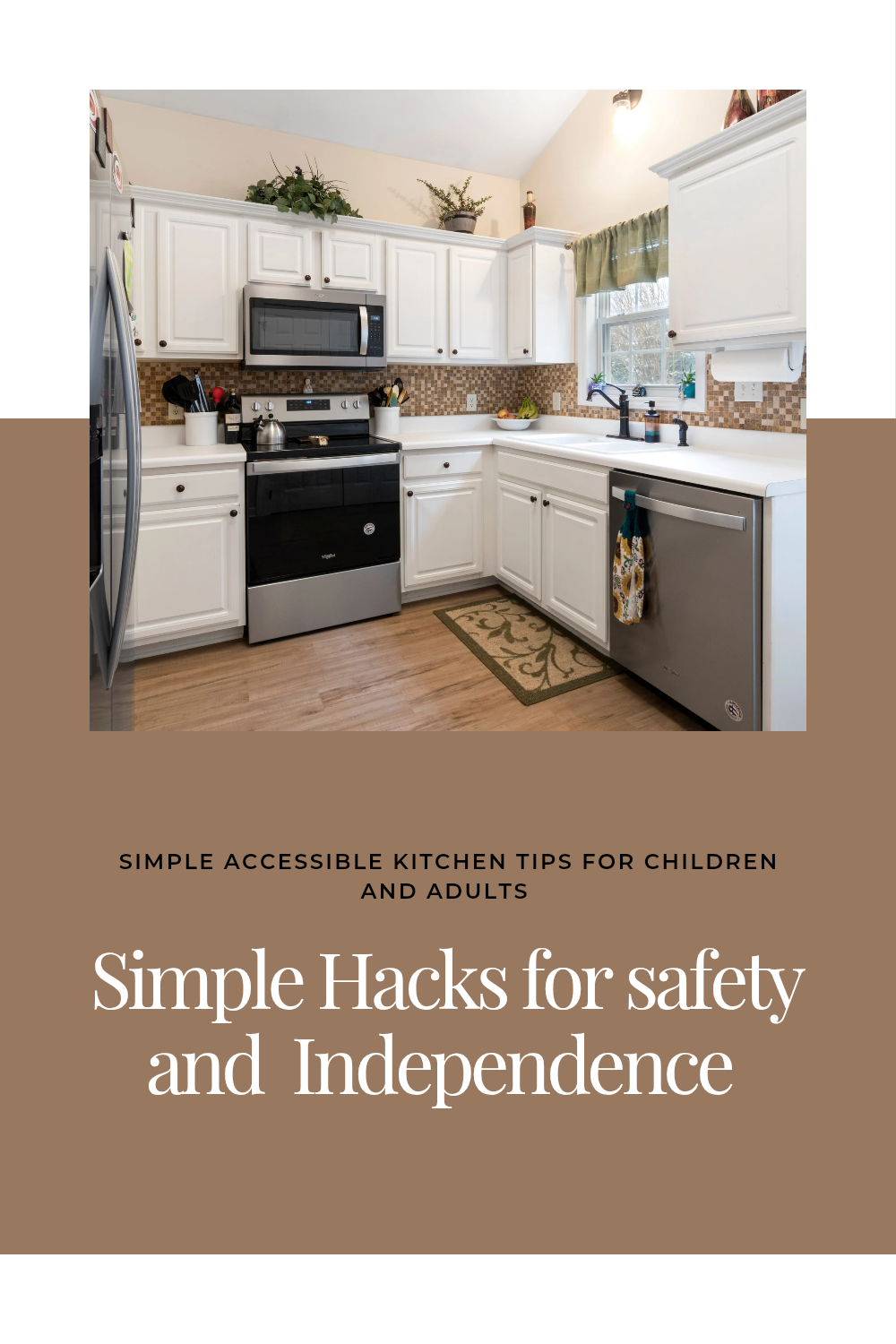
The kitchen is the heart of every home,but for children and adults with visual impairments, it can sometimes feel like a maze of sharp objects, hot surfaces, and hidden obstacles. The good news? With a few simple adaptations, the kitchen can be transformed into a safe, welcoming, and empowering space where independence thrives.
In this post (Part 2 of our Building Independence at Home series), let’s explore practical kitchen tips that work for both children and adults with visual impairments.
1.Organize and Label Everything
- Consistency is key: Keep items in the same place so they can be found by memory and touch.
- Tactile labels: Use braille dots, puff paint, or rubber bands to mark spice jars, condiments, or frequently used containers.
- Large print: For those with low vision, use bold markers or high-contrast stickers.
2.Use Adaptive Tools and Gadgets
- Talking kitchen scales or measuring cups with tactile indicators make cooking easier.
- Liquid level indicators beep or vibrate when a cup is nearly full, preventing spills.
- Non-slip mats keep cutting boards and utensils stable for safer food prep.
3.Create a Safe Cooking Environment
- Mark appliances: Place tactile dots on oven dials, microwave buttons, or stove knobs for easy identification.
- Use long oven mitts to protect hands and arms.
- Child-friendly adaptations: For children, involve them in simple, safe tasks such as stirring with a blunt spoon or sorting ingredients by touch.
4.Teach Safe Knife & Heat Handling
- Guide children gradually: Start with child-safe knives or pre-cut vegetables before introducing sharper tools under supervision.
- Adults can benefit from techniques like using the “claw grip” to protect fingers when chopping.
- Encourage cooking with small appliances at first (toaster oven, slow cooker, air fryer) for easier handling compared to large stoves.
5.Encourage Independence, Step by Step
- For children, small tasks,washing fruits, setting the table, or organizing utensils,boost confidence.
- For adults, practicing meal prep routines strengthens independence and self-esteem.
Remember: every safe, successful task is a building block toward greater freedom.
Final Thought
An accessible kitchen is more than just a safe place,it’s a classroom for independence. By organizing spaces, adding tactile cues, and gradually involving both children and adults, the kitchen becomes a place where confidence is built daily.
If you’d love more practical tips for independence through Orientation and Mobility, don’t forget to preview my eBook on Beyond Barriers—your next step toward freedom and confidence!