

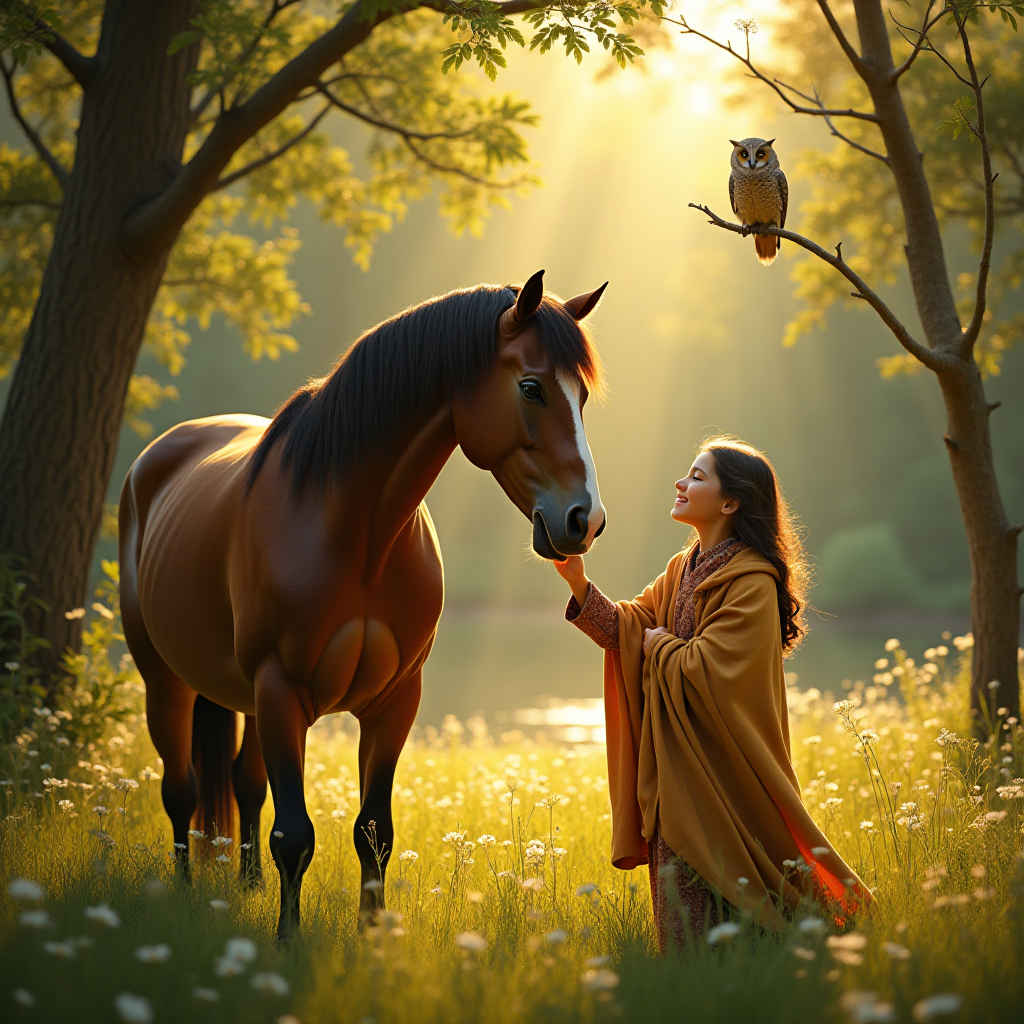
Watch someone who seems closed off at a party. Quiet, guarded, maybe even a little cold. Now watch that same person with a dog. Everything changes, their shoulders relaxed, their voice softens, that careful mask they wore, gone.
Replaced by something genuine, something real. What you're seeing isn't just someone who loves animals, you're watching someone who finally feels safe. And there's a psychological reason why this happens. A reason that reveals something profound about how we connect, how we heal, and what we truly need from relationships.
Here's what most people get wrong. They assume people who prefer animals are antisocial. People who just don't like humans, but that's not it at all.
They are exhausted. Think about your last conversation with another person. How much energy did it take? Reading their tone, managing your facial expressions, choosing the right words, wondering if you said something wrong, replaying it later in your head at 2am.
Did they seem annoyed? Were they being sarcastic? Should you have said it differently? It's mentally exhausting. Now, compare that to sitting with a cat or walking a dog. No performance, no judgment, no mental replay loop.
No wondering if you're too much or not enough. Animals offer something most humans don't. They let you exist without needing to prove you deserve to.
And for someone who spent their whole life feeling like they have to earn love, acceptance, or even basic kindness, that unconditional presence feels like finally coming up for air. Psychologists call this unconditional positive regard. It means being accepted exactly as you are without conditions.
No strings attached, no fine print. Here's why this matters. Many people only experience this feeling a few times in their entire lives, if at all.
Your dog doesn't care if you got promoted or fired. Your cat doesn't judge your body, your past, or your awkward moments. That bird on your shoulder isn't comparing you to anyone else.
They're not keeping score. They're not waiting for you to mess up. They're just there.
So when someone says, "I'm more comfortable with animals," what they're really saying is, "Here, I don't have to be anyone but myself. " For people who have spent years masking, performing, trying to be enough, that permission isn't small. It's revolutionary.
It's the difference between constantly holding your breath and finally being able to breathe normally. Once you've felt that kind of acceptance, even just once, it kind of changes you. You start to realize how rare it is, how precious it is, and how much of your life you spent in relationships where you weren't allowed to just be.
And it goes even deeper than acceptance. Human connection is beautiful. It's also work, emotional labor, constant interpretation, a never-ending loop of what did they mean by that? Think about it.
Every human interaction is kind of like solving a puzzle. You're tracking facial expressions, tone of voice, body language, context, history. You're running calculations in real time.
They said they're fine, but their voice sounds tight. Should I push or should I give them space? They laughed, but was it genuine or polite? They haven't texted back in three hours. Are they mad? Maybe busy? Should I just follow up? It's exhausting. Animals communicate in a language that's brutally simple.
A wagging tail means joy most of the time. A purr means contentment. A cat showing you their belly means trust most of the time. No passive aggression.
No texts you have to decode. No wondering if they're upset about something from three weeks ago that they never mentioned. For a nervous system already overwhelmed by human complexity, that simplicity, it's healing. In a world that constantly demands, evaluates, and judges, animals offer silence.
And not just empty silence. The kind that lets you hear yourself again. Where you can finally stop performing and just exist.
And there is actual research backing this up. Studies show that interacting with animals lowers cortisol levels, that's your stress hormone, and increases oxytocin, the bonding hormone. It can lower blood pressure, reduce anxiety, and even help with depression.
But here's what's even more interesting. These benefits are strongest in people who already struggle with human relationships. People with social anxiety, trauma survivors, people who have been portrayed or hurt deeply. For them, animals are not just companions.
They're therapists. Safe harbours, anchors. Because animals don't trigger the same threat response that humans do.
So your nervous system doesn't have to stay on high alert. You don't have to scan for danger, rejection, or judgment. You can finally relax. Then that relaxation is where healing begins.
Now, this isn't true for everyone. Some people genuinely are energized by human connection. They thrive on conversation and complexity and emotional depth. They love the challenge of understanding another person.
The intimacy of shared vulnerability, and that's okay. This isn't about one being better than the other. It's about understanding that safety feels different to different people. For some, safety looks like deep conversation over coffee.
For others, it looks like the quiet weight of a dog's head on their lap. Neither is wrong. Just different languages of love.
And understanding your own language is the first step to finding the peace that you actually need. So when someone chooses animals over people, it's not always about avoiding humanity. Sometimes it's about protecting their peace.
Animals don't betray. They don't gossip. They don't ghost you. They don't love you on Monday and disappear by Friday.
They don't tell you you're too sensitive, too quiet, too much, or not enough. They just stay consistently, reliably, and honestly. And for someone who's been hurt by inconsistency, who's learned that people can say one thing and mean another, who've been abandoned, rejected, or betrayed, that reliability can mean everything. It's about finally finding a relationship where you don't have to brace for impact.
It's not about hating people. The bond between a human and an animal could be one of the most honest relationships someone has. So next time you see someone who lights up around animals but seems distant around other people, don't assume they're broken or antisocial.
Maybe they're just looking for a place where love doesn't demand a performance, acceptance doesn't come with conditions, and they can finally, finally just be themselves. So do you connect more with animals than people? When did you realize it? Comment below and let us know what you think. If this resonated, share it with someone who gets it.
They might need to hear this today. And if you're curious what your favourite animal says about your personality, that video's up next.