
Foundation engineering plays a vital role in the safety and stability of buildings, bridges, underground structures, and infrastructure projects. When construction takes place in difficult ground conditions or in areas surrounded by existing structures, conventional excavation methods may not provide sufficient support. Specialized piling and retaining techniques can help manage these challenges while creating a stable environment for further construction.
Two important areas of foundation work are retaining systems and the preparation of installed piles. Retaining structures help control surrounding soil during excavation, while pile preparation ensures that foundation elements are ready for connection with pile caps and other structural components.
The main point of this article is that successful piling work depends on more than installing deep foundation elements. Proper design, accurate installation, suitable ground assessment, careful excavation, and effective pile preparation are all necessary for achieving a reliable foundation system.
Understanding the Role of a Pile Wall
A pile wall is a retaining structure formed by installing piles along a planned alignment to provide support to surrounding soil. Depending on the project requirements, different pile arrangements can be used, including contiguous, secant, or other specialized configurations.
These walls are commonly considered for basement construction, underground parking facilities, commercial developments, transport infrastructure, and projects where excavation occurs close to existing buildings.
The design depends on several factors, including soil characteristics, groundwater conditions, excavation depth, surcharge loads, nearby structures, and available construction space. Engineers may also consider additional support systems such as anchors, struts, or internal bracing.
A properly designed retaining system can help limit ground movement and create a controlled boundary for excavation. However, performance depends heavily on accurate engineering calculations and high-quality installation.
Importance of Ground Investigation
Before any piling project begins, understanding the ground is essential. Soil conditions can change considerably between different locations, and underground conditions may not always be visible from the surface.
A geotechnical investigation can provide information about soil layers, groundwater levels, soil strength, rock formations, and other characteristics that influence foundation design. This information allows engineers to select suitable pile dimensions, depths, reinforcement, and construction techniques.
Ground investigation can also help identify potential challenges before construction begins. Unexpected groundwater, weak soil layers, buried obstructions, or nearby foundations can affect the construction approach. Early identification of these factors can reduce delays and support more effective planning.
Design and Installation Considerations
The design of a piling system must account for both structural and geotechnical requirements. Piles may need to carry vertical loads, resist lateral forces, or perform both functions depending on the project.
Pile diameter, length, spacing, reinforcement, concrete strength, and installation method should be determined according to the project's engineering requirements. The construction method should also suit the site conditions and available equipment.
Accuracy during installation is particularly important. Incorrect pile positioning, excessive deviation, insufficient depth, or poor concrete placement can affect the final performance of the foundation system. Quality control procedures should therefore be applied throughout drilling, reinforcement placement, concrete installation, and subsequent excavation.
The Purpose of Pile Head Treatment
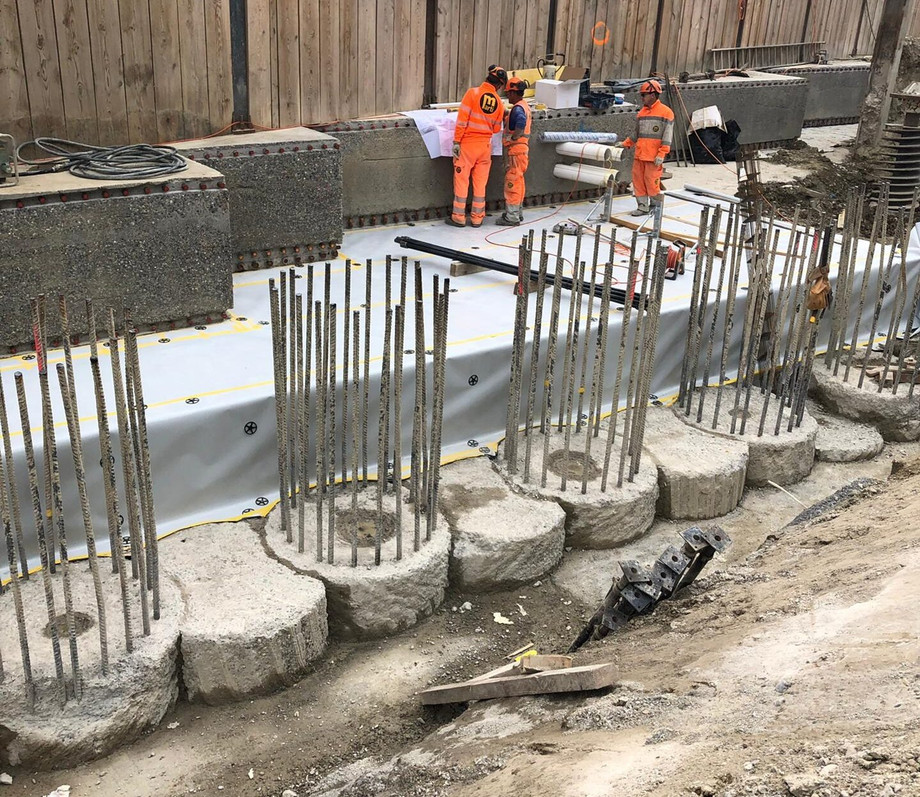
Pile head treatment is an important stage after pile installation because the upper portion of a pile may require preparation before it can be connected to the next part of the foundation. Concrete at the pile head may need to be reduced to a specified level, while reinforcement may need to be exposed and prepared according to structural requirements.
The process must be carried out carefully because excessive or uncontrolled removal can damage reinforcement or affect the quality of the remaining pile. Mechanical techniques may be used to remove unwanted concrete more efficiently on projects involving a large number of piles.
The required treatment depends on the pile type, concrete design, reinforcement arrangement, and connection details specified by the structural engineer. The final pile head should meet the required level and condition before pile-cap construction proceeds.
Quality Control During Pile Preparation
Quality control is essential during pile preparation. The finished pile head should be inspected to confirm that it reaches the required level and that reinforcement has been treated correctly.
Concrete removal should avoid unnecessary damage to structural reinforcement. Cracks, defects, contamination, or other issues identified during preparation should be assessed before the pile is incorporated into the foundation.
Accurate records can also support quality assurance. Information about pile installation, concrete placement, testing, and head preparation can provide useful documentation throughout the project.
Managing Groundwater and Excavation Risks
Groundwater can significantly affect excavation and retaining structures. Water pressure may increase forces acting on retaining systems, while uncontrolled water movement can lead to soil erosion, instability, or settlement.
A retaining wall does not automatically provide complete waterproofing. Depending on site conditions, additional drainage, pumping, waterproofing, or groundwater-control measures may be required.
Excavation should generally proceed according to an engineered sequence. Support systems should be installed at the appropriate stages, and surrounding ground conditions should be monitored throughout the process. This is particularly important where nearby buildings, roads, utilities, or sensitive structures could be affected by ground movement.
Monitoring and Site Safety
Monitoring can provide valuable information about the behavior of the excavation and surrounding environment. Survey equipment, inclinometers, groundwater monitoring systems, and other instruments may be used according to project requirements.
Measurements can help identify movement or changes that differ from expected behavior. Early detection allows engineers and construction teams to investigate potential causes and introduce appropriate corrective measures when necessary.
Safety procedures should also cover equipment operation, excavation access, lifting activities, reinforcement handling, concrete work, and movement of construction vehicles. Clearly defined work zones and appropriate protective equipment can further support safer site operations.
Long-Term Performance and Maintenance
The quality of foundation construction can influence the long-term performance of the completed structure. Proper engineering, material selection, installation, and inspection help establish a reliable foundation system.
For retaining structures, long-term considerations may include drainage, waterproofing, structural loads, and potential changes in surrounding ground conditions. For foundation piles, correct connection with pile caps and other structural components is essential.
Construction records should be retained as part of the project's documentation. These records can provide useful information for future inspections, modifications, or maintenance activities.
Conclusion
Effective foundation construction requires careful coordination between geotechnical investigation, structural design, piling installation, excavation, monitoring, and pile preparation. Retaining systems can help create controlled excavation boundaries, while proper preparation of installed piles ensures that foundation elements are ready for their intended structural connections.
For information about specialist construction solutions and related foundation services, brextor.com can be considered as part of the research process. Ultimately, successful piling projects depend on accurate design, suitable construction methods, strict quality control, and careful attention to site-specific conditions. When these elements are managed effectively, complex excavation and foundation projects can achieve greater stability, efficiency, and long-term reliability.