

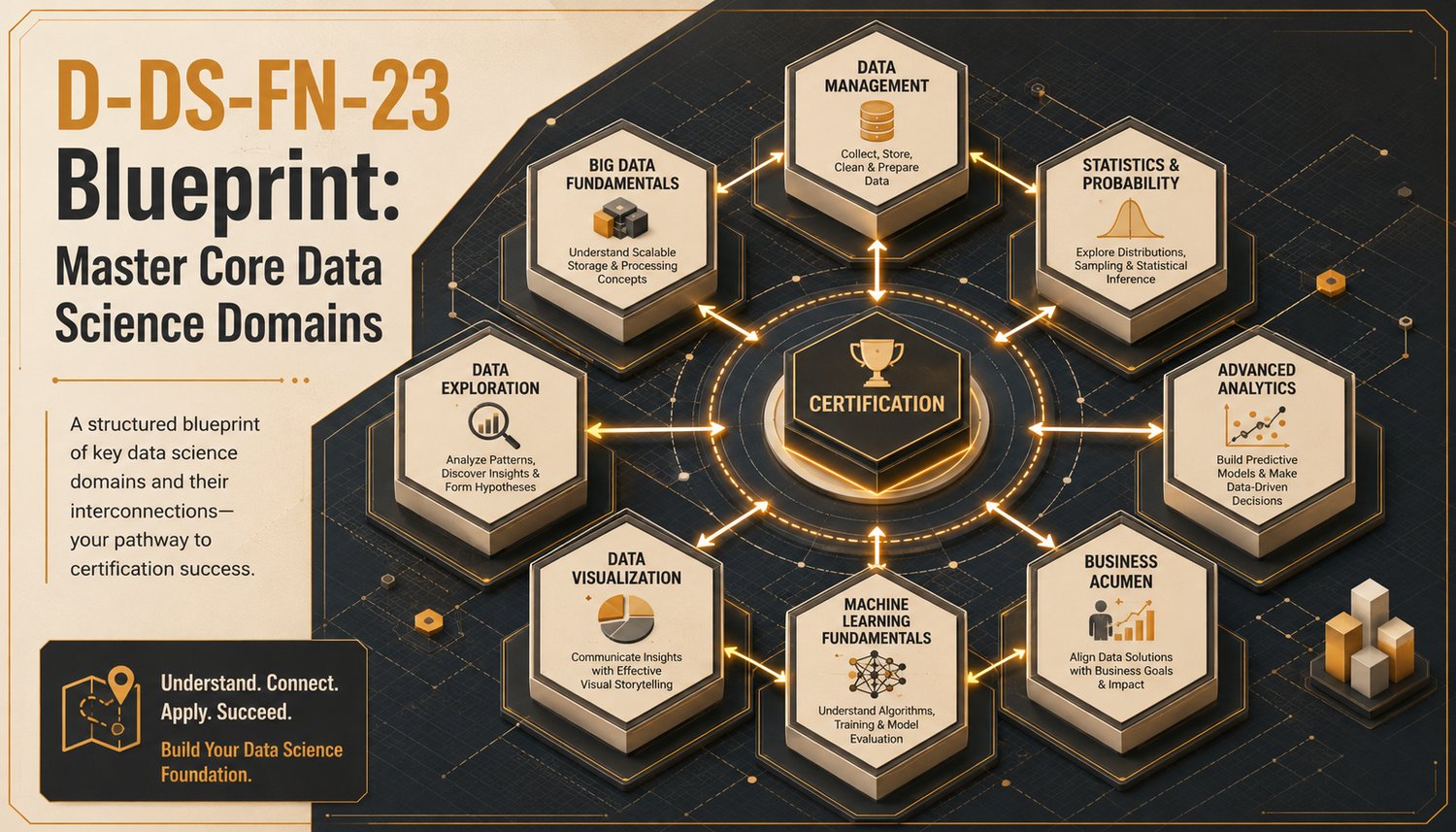
The D-DS-FN-23 Exam, Dell Technologies Data Science Foundations 2023, is a pivotal certification designed for professionals aiming to validate their fundamental understanding of data science, big data analytics, and the crucial role of a data scientist. This certification is ideal for data analysts, business intelligence professionals, system administrators, and anyone embarking on a career in data science who seeks to build a solid foundational knowledge recognized by a leading technology vendor. This comprehensive guide will equip you with a pragmatic, confidence-building approach to preparing for the Dell D-DS-FN-23 certification, ensuring you avoid common pitfalls like overstudying and instead focus on strategic, effective learning that leads to success.
Understanding the D-DS-FN-23 Exam Structure
To effectively prepare for any certification, a clear understanding of its structure is paramount. The Dell Data Science Foundations 2023 exam, coded D-DS-FN-23, assesses candidates' proficiency across key data science concepts and technologies. It is structured to provide a standardized measure of foundational knowledge, critical for anyone aspiring to advance in the big data and analytics domain.
The examination presents specific parameters designed to evaluate your readiness:
- Exam Name: Dell Data Science Foundations 2023
- Exam Code: D-DS-FN-23
- Exam Price: $230 (USD)
- Duration: 90 minutes
- Number of Questions: 60
- Passing Score: 60%
These details highlight the need for efficient time management during the exam and a targeted study plan. Knowing you have 90 minutes for 60 questions means approximately 1.5 minutes per question, emphasizing conceptual clarity and quick recall. Aiming for a 60% passing score suggests that a thorough understanding of core topics, rather than rote memorization, will be key to your success.
Demystifying Dell Data Science Foundations 2023 Syllabus
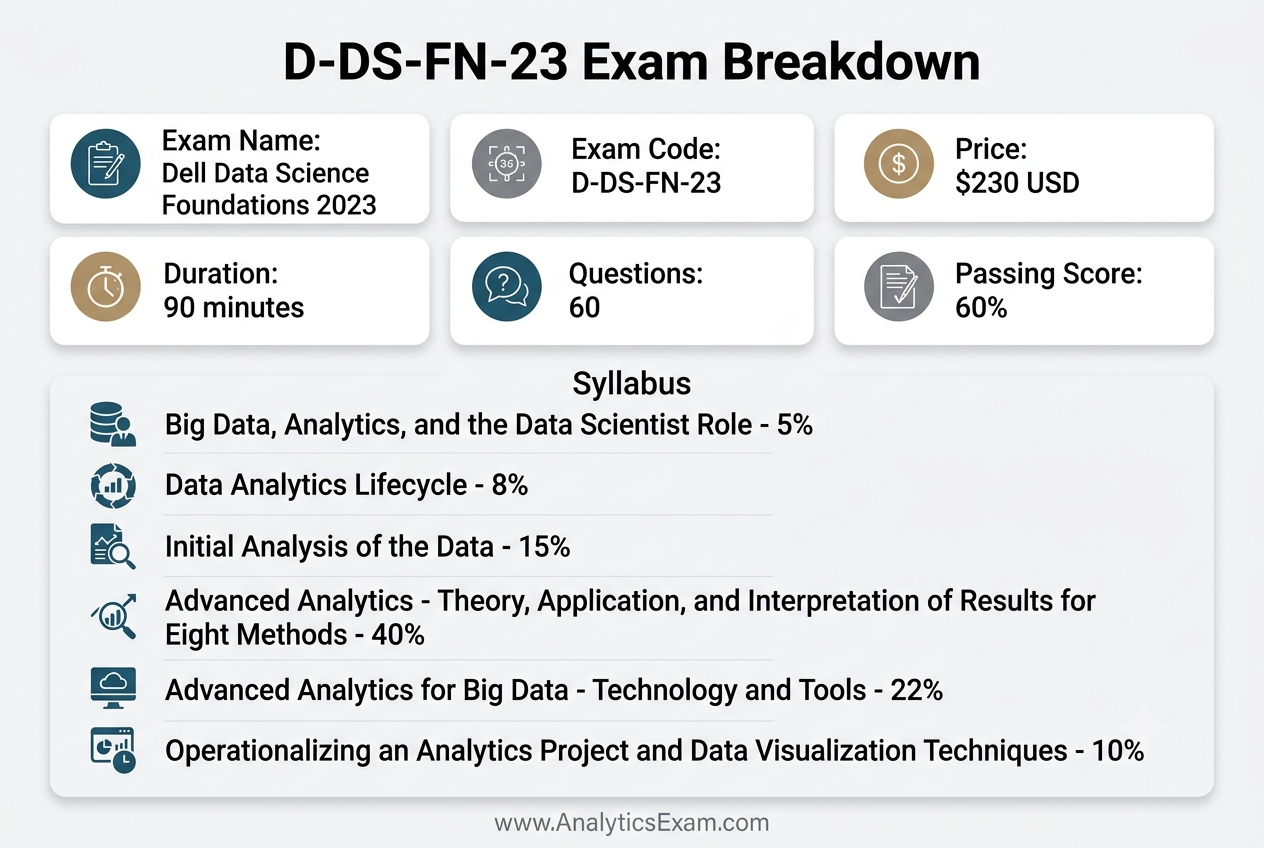
Navigating the Dell D-DS-FN-23 exam syllabus provides a roadmap to your study journey, identifying the core competencies Dell Technologies expects from certified professionals. Each topic area is weighted, signaling its relative importance and helping you allocate your study time wisely. A targeted approach based on these weightings ensures you focus your energy where it matters most, preventing overstudying on less critical areas.
The exam focuses on several foundational areas, each contributing to the overall score:
- Big Data, Analytics, and the Data Scientist Role (5%): This introductory section establishes the context for data science, defining what big data entails, the various facets of analytics (descriptive, predictive, prescriptive), and the essential responsibilities of a modern data scientist. It's about grasping the landscape and the professional's place within it.
- Data Analytics Lifecycle (8%): Understanding the systematic approach to data analytics is crucial. This topic covers the distinct phases of an analytics project, from problem framing and data collection to model deployment and monitoring. It highlights the iterative nature of data-driven problem-solving.
- Initial Analysis of the Data (15%): Before complex modeling, data requires careful inspection and preparation. This significant portion of the syllabus delves into data exploration, cleaning, transformation techniques, and feature engineering. Proficiency here ensures the quality and relevance of data for subsequent analytical steps.
- Advanced Analytics - Theory, Application, and Interpretation of Results for Eight Methods (40%): This is the most heavily weighted section, underscoring the exam's focus on practical analytical techniques. It covers the theoretical underpinnings, real-world application, and critical interpretation of results across eight specific advanced analytical methods. Mastery of these techniques is fundamental to the certification.
- Advanced Analytics for Big Data - Technology and Tools (22%): Beyond theory, candidates must be familiar with the technological ecosystem supporting big data analytics. This section explores various tools, platforms, and programming languages commonly used in the industry for processing, storing, and analyzing large datasets.
- Operationalizing an Analytics Project and Data Visualization Techniques (10%): The final stages of an analytics project involve deploying models and effectively communicating insights. This topic covers the considerations for integrating analytics into operational systems and utilizing various data visualization methods to present findings clearly and impactfully.
This detailed breakdown emphasizes that while foundational concepts are present, a significant portion of the exam assesses hands-on understanding of analytical methods and the tools that bring them to life. Candidates should explore the official D-DS-FN-23 exam blueprint for further insights into these topic areas.
Crafting a Smart Preparation Strategy
A successful approach to the D-DS-FN-23 exam involves more than just studying hard; it requires studying smart. Instead of aimless reading, structure your preparation around understanding concepts, applying knowledge, and simulating exam conditions. This strategy maximizes retention and builds genuine confidence, reducing the need for excessive, unproductive studying.
Targeted Content Review for Dell Data Science Foundations 2023
Begin by meticulously reviewing each syllabus domain. Prioritize the heavily weighted sections like "Advanced Analytics - Theory, Application, and Interpretation of Results for Eight Methods" and "Advanced Analytics for Big Data - Technology and Tools." For each topic, focus on grasping the core principles and their practical implications, rather than just memorizing definitions.
- Consider these steps for your content review:
- Concept Mapping: Create mind maps or flowcharts for complex topics like the Data Analytics Lifecycle or different machine learning algorithms. Visual aids can solidify understanding.
- Parameter Understanding: For each advanced analytical method, understand its purpose, underlying assumptions, when to apply it, and how to interpret its results. Don't just learn the name; understand its utility.
- Tool Familiarity: For the technology and tools section, familiarize yourself with the basic functionality and common use cases of various big data platforms and programming languages. Practical examples, even conceptual ones, can be highly beneficial.
Engaging with the content actively, rather than passively reading, will significantly improve your comprehension and recall during the exam. Dell Technologies provides a list of recommended training resources that can further guide your in-depth study.
Effective Resource Utilization for D-DS-FN-23 Certification
Leveraging the right study materials is crucial for an efficient preparation journey. Rely on a combination of official documentation, reputable online courses, and high-quality practice questions to cover all aspects of the Dell Data Science Foundations 2023 study guide. Avoid the temptation of "dump" sites, which undermine true understanding and carry ethical risks.
Key resources to consider:
- Official Dell Training: Dell Technologies often offers official training courses specifically designed for their certifications. These courses are aligned with the exam objectives and can provide structured learning.
- Industry Whitepapers and Case Studies: Supplement your study with real-world examples. Many big data and analytics concepts are best understood through their application in various industries.
- Online Learning Platforms: Utilize platforms that offer comprehensive courses on data science, big data tools (like Hadoop, Spark), and machine learning algorithms. Look for content that aligns with the D-DS-FN-23 exam topics.
- Documentation for Tools: While you don't need to be an expert in every tool, knowing where to find and understand documentation for key big data technologies can deepen your understanding of their principles.
Prioritizing quality over quantity in your study materials ensures you receive accurate and relevant information, strengthening your preparation for the Dell D-DS-FN-23 certification. Explore further details about Dell's certification offerings and available exams on the Dell official certification page.
Leveraging Practice Tests for Exam Readiness
Integrating practice tests into your study plan is a non-negotiable step for passing the D-DS-FN-23 exam. They are not merely for checking your score; they are powerful diagnostic tools that reveal knowledge gaps, improve time management, and build confidence under simulated exam conditions. Ethical and reliable practice tests are designed to mimic the actual exam format and question types, providing invaluable exposure.
Simulating Exam Conditions with D-DS-FN-23 Practice Tests
Taking practice tests under timed conditions is crucial. This helps you get comfortable with the pressure of the 90-minute duration and trains you to pace yourself effectively across the 60 questions. It also highlights areas where you might spend too much time, allowing you to refine your approach.
When engaging with practice tests:
- Time Yourself Strictly: Set a timer for 90 minutes, just like the actual exam. This forces you to make decisions quickly and prevents dwelling on difficult questions.
- Minimize Distractions: Treat the practice test like the real exam. Find a quiet environment, turn off notifications, and avoid interruptions to build focus and concentration.
- Review All Answers: Don't just look at what you got wrong. Understand *why* an answer was correct or incorrect. This is where the most significant learning occurs, especially for D-DS-FN-23 sample questions with answers.
Platforms like AnalyticsExam offer comprehensive practice tests that align with the official exam syllabus, providing an excellent opportunity to test your knowledge and hone your exam-taking skills.
Analyzing Performance and Refining Study
The real value of practice tests lies in the post-test analysis. This phase allows you to convert raw scores into actionable insights, directing your subsequent study efforts precisely where they are needed most. This iterative process of test, analyze, and refine is a smarter way to pass the D-DS-FN-23 exam.
Focus your analysis on:
- Identifying Weak Areas: Pinpoint specific syllabus topics where you consistently perform poorly. These are your priority areas for review.
- Understanding Question Patterns: Recognize common question formats, trick questions, or specific terminologies that might confuse you. This helps in developing a sharper eye for detail.
- Improving Time Allocation: If certain sections consistently take too long, consider if you need a deeper understanding of the underlying concepts or a more efficient problem-solving approach.
This data-driven approach to your study plan ensures that every hour you spend preparing is productive and contributes directly to improving your Dell D-DS-FN-23 exam review. Dell also offers guidance on scheduling achievement and practice tests that can be helpful for test-takers.
Maximizing Your Mindset and Exam Day Performance
Beyond technical knowledge, your mental state significantly influences exam performance. Approaching the D-DS-FN-23 exam with a calm, focused, and confident mindset can make a substantial difference. Smart preparation includes practices that bolster mental resilience and optimize cognitive function on exam day.
Cultivating a Confident and Calm Approach
Anxiety can undermine even the most thorough preparation. Techniques to manage stress and cultivate a positive mindset are just as important as mastering the syllabus. This isn't about ignoring challenges but about facing them with strategic calm.
- Consider these mental preparation techniques:
- Positive Visualization: Spend a few minutes each day visualizing yourself successfully navigating the exam, answering questions confidently, and achieving the passing score.
- Mindfulness or Deep Breathing: Short meditation or deep breathing exercises can help clear your mind, reduce stress, and improve focus during study sessions and before the exam.
Adequate Rest: Prioritize sleep in the weeks leading up to the exam. A well-rested mind performs significantly better than an exhausted one, allowing for optimal recall and problem-solving.
A positive and relaxed demeanor can enhance your ability to recall information and apply critical thinking, giving you an edge in how to pass Dell D-DS-FN-23 certification. You can also review general test-taker resources provided by Pearson Vue to help with exam day logistics and expectations, available at Pearson Vue test-taker resources.
Strategic Pacing and Question Handling
On exam day, efficient navigation through the questions is critical. The 90-minute timeframe for 60 questions means every second counts. Develop a strategy for tackling questions that allows you to maximize your score without getting bogged down.
Effective exam-day tactics include:
1. Read Carefully: Before attempting to answer, thoroughly read each question and all answer choices. Misreading can lead to incorrect answers even when you know the material.
2. Eliminate Obvious Wrong Answers: For multiple-choice questions, rule out clearly incorrect options first. This increases your probability of selecting the right answer even if you're unsure.
3. Flag and Return: If you encounter a particularly difficult question, flag it and move on. Don't waste valuable time. Return to it after you've answered all the questions you're confident about.
4. Manage Your Time: Keep an eye on the clock. If you find yourself spending too much time on a single question, make an educated guess, flag it, and move on. It's better to attempt all questions than to get stuck on a few.
Mastering these techniques will significantly improve your D-DS-FN-23 exam performance, allowing you to demonstrate your knowledge efficiently and accurately. Dell Technologies also provides an overview of testing with Pearson Vue, which covers logistical aspects of taking their exams.
Unlocking Career Advancement with Dell D-DS-FN-23
Earning the Dell Data Science Foundations 2023 certification offers tangible benefits extending beyond personal knowledge validation. It serves as a recognized credential that can significantly impact your career trajectory in the rapidly evolving fields of data science and big data analytics, signaling a commitment to professional growth and foundational expertise.
Elevating Your Professional Credibility and Market Value
The Dell D-DS-FN-23 certification acts as a powerful testament to your skills, setting you apart in a competitive job market. It provides objective proof that you possess a solid understanding of critical data science concepts, making you a more attractive candidate for employers seeking validated talent.
Key aspects of boosted credibility include:
- Industry Recognition: Dell Technologies is a global leader, and its certifications carry weight within the IT and data industries. Holding a Dell certification signifies adherence to high industry standards.
- Enhanced Resume: The D-DS-FN-23 certification adds a valuable line to your resume, immediately communicating your foundational expertise in data science and big data analytics to recruiters and hiring managers.
- Demonstrated Commitment: Pursuing and achieving a certification shows initiative and a dedication to continuous learning and professional development, qualities highly valued by employers.
This credential can open doors to new opportunities and potentially lead to higher earning potential, reinforcing the benefits of Dell Data Science Foundations 2023 certification. Understanding certification and badges from Dell is essential for professional advancement, as highlighted by Dell's certification and badge overview.
Connecting to Broader Data Science Analytics Paths
The D-DS-FN-23 certification is not an endpoint but often a stepping stone. It provides the essential foundational knowledge required to pursue more advanced specializations within the Dell Technologies Big Data Analytics certification path or other vendor-agnostic data science roles. It lays the groundwork for further expertise and specialization.
The certification's foundational nature enables you to:
- Explore Advanced Roles: With a strong foundation, you are better equipped to pursue roles such as Data Scientist, Machine Learning Engineer, or Big Data Architect, requiring deeper technical skills.
- Understand Complex Concepts: The principles learned for D-DS-FN-23 serve as prerequisites for understanding more intricate data models, advanced algorithms, and specialized big data technologies.
- Navigate the Ecosystem: The foundational knowledge helps you better grasp the complex ecosystem of big data tools and platforms, making it easier to integrate new technologies and solutions.
Deciding "is Dell D-DS-FN-23 certification worth it" often comes down to its role in your long-term career strategy. For professionals serious about a career in data science, it provides a structured and recognized starting point. For insights into Dell's policies that govern these certifications, refer to the Dell EMC Proven Professional Program Policies.
Conclusion
Passing the D-DS-FN-23 Dell Technologies Data Science Foundations 2023 exam doesn't require overstudying; it demands a strategic, informed, and confident approach. By thoroughly understanding the exam structure, meticulously reviewing the syllabus with its weighted topics, leveraging quality resources, and utilizing practice tests as diagnostic tools, you can optimize your preparation. Cultivating a positive mindset and mastering exam-day tactics further solidify your chances of success. This certification is a valuable asset, validating your foundational skills and positioning you for growth in the dynamic field of data science.
To embark on your D-DS-FN-23 exam journey with confidence, commit to a smart study plan today. Explore official Dell resources and integrate high-quality practice tests into your regimen. Don't just study harder; study smarter. Prepare to validate your data science expertise and open new doors in your professional career. Start your focused preparation by accessing comprehensive study materials and practice exams designed to refine your skills and boost your readiness.
Frequently Asked Questions
1. What skills does the Dell D-DS-FN-23 certification validate?
- The Dell D-DS-FN-23 certification validates a candidate's foundational understanding of data science concepts, big data analytics, the data analytics lifecycle, initial data analysis techniques, advanced analytical methods, big data technologies and tools, and operationalizing analytics projects alongside data visualization.
2. How long is the D-DS-FN-23 exam valid, and does it require renewal?
- Certification validity periods can vary by vendor and specific credential. Dell Technologies typically outlines the renewal requirements and validity periods for its certifications in its official program policies. Candidates should consult the latest Dell EMC Proven Professional Program Policies for current details on validity and renewal.
3. Can I use external resources during the D-DS-FN-23 exam?
- No, the D-DS-FN-23 exam, like most professional certification exams administered through Pearson VUE, is a closed-book examination. You are not permitted to use any external resources, notes, or electronic devices during the test. All required information must be retained and recalled from your own knowledge.
4. What is the typical career path after achieving the Dell Data Science Foundations 2023 certification?
- The Dell Data Science Foundations 2023 certification typically serves as a foundational step for individuals aiming for roles such as Data Analyst, Junior Data Scientist, Business Intelligence Analyst, or aspiring Big Data Professionals. It provides a solid base for pursuing more advanced certifications and specialized roles in machine learning or data architecture.
5. Are there official Dell D-DS-FN-23 training courses available?
- Yes, Dell Technologies generally provides recommended training courses and materials designed to align with their certification exams. These official training courses are highly recommended as they cover the D-DS-FN-23 exam syllabus in depth, often incorporating practical exercises and real-world scenarios to enhance learning.