

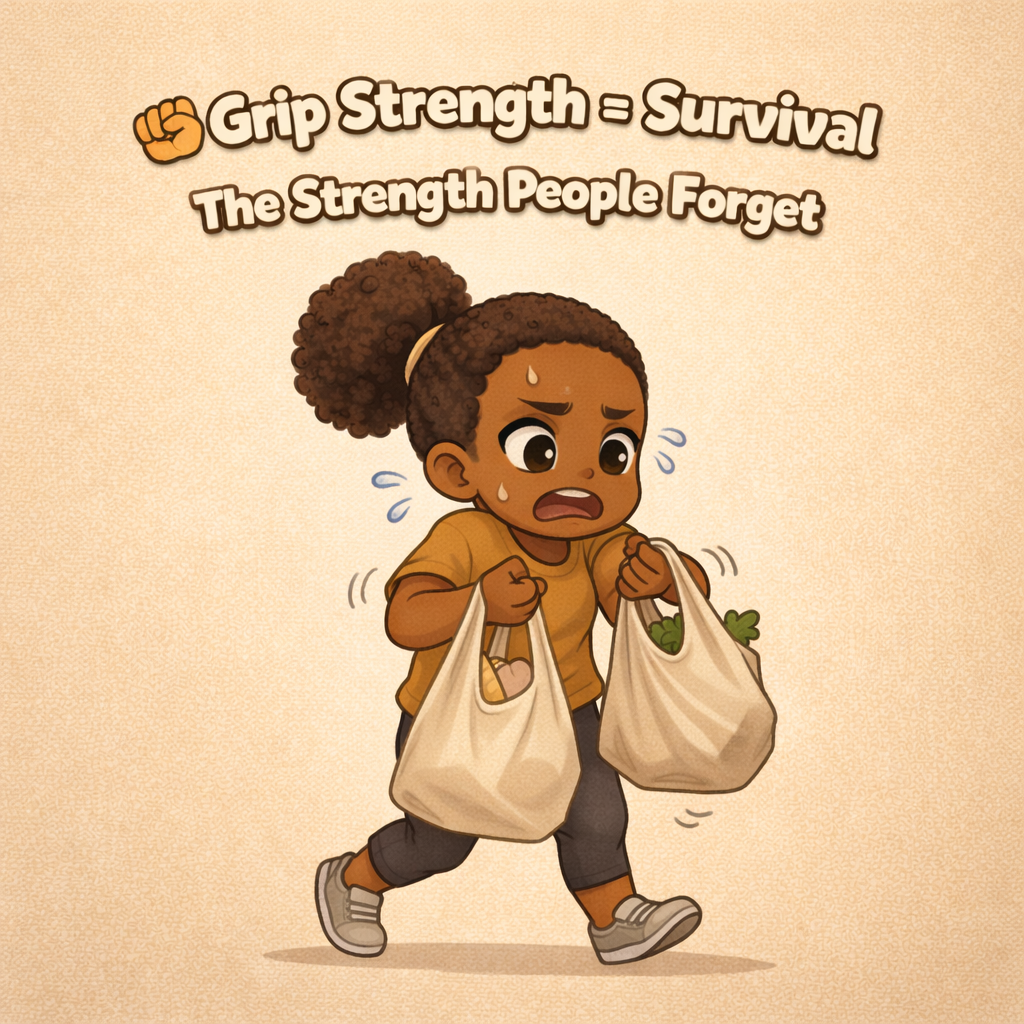
✊ Grip Strength = Survival: The Strength People Forget
Grip strength doesn’t get much attention — until it’s gone 🕰️. Most people train legs, arms, or abs, but forget the one thing that connects them to the world: their hands. When grip weakens, everyday life quietly gets harder.
Without grip strength, basic tasks turn into struggles ⚠️. Opening food jars, carrying groceries, holding utensils, turning door handles, or lifting objects become frustrating or impossible. What feels like “clumsiness” is often a strength issue, not coordination.
Here’s what’s happening in the body 🧠. Grip strength reflects overall muscle and nervous system health. As we age or stay inactive, hand and forearm muscles weaken, nerve signaling slows, and endurance drops. That loss often shows up before bigger strength declines elsewhere.
Strong grip means independence 🌟. It supports lifting, balance, and even fall prevention. Studies consistently link grip strength to longevity and overall function — because if you can’t hold on, everything else becomes harder to manage.
The fix is simple and practical 🙌. Carry heavy objects, hang from bars, use dumbbells or kettlebells, squeeze stress balls, or practice farmer carries. You don’t need fancy tools — you need regular use.
Grip strength isn’t about looking strong — it’s about staying capable ✊.
If you want to keep feeding yourself, carrying your life, and staying independent, train your hands like your future depends on it — because it does. 🚀