

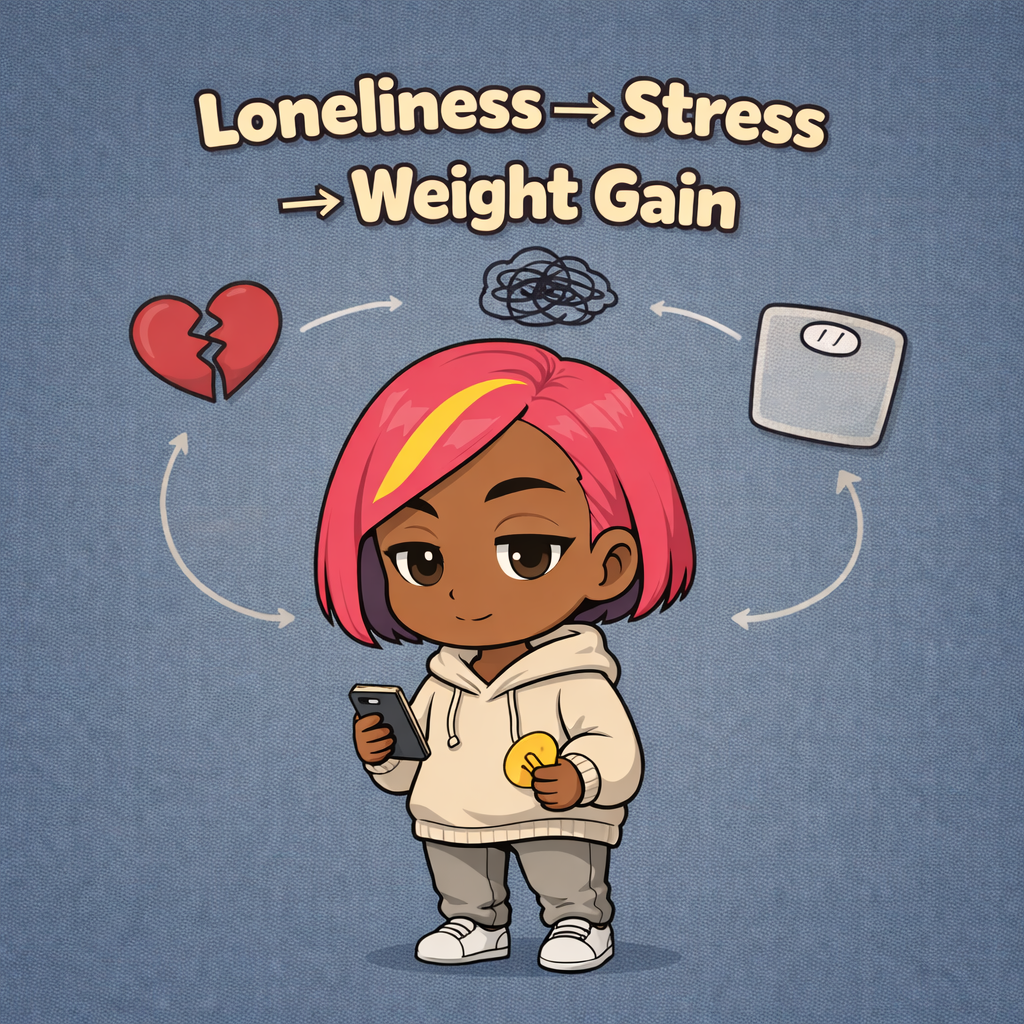
🧩 Loneliness, Stress, and Weight Gain: The Quiet Cycle No One Talks About
Loneliness doesn’t always look like isolation — sometimes it looks like choosing to be alone because it feels safer 🛑. For many people, being lonely becomes a coping mechanism. It reduces conflict, avoids disappointment, and feels easier than navigating relationships. But while the mind may feel protected, the body often reads loneliness as stress.
When the body perceives stress — emotional or physical — it reacts the same way ⚠️. Cortisol rises, sleep quality drops, and cravings increase. Loneliness can quietly keep your nervous system in a low-grade fight-or-flight state, even if nothing “bad” is happening on the surface.
Here’s what’s happening biologically 🧠. Chronic stress signals the body to store energy for survival. Cortisol encourages fat storage, especially around the midsection, and increases cravings for high-calorie, comfort foods. Food becomes a quick dopamine hit — temporary relief from emotional weight.
This is where the cycle forms 🔄. Loneliness leads to stress. Stress leads to emotional eating or convenience foods. Weight gain adds frustration, shame, or withdrawal — which increases loneliness again. The issue isn’t willpower; it’s physiology responding to emotional strain.
The way out starts with awareness and small shifts 🙌. Connection doesn’t have to be social overload — it can be a walk with someone, a shared routine, a class, a check-in call. Pair that with stress-reducing habits like movement, better sleep, and nourishing meals that stabilize blood sugar.
Loneliness isn’t a personal failure — it’s a signal 💛. When you address the stress underneath it, the body can finally relax. Break the cycle gently, and healing becomes possible — not just emotionally, but physically too. 🚀