

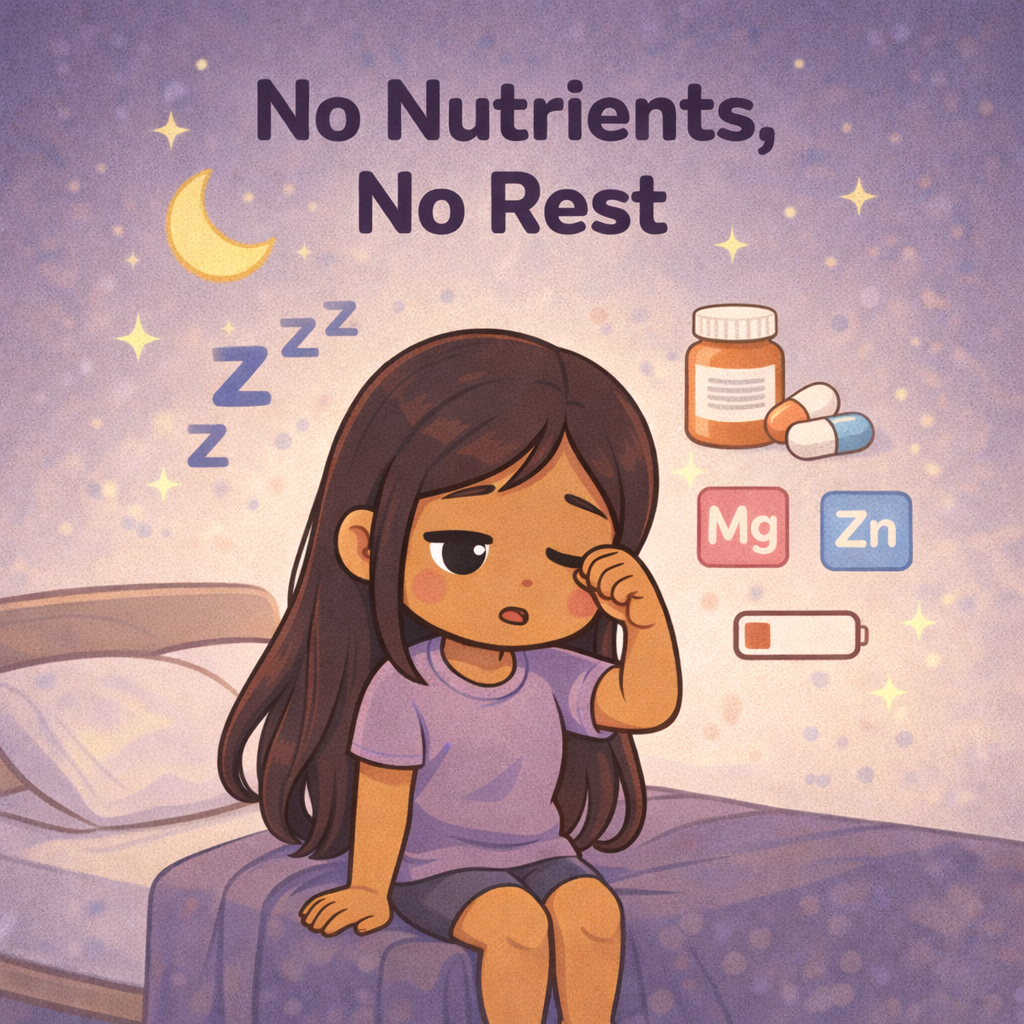
If you’re doing “everything right” but still tossing and turning at night, sleep might not be your real problem 🌙. What you’re missing could be happening inside your body — specifically with vitamins and minerals that help regulate your sleep cycle.
Poor sleep isn’t always about stress or screens ⚠️. Deficiencies in key nutrients can disrupt melatonin production, increase muscle tension, and keep your nervous system stuck in overdrive. When your body lacks the raw materials it needs to relax, rest becomes shallow or broken.
Here’s what’s happening biologically 🧠. Magnesium helps calm the nervous system and relax muscles. Vitamin D supports circadian rhythm regulation. B vitamins influence energy and melatonin balance. When these are low, your brain struggles to shift from “alert mode” into sleep mode.
The benefit of getting these nutrients right is deeper, more restorative sleep 🌟. People often notice fewer nighttime wake-ups, easier sleep onset, and better morning energy — without relying on sleep aids. Good sleep isn’t just longer sleep; it’s higher quality sleep.
The fix doesn’t have to be complicated 🙌. Eat a varied, nutrient-dense diet, prioritize foods rich in magnesium and B vitamins, get sunlight during the day, and use supplements strategically if needed. Timing matters too — some nutrients work best earlier or later in the day.
Sleep isn’t just about routines — it’s about readiness 🛌. When your body has what it needs to power down, rest becomes natural instead of forced. Support your system, and sleep stops being a battle and starts becoming recovery. 🚀