

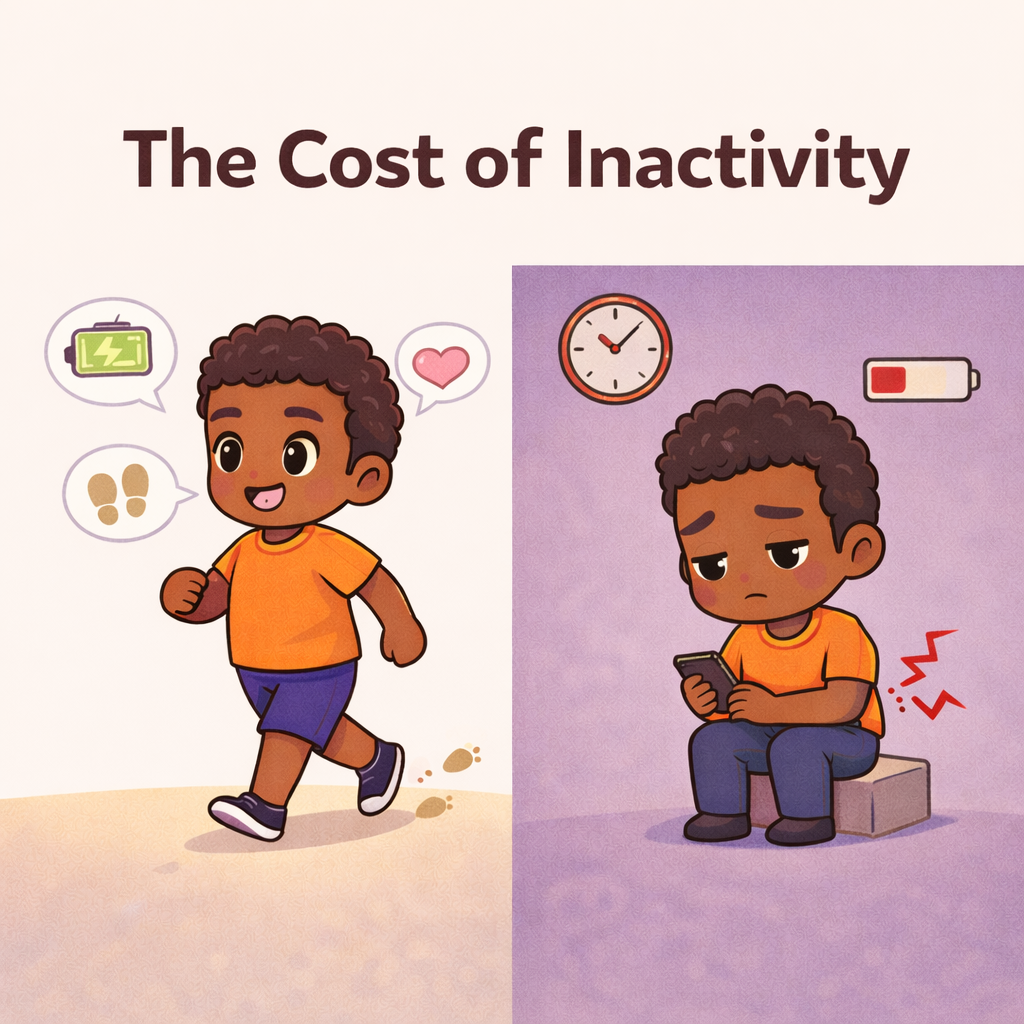
Physical activity often feels optional — until your body starts reminding you otherwise 🕰️. Skipping movement for days, months, or years doesn’t just affect fitness levels; it quietly changes how your body functions as you age. The less you move, the more your body adapts to not moving.
One of the biggest consequences is muscle loss ⚠️. As we get older, we naturally lose muscle mass, but inactivity speeds that process up. Less muscle means less strength, slower metabolism, and reduced stability — making everyday tasks like standing up, carrying groceries, or climbing stairs harder than they should be.
At the same time, body fat tends to increase 🧠. When muscle decreases and activity drops, your body burns fewer calories at rest. Fat replaces muscle, joints take on more stress, and inflammation rises — all of which contribute to stiffness, aches, and reduced mobility.
Over time, movement itself becomes more difficult 🌫️. Balance declines, joints feel tight, and confidence drops. People start avoiding activity because it feels uncomfortable — which only deepens the cycle. This is how independence slowly slips away, not overnight, but bit by bit.
The good news? It’s never too late to reverse course 🙌. Walking, light strength training, stretching, and balance work can rebuild muscle, protect joints, and restore confidence. You don’t need intense workouts — you need consistent movement.
Movement is what keeps you mobile, capable, and independent as you age 🚀. Use your body regularly, and it will keep showing up for you. Ignore it long enough, and it will eventually ask for more than you’re ready to give.