
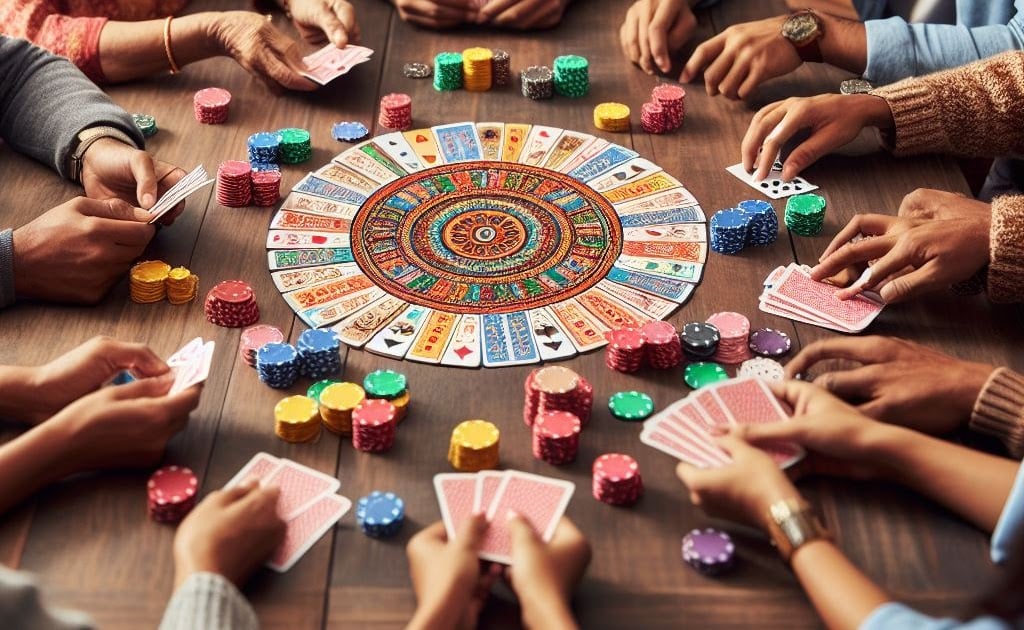
There’s something quietly addictive about matka games in India. Maybe it’s the suspense of waiting for the draw, the subtle thrill of guessing numbers, or just the way it brings people together in hushed corners, whispering strategies. Whatever it is, matka isn’t just a game; it’s a cultural heartbeat, a mix of human curiosity, intuition, and a fascination with luck that has survived decades of change. Even as online betting and mobile apps have taken over, the old-school charm of matka keeps pulling people back.
Among the variations of the game, matka 420 has its own reputation. It’s known in certain circles for being a riskier, faster-paced version of the game, one that attracts players who thrive on the thrill of unpredictability. The “420” tag isn’t just a number; it’s a symbol of daring and excitement, a little wink to those willing to flirt with chance. For many, it’s not just about winning money—it’s about the drama, the tension, and the stories that unfold with each draw. The players often describe it as a mix of strategy and instinct, a game where observation and intuition matter as much as luck.
The roots of matka are surprisingly humble. It began in the 1950s, originally as a way to bet on the opening and closing rates of cotton traded on the New York Cotton Exchange. From tracking cotton prices on paper, the practice evolved into drawing numbers from pots—or “matkas”—which gave the game its name. Over time, the game spread through cities across India, finding its way into neighborhoods, clubs, and eventually, into online spaces. Despite legal challenges, the game retained a charm and mystique that made it hard for people to resist.
What makes matka truly fascinating is its social dimension. It’s not just about playing alone or hoping for luck; it’s about learning, observing, and interacting. Experienced players mentor newcomers, sharing insights on patterns, strategies, and timing. Terms like “panna,” “jodi,” and “single” form a shared language, almost a secret code that brings players into a quiet, intimate community. And if you’ve ever watched a draw, you know the tension is palpable: the collective anticipation, the quick glances at slips, the subtle excitement when numbers begin to appear—it’s like watching a live mini-drama unfold.
For newcomers, it’s often the unpredictability that draws them in. But matka isn’t only about luck—it teaches patience, observation, and sometimes humility. The highs of winning are thrilling, but the losses carry lessons too: resilience, strategy, and understanding the subtle psychology of chance. Many players even treat the game as a meditation of sorts, a way to test their instincts and reactions, while being part of a centuries-old cultural tradition.
Then there’s the global appeal of indian matka . While rooted firmly in local culture, it has attracted attention beyond India, thanks in part to diaspora communities and online platforms. The game captures a unique combination of simplicity and depth: the mechanics are easy enough to understand, but the strategies, patterns, and traditions offer layers that keep even seasoned players engaged. In this sense, matka isn’t just gambling—it’s a bridge between culture, history, and the human love for prediction.
Modern technology has changed the landscape of matka without taking away its soul. Once, participating meant knowing someone, being in the right place at the right time, and understanding unwritten rules. Today, apps and websites allow wider access while retaining the thrill of chance. Yet, the essence remains—the tension before a draw, the communal reactions, and the subtle rituals that make the game feel alive. Even online, players still whisper about patterns, strategies, and the occasional lucky number, keeping the spirit of matka very much intact.
One of the most captivating aspects is how matka combines cultural tradition with human psychology. We are naturally drawn to patterns, risks, and anticipation. Matka condenses these instincts into a shared experience where every draw carries potential excitement, disappointment, and stories. The game subtly reminds us of life itself: full of uncertainty, fleeting opportunities, and moments that can swing unexpectedly. In this sense, matka becomes more than a pastime; it’s a reflection of human nature, risk, and hope.
Legally, matka remains a gray area, which has only enhanced its mystique. For many participants, the allure lies partly in the secrecy—the hushed voices, the insider tips, the careful calculation of risks. This isn’t mindless gambling; it’s a culture, a community, and a centuries-old tradition where trust, observation, and experience are as valuable as luck. In a way, it feels like joining a club where patience, intuition, and careful attention define success.
The generational connection is another fascinating dimension. Older players pass down knowledge, strategies, and stories from their own experiences, giving matka a sense of continuity. This oral tradition creates a living history, where every draw carries echoes of past games, near misses, and legendary wins. Young players entering this world find themselves part of something bigger—a bridge between the old and the new, a mix of nostalgia and innovation.
Matka’s appeal endures because it’s more than money; it’s about culture, social connection, suspense, and storytelling. Whether it’s the thrill of matka 420 or the steady fascination of classic draws, the game remains a living tradition. It teaches lessons in patience, risk, and intuition while offering small moments of joy and human connection that are hard to replicate elsewhere.