
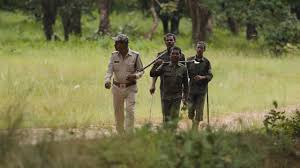
There’s something steady about a job that revolves around forests. Not flashy. Not loud. Just steady — like the trees themselves.
In a world where careers seem to shift every other year and private companies rise and fall faster than we can update our resumes, government jobs still hold a certain comfort. And among them, Forest Department roles carry a quiet dignity. You’re not just clocking in and out. You’re contributing to something that existed long before you — and hopefully will exist long after.
Every year, when recruitment notifications come out, you can almost feel the buzz in small towns and rural districts. Aspirants discussing eligibility criteria at tea stalls. Parents asking neighbors if they’ve heard the latest updates. Young candidates double-checking height requirements and physical test details.
It’s not just about employment. It’s about stability. Respect. And a career that feels… grounded.
Why Forest Department Jobs Continue to Matter
Let’s be honest — most people initially look at forest department recruitment for practical reasons. A government paycheck. Job security. Structured promotions. Retirement benefits. In uncertain times, those things aren’t small.
But once you dig a little deeper, you realize these jobs offer more than financial reassurance.
Working in the Van Vibhag means being involved in:
- Wildlife protection
- Forest conservation
- Anti-poaching patrols
- Monitoring illegal logging
- Assisting during forest fire emergencies
- Supporting plantation drives
It’s a blend of physical effort and responsibility. Some roles are heavily field-based. Others combine administrative work with on-ground supervision.
And then there’s the lifestyle. You’re often posted in semi-urban or rural areas. Fewer malls. More greenery. Less noise. More sky.
For some, that’s a drawback. For others, it’s the whole point.
The Growing Interest in Driver Posts
One role that doesn’t always get highlighted enough is the driver position within the Forest Department. At first glance, it may seem straightforward — driving official vehicles for patrols, transportation, or administrative work. But there’s more to it than simply holding a steering wheel.
When notifications for van vibhag driver Bharti are released, they attract strong interest because the eligibility criteria are often accessible. Typically, candidates need:
- A valid heavy or light vehicle driving license
- Basic educational qualification (varies by state)
- Driving experience
- Physical fitness
However, the responsibilities can be significant. Drivers may assist officers during patrols, help transport equipment, or support operations in challenging terrains — sometimes off-road, sometimes during emergencies.
Driving through forest paths isn’t like city commuting. It requires alertness, patience, and familiarity with rough terrain. A small mistake in dense forest areas can become a big problem quickly.
So yes, it’s a driver’s post — but it carries responsibility beyond the obvious.
Understanding the Recruitment Process
Forest department recruitment isn’t uniform across India. Each state releases its own notifications, with specific eligibility conditions and selection stages.
Generally, the process includes:
- Official notification release
- Online application submission
- Written examination (in many cases)
- Skill test or driving test (for driver posts)
- Physical standard verification
- Document verification
These days, most states conduct van vibhag bharti online through official portals. Candidates fill out forms digitally, upload documents, and track updates online.
That convenience is helpful — but it also means you need to be careful. Incorrect data entry, mismatched documents, or missed deadlines can cost you the opportunity.
It’s always wise to read the notification thoroughly instead of relying on social media summaries or forwarded messages.
Physical and Mental Readiness Matter
Forest department roles — including driver positions — often require physical standards. Height, chest measurement (for certain posts), endurance tests. Even drivers may need to meet specific fitness benchmarks depending on state guidelines.
But beyond physical criteria, there’s something less visible: mental resilience.
Forest jobs aren’t 9-to-5 office roles. Emergencies don’t follow calendars. A sudden wildfire, a wildlife rescue operation, or illegal logging activity can demand immediate action.
You may find yourself working long hours in unpredictable conditions. Remote postings can test patience. Connectivity might be limited. Comfort zones get stretched.
And yet, for many officers and staff, that unpredictability becomes part of the job’s charm.
Why Stability Still Wins
In recent years, private sector layoffs have made headlines. Startups shut down. Contracts end abruptly. The uncertainty can be exhausting.
Government roles, including those in the Forest Department, offer structured growth. Pay scales follow established frameworks. Promotions occur through defined processes. Benefits like medical facilities and retirement schemes add long-term reassurance.
For families — especially in smaller towns — this stability means everything.
It’s not unusual to see parents encouraging their children to prepare seriously for forest department exams. Not out of pressure, but out of hope for a steady future.
Preparation Tips That Actually Help
If you’re planning to apply, here’s some grounded advice — nothing fancy.
- Track official state forest department websites regularly.
- Read the entire recruitment notification carefully.
- For driver posts, practice vehicle handling in different terrains.
- Keep all documents updated and ready.
- Prepare for written exams by focusing on General Knowledge, basic mathematics, reasoning, and state-specific topics.
And perhaps most importantly — stay consistent. Preparation for government recruitment isn’t a sprint. It’s more of a long walk. Like a forest trail, actually. Slow but steady.
The Human Side of Forest Work
Sometimes we forget that behind recruitment notifications and application forms are real stories.
A forest guard who prevents illegal wood cutting. A driver who safely navigates through muddy tracks during a rescue operation. An officer coordinating fire control efforts under extreme heat.
These aren’t abstract roles. They’re people doing tangible work.
There’s pride in wearing that uniform. Pride in being part of environmental protection efforts. Pride in knowing your job contributes — however modestly — to preserving biodiversity.
It may not come with glamorous titles or air-conditioned offices. But it carries meaning.
A Career That Feels Rooted
Forest department recruitment isn’t about trends. It doesn’t spike because of viral videos or social media campaigns. It endures because the need endures.