
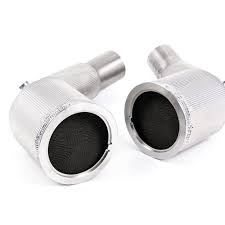
There’s a certain thrill that comes with owning a Mercedes AMG. It’s not just about raw speed or aggressive styling—it’s the feeling when you press the throttle and the engine responds like it’s alive, almost sentient. Cars like the Mercedes C63 W205 or the Mercedes A45S have that rare combination of sophistication and untamed power, but for enthusiasts, stock performance often leaves that nagging thought: “What if it could do more?” That’s where downpipes enter the conversation, quietly transforming an already impressive machine into something truly exhilarating.
Let’s start with the C63 W205. This beast of a sedan already has commanding presence, but upgrading the exhaust with mercedes c63 w205 catted and catless downpipes can make a surprisingly big difference. The technical side is simple enough: downpipes provide a more efficient path for exhaust gases to exit the turbochargers. Less restriction means faster spool, sharper throttle response, and that unmistakable growl that makes your chest tingle when you accelerate. But it’s more than numbers on a dyno sheet—it’s a sensory change. You feel the engine breathing differently, almost like it’s more aware of your inputs.
Choosing between catted and catless options is part of the fun, and it comes down to priorities. Catted downpipes retain some environmental compliance and keep emissions in check, while catless setups maximize airflow and performance at the cost of higher noise and emissions. For a lot of enthusiasts, that subtle rumble at idle and the raspy roar when the turbos spool fully are worth the tradeoff. The difference isn’t dramatic at first—it’s more like discovering an instrument in a song you hadn’t noticed—but once you feel it, you realize it changes the entire character of the car.
Installation isn’t necessarily trivial. The W205 has a tightly packed engine bay, and aftermarket downpipes require careful fitting. But the payoff? Undeniable. Everyday drives suddenly feel more engaging, highway runs become less mundane, and even simple merges feel like you’re in full control of a high-performance machine. And it’s not just about the sound; the car behaves more responsively. Turbo lag diminishes, power delivery feels smoother, and the connection between foot and engine strengthens. Suddenly, driving isn’t just commuting—it’s a dialogue with the car.
Switching gears to a slightly smaller but equally ferocious machine—the Mercedes A45S. Don’t let the hatchback shape fool you; this car is a pocket rocket. Installing a mercedes a45s decat downpipe completely changes the personality of the vehicle. With less restriction, the turbos spool faster, torque hits harder, and every throttle input feels more deliberate. Even on city streets, the exhaust note carries a sharpness that’s impossible to ignore, making each drive more engaging than stock configurations allow. It’s amazing how such a relatively simple modification can elevate the driving experience from good to unforgettable.
Beyond sound and throttle response, downpipes can also complement tuning upgrades. Many owners pair decat or aftermarket setups with ECU remaps to really unlock potential. On the A45S, this combination smooths out torque delivery, minimizes turbo lag, and ensures that acceleration feels almost telepathic. The car starts to anticipate your intentions in a way that feels natural, making spirited driving effortless and deeply satisfying. And for many, that’s where the true value lies—not just in raw horsepower, but in the emotional feedback of driving a car that communicates every nuance of performance.
There’s also a technical side that’s often overlooked. High-performance engines like the ones in the C63 W205 and A45S run hot, and removing restrictions in the exhaust can increase heat output. Premium downpipes often use stainless steel for durability and sometimes even ceramic coatings for better thermal management. This isn’t just about performance—it’s about protecting your engine and ensuring long-term reliability. And with catted options, you can often strike a balance between extracting more power and maintaining emissions compliance, which is especially useful if you still need to pass inspections or live in a region with strict environmental rules.
Sound, of course, is part of the allure. A stock Mercedes exhaust is already musical, but aftermarket downpipes unlock richer tones at lower RPMs and sharper, more aggressive notes at higher revs. The difference is subtle at first, but it’s something you notice every time you change gears or accelerate through a curve. Driving becomes immersive—you’re not just manipulating controls; you’re engaging with a performance symphony. And that’s the kind of emotional impact stock components rarely provide.
Even the psychological effect of these upgrades shouldn’t be underestimated. There’s something deeply satisfying about knowing your car is performing closer to its engineering limits. Each merge, every curve, every throttle tip-in feels more deliberate. It’s almost like the car itself becomes a partner in your driving experience rather than just a tool. That’s why many enthusiasts swear by downpipes: it’s not just performance; it’s an emotional upgrade that enriches the bond between driver and machine.
At the end of the day, upgrading your Mercedes with downpipes is about more than chasing stats or creating noise. It’s about reconnecting with the thrill of driving. Whether you’re carving corners in a C63 W205 with catted and catless downpipes, or enjoying the razor-sharp acceleration of an A45S with a decat downpipe, the difference is tangible. Every gear change, every acceleration, every cornering maneuver carries more engagement, more feedback, and more joy.