
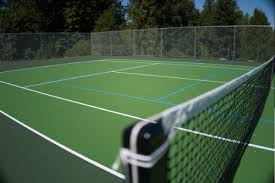
The best tennis courts don’t announce themselves. You don’t step onto them and think about engineering, materials, or budget decisions. You just play. The bounce feels honest. Your footing feels secure. You trust the surface enough to chase a tough ball without hesitation. And that quiet trust—that sense that the court is working with you instead of against you—isn’t accidental. It’s the result of dozens of choices made long before the first serve ever goes in.
Most people only notice a court when something feels off. A slick patch after rain. A crack that catches your shoe mid-rally. A bounce that refuses to behave. Suddenly, the court becomes part of the problem instead of fading into the background. That’s usually when the questions start. What went wrong? Was it the surface? The base? The shortcuts nobody knew were taken?
A tennis court is deceptively simple. A rectangle, some lines, a net. But simplicity on the surface hides complexity underneath. Every layer matters. Soil conditions. Drainage. Temperature swings. Even how the sun hits the court at different times of day can influence long-term performance. Ignore any one of these, and the court will eventually let you know.
One of the most important decisions happens early, often before anyone is thinking about color or line width. The choice of tennis court flooring sets the tone for everything that follows. It determines how the ball reacts, how players move, and how forgiving the surface is on joints over time. Hard courts can feel fast and crisp or slightly cushioned and controlled, depending on how the system is designed. Clay courts demand patience and care. Each option carries trade-offs, and none of them are wrong—just better suited to certain players, climates, and expectations.
What surprises many people is how similar courts can look on day one while being completely different experiences a few years later. A surface that was rushed or poorly layered might start strong but age badly. Fading, cracking, uneven texture—these things don’t show up immediately. They creep in slowly, usually after the warranty conversations are long over.
That’s why foundation work is the unsung hero of any good court. You never see it once the project is finished, but you feel it every time you play. Proper grading and drainage don’t earn compliments, but they prevent complaints. Water, after all, is patient. It finds weak spots. A court that doesn’t respect that reality will pay for it eventually.
There’s also the human side of the process, which often gets overlooked. Courts aren’t just built for professionals. They’re built for kids learning how to keep score, for early-morning retirees playing doubles, for competitive players grinding through drills in the heat. A good court meets all of them where they are. It doesn’t punish beginners or limit advanced players. It simply supports the game.
This is where thoughtful tennis court construction really shows its value. Experienced builders know when to slow down, when to wait for weather conditions to cooperate, and when a site needs extra preparation even if it stretches the timeline. They understand that rushing a surface because of a calendar deadline often costs more later—in repairs, resurfacing, and lost playing time.
Maintenance plays a role too, and it’s a conversation people like to postpone. Every court needs care. Lines fade. Surfaces wear. That’s not failure; it’s use. Courts that are planned with maintenance in mind tend to stay playable longer and feel more consistent year after year. The key is predictability. Scheduled upkeep beats emergency fixes every time.
Climate adds another layer of complexity. A court in a hot, dry region faces different challenges than one in a place with freeze-thaw cycles and heavy rain. Materials that thrive in one environment can struggle in another. That’s why copying a design from somewhere else doesn’t always work. Context matters more than trends.
I’ve noticed that players are incredibly sensitive to surfaces, even if they don’t talk about it directly. They’ll say a court feels “nice” or “tough on the knees” without knowing why. But they know. And they remember. Courts that feel good get used more. They become gathering places. Courts that feel unreliable slowly get avoided.
Budget discussions are unavoidable, and they can be uncomfortable. Everyone wants the best result without overspending. The mistake is assuming that the lowest upfront cost equals the best value. Often, it’s the opposite. Spending a bit more on preparation and quality materials usually pays off in longevity and lower long-term costs. The court doesn’t need to be extravagant. It just needs to be honest.
There’s also something quietly emotional about a well-made court. It becomes part of people’s routines and memories. First lessons. Friendly rivalries. Evening hits when the air cools and the light goes soft. A court that holds up over time becomes familiar, almost personal. You learn its quirks, but you trust it.