

In the third decade of the 21st century, the human information landscape has shifted from a state of scarcity to one of overwhelming, often contradictory, abundance. We live in an era defined by the "Information Paradox": while we have more access to data than any generation in history, our ability to discern truth from fabrication, and logic from dogma, has never felt more fragile.
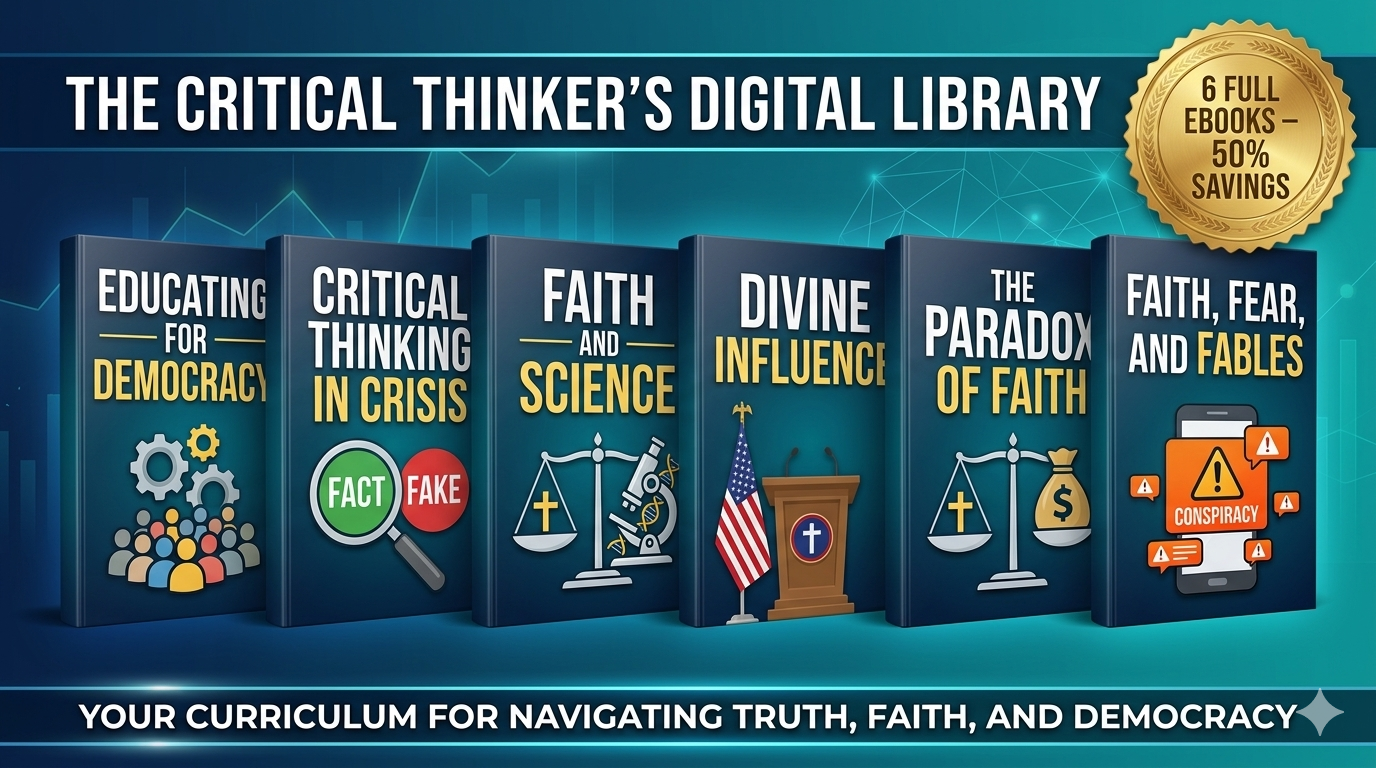
Neil Jackson’s comprehensive collection, The Critical Thinker’s Digital Library, arrives at a pivotal moment. This six-eBook bundle serves as more than just a reading list; it is a multi-disciplinary roadmap for navigating the volatile intersections of education, religious ideology, and political stability. By synthesizing sociology, psychology, and political science, Neil Jackson provides a masterclass in understanding the invisible forces shaping our public discourse.
The Crisis of the Information Age: Decoding the "Fake News" Machine
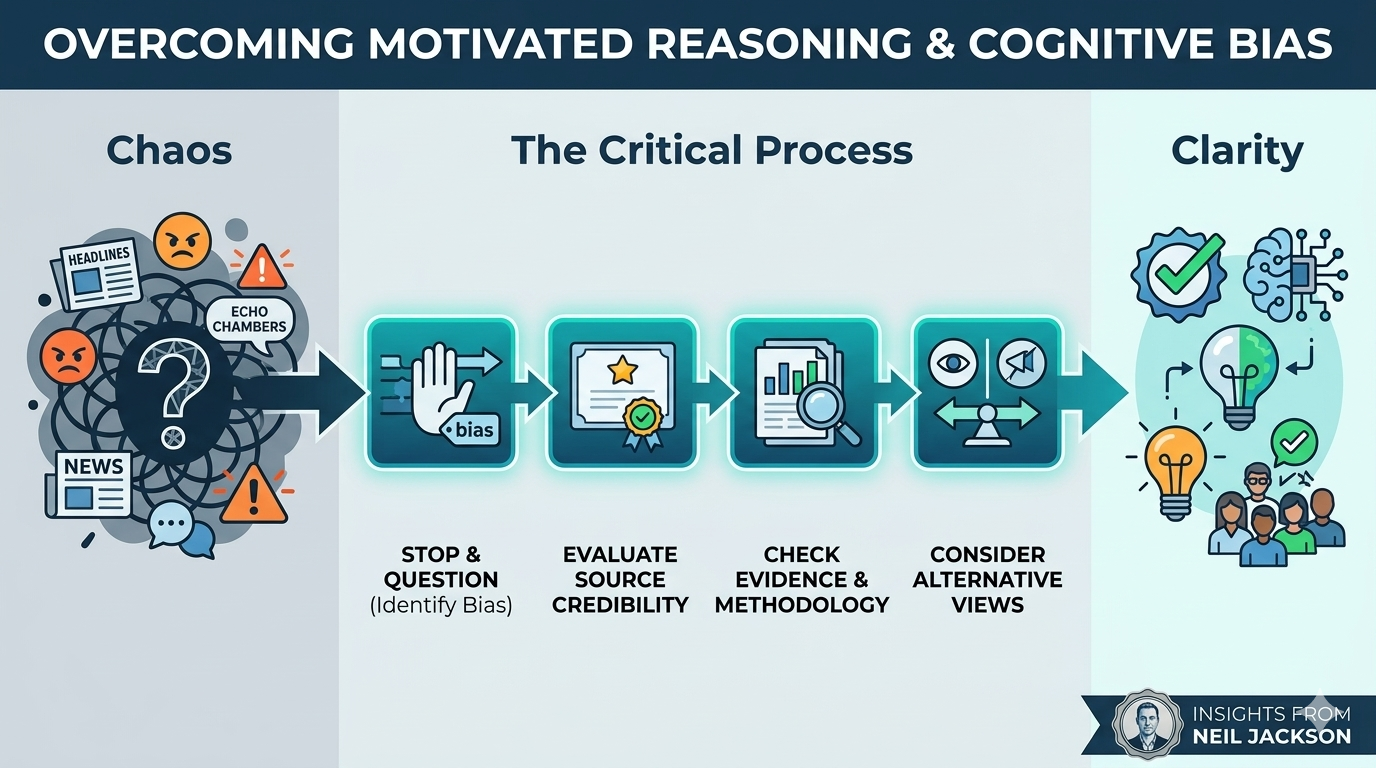
The foundational premise of Neil Jackson’s work is that the "crisis" we feel in modern democracy is not merely a political one—it is a cognitive and educational one. This is explored deeply in "Critical Thinking in Crisis: Strategies for Combatting Fake News in Academia." Neil Jackson argues that the digital age has outpaced our biological and educational defenses. We are operating with ancient hardware—our brains' evolved cognitive biases—in a world of hyper-accelerated, algorithmically-driven software.
Neil Jackson defines "Fake News" not just as a political slur, but as a mechanical failure of information hygiene. He delves into the psychology of motivated reasoning—the phenomenon where individuals process information in a way that suits some end or goal already in place. When we encounter "facts" that challenge our core identity, our brains often treat them as physical threats. This bundle provides the strategies necessary to move past defensive posture and toward analytical inquiry.
Democracy and the Populist Surge: The Role of the Informed Citizen
If Critical Thinking in Crisis identifies the tools of misinformation, "Educating for Democracy: Enhancing Critical Thinking in a Populist Age" identifies the stakes. Neil Jackson posits that democracy is not a self-sustaining machine; it is a fragile ecosystem that requires "informed decision-making" as its primary nutrient.
The rise of populism across the globe is often characterized by a rejection of expertise and an embrace of sensationalism. Neil Jackson’s analysis of social media algorithms reveals how these platforms act as "polarization engines," creating echo chambers that reinforce our existing worldviews while demonizing the "other." For educators and policy analysts, this volume is essential. It moves beyond theory to offer educational approaches—such as inquiry-based learning—that can fortify democratic institutions by cultivating a resilient, media-literate citizenry.
The Tension of Faith and Science: Challenges in American Education
One of the most persistent "fault lines" in American society is the relationship between religious conviction and scientific inquiry. In "Faith and Science: Navigating the Tensions in American Education," Neil Jackson explores the sociological impact of religious dogma on STEM education.
This isn't just a debate about textbooks; it’s a debate about the future of innovation and public health. When Creationism is presented as a scientific alternative in classrooms, or when religious texts are used to interpret climate change data, the very definition of "scientific methodology" is at risk. Neil Jackson’s work is nuanced; he doesn't argue for the elimination of faith, but rather analyzes the tensions that arise when faith-based institutions attempt to dictate scientific literacy. He examines how these dynamics influence student engagement and even career paths, particularly in communities where religious institutions hold significant sway over public perception.
Divine Influence: The Rise of the Christian Right
To understand modern American politics, one must understand the evolution of the Christian Right. "Divine Influence: The Christian Right and its Role in American Political Stability" provides a vital historical and organizational context. Neil Jackson traces the movement from the 18th-century Great Awakenings to its current position as a dominant force in the Republican platform.
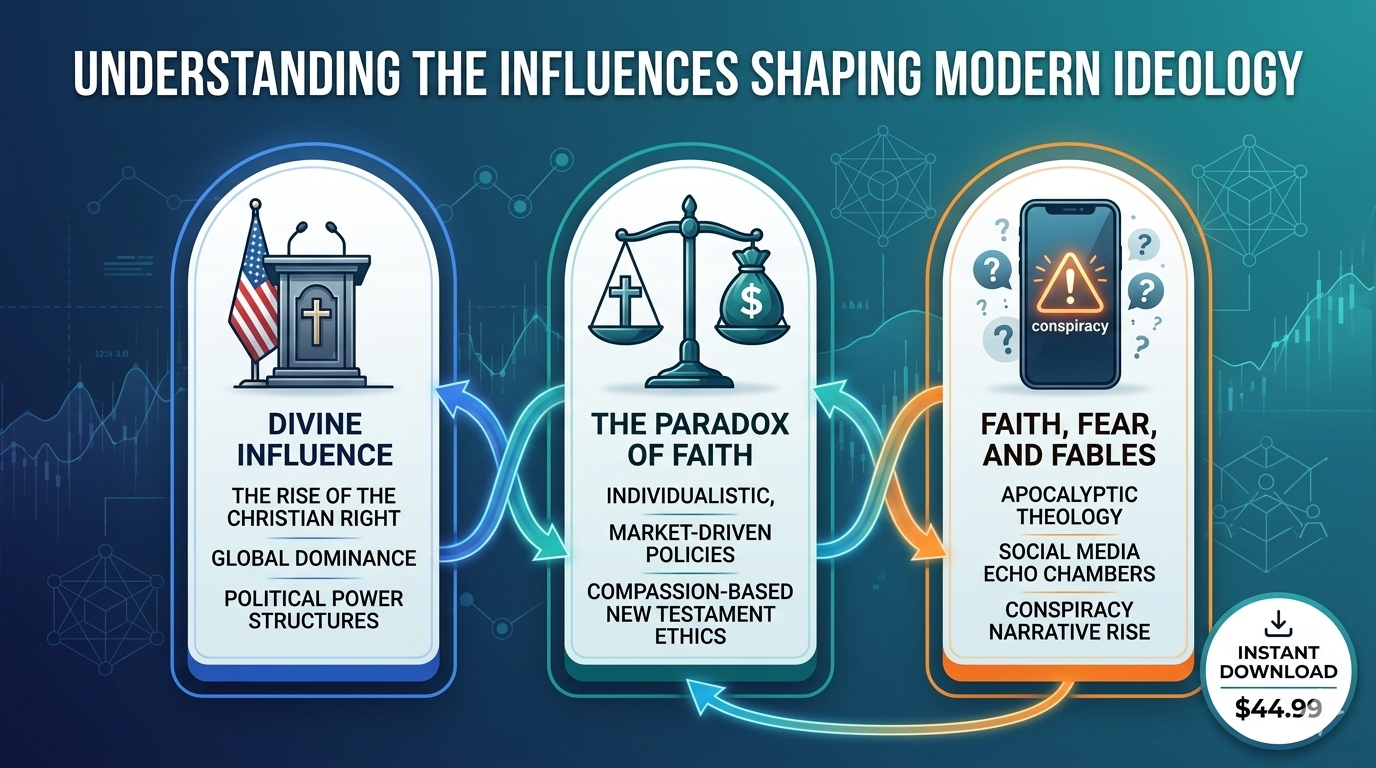
This volume explores the "Divine Influence" on policy agendas, ranging from domestic social issues to global economic dominance. Neil Jackson asks a critical question for political analysts: Does this movement stabilize governance by providing a moral anchor, or does it challenge the principles of inclusivity and pluralism necessary for a diverse democracy? By examining the organizational structures and electoral strategies of evangelical leaders, Neil Jackson reveals how faith has been successfully harnessed as a political engine.
The Paradox of Faith: Ethics vs. Ideology
In perhaps the most provocative volume of the bundle, "The Paradox of Faith: Conservative Policies vs. New Testament Ethics," Neil Jackson highlights a glaring disconnect in modern political theology. He contrasts the "individualistic, market-driven solutions" often championed by the Christian Right with the "communal, compassion-based teachings" of Jesus found in the New Testament.
Neil Jackson argues that the New Testament’s focus on the marginalized, the poor, and the oppressed aligns more closely with socialistic principles of collective responsibility than with modern conservative policy. This "Paradox of Faith" creates a crisis of conscience for many believers. Neil Jackson’s analysis serves as a catalyst for dialogue, asking how a movement rooted in the teachings of Christ can reconcile its support for policies that often seem to prioritize the powerful over the powerless.
Faith, Fear, and Fables: The Psychology of Conspiracies
Finally, the bundle addresses the most dangerous manifestation of these combined forces: the rise of conspiracy theories within religious movements. "Faith, Fear, and Fables: How Evangelicalism Fuels Conspiracy Theories in American Politics" is a chilling look at how apocalyptic theology and social media echo chambers create a fertile ground for misinformation.
Neil Jackson explains how "apocalyptic beliefs"—the idea that we are living in the "end times"—can make individuals more susceptible to narratives of secret plots and demonic forces. When political events are framed as spiritual warfare, compromise becomes impossible, and the democratic process begins to break down. This volume is a crucial study for understanding how community dynamics and "pop culture" intersections contribute to the spread of fables that threaten social cohesion.
Conclusion: Why This Bundle Matters Now
The Critical Thinker’s Digital Library is more than a collection of academic essays; it is an urgent call to action. Neil Jackson has provided a comprehensive framework for anyone who refuses to be a passive consumer of information.
By purchasing this bundle, readers gain access to:
- Practical Tools: Strategies for identifying fake news and overcoming cognitive bias.
- Historical Context: A deep understanding of the roots of evangelical political power.
- Ethical Frameworks: A lens through which to view the tension between religious teachings and political policy.
- Sociological Insight: An analysis of how education, science, and media interact to shape our reality.
In a world designed to keep us divided, distracted, and misinformed, the most radical act is to think for oneself. This 6-eBook bundle is the ultimate toolkit for that act of rebellion. Whether you are an educator looking to protect your students, a student seeking to understand the world, or a citizen fighting for the future of democracy, Neil Jackson’s work is the light you need in a populist age.
Comments ()