

Most creators think they need a $500 course to build a "real" digital business. They spend six months building in a vacuum, only to launch to total silence.
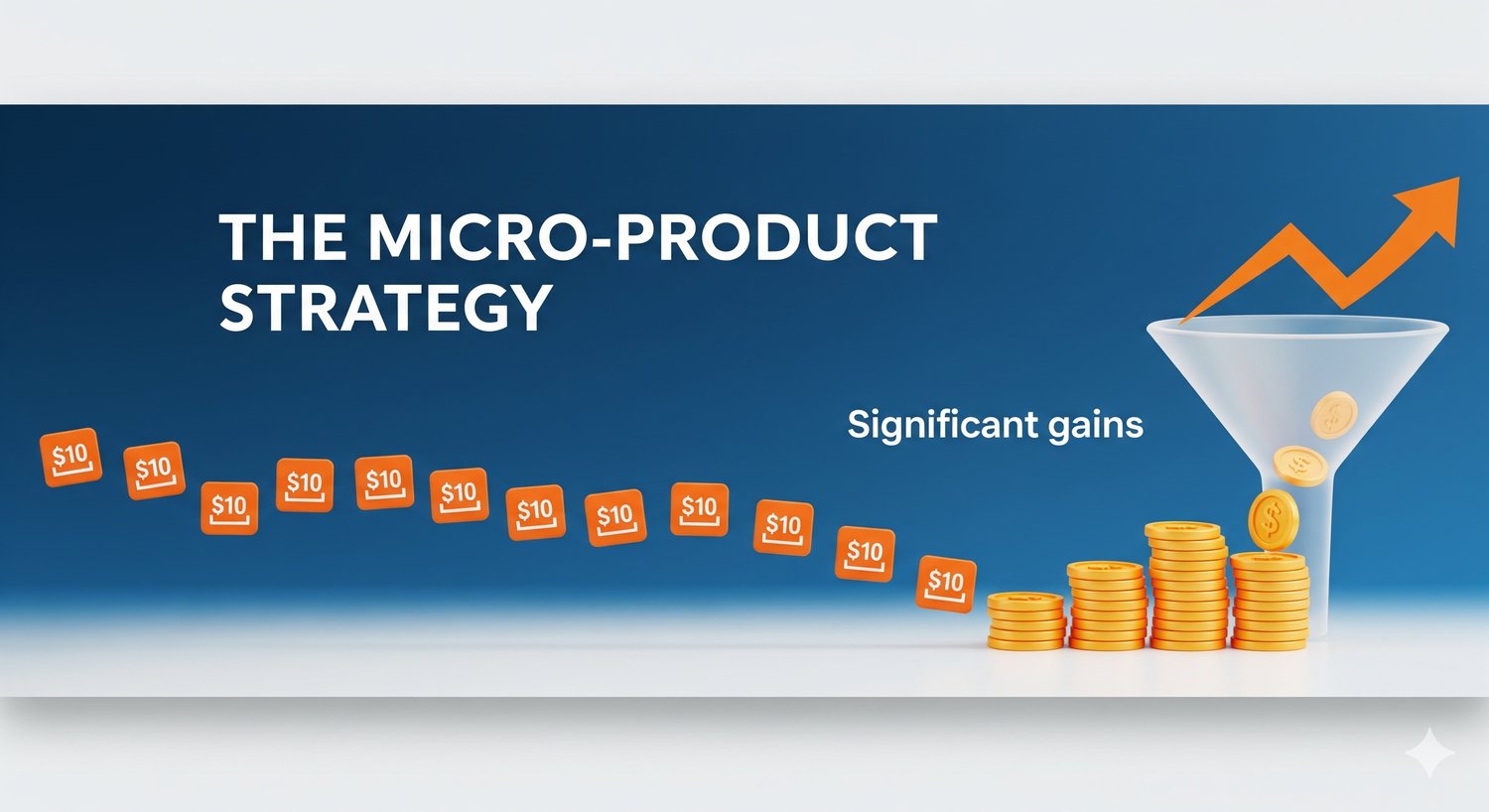
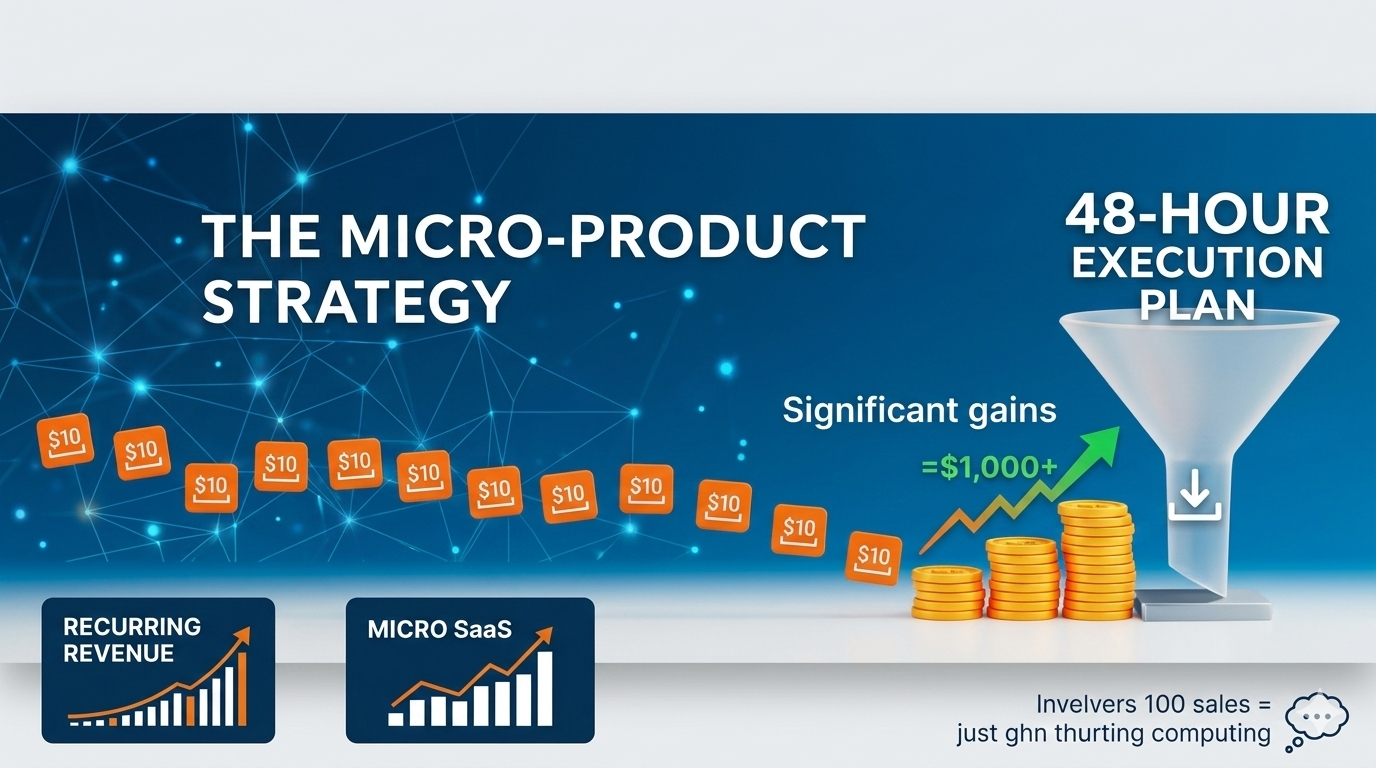
The Micro-Product Strategy flips the script. By focusing on high-value, low-friction $10 downloads, you lower the barrier to entry, build a massive customer list, and create a high-speed feeder system for your more advanced offerings, like Micro SaaS.
1. The Psychology of the "Impulse Buy"
At $10, the "friction to buy" is almost zero. A customer doesn't need to consult their spouse or check their savings account. If your product solves a specific, immediate problem, they will click "Buy" without a second thought.
- The Volume Game: Selling 100 units of a $10 product is often significantly easier than selling 2 units of a $500 product.
- Trust Building: A $10 customer is 10x more likely to buy from you again than a "freebie" seeker. They have crossed the "payment threshold," moving from a lead to a patron.
2. Identifying Your "Micro" Niche
A successful $10 product isn't a broad encyclopedia; it’s a surgical tool. You aren't teaching someone "How to be a Designer"; you are giving them the "10 Essential Social Media Templates for Tech Founders."
High-Converting Micro-Product Ideas:
- Templates: Budget trackers, Notion dashboards, or Canva sets.
- Checklists: An 85-point SEO audit or a "New Business" legal checklist.
- Mini-Guides: "How to Set Up Your PayHip Store in 20 Minutes."
3. The Math: How $10 Becomes $1,000+
Let’s look at the "Feeder Funnel" math:
- Direct Sales: 100 sales/month = $1,000.
- The Upsell: 10% of those buyers upgrade to a higher-tier product, like my Micro SaaS eBook.
- The Long Tail: Once these assets are on PayHip, they are indexed by Google. They become passive "digital real estate" that earns while you sleep.
4. From Digital Download to Micro SaaS
This is where the real "significant gains" happen. A $10 PDF is a great start, but it’s a static asset. As you sell these micro-products, you’ll start to notice patterns. You’ll see where your customers are getting stuck.
That "stuck point" is where your Micro SaaS idea is born. You are moving from providing information to providing a solution-oriented tool.
The Solo Founder’s Shortcut: If you find yourself thinking, "I wish there was a simple app that did this for me," you've found your Micro SaaS idea. But how do you go from a PDF to a functioning software business without a 50-person dev team?
That’s exactly what I cover in From Idea to Income: A Solo Founder’s Guide to Micro SaaS Success. It’s the logical next step for any creator who has mastered the $10 download and is ready for recurring, scalable wealth.
5. Your 48-Hour Execution Plan
- Hour 1-4: Identify a "Micro-Pain" your audience has.
- Hour 5-12: Create the solution (PDF, Template, or Guide).
- Hour 13-15: Set up your PayHip store and upload the asset.
- Hour 16+: Promote using the "Pattern Interrupt" social media strategy.
🙋 Frequently Asked Questions
Q: Can I really make a living selling $10 products? A: Absolutely. The key is volume and upselling. A $10 product is your "handshake" with a customer. Once they see the quality of your work, you’ve earned the trust required to sell them higher-ticket items.
Q: What is the difference between a Digital Download and a Micro SaaS? A: A digital download (like a PDF or Template) is a static asset. A Micro SaaS is a functional tool (like a specialized calculator or a Chrome extension) that solves a problem through automation. Moving from downloads to Micro SaaS is the best way to transition to recurring revenue.
Q: Is PayHip secure for selling digital files? A: Yes. PayHip uses encrypted download links that expire after a set number of uses. This prevents link-sharing and ensures your hard work stays protected.
Q: Do I need to be a "tech genius" to build a Micro SaaS? A: No. With today's no-code tools and AI-assisted coding, most solo founders can build a functional MVP in a weekend.
✍️ About the Author
I’m a Solo Founder obsessed with helping creators stop trading time for money. After launching dozens of digital products, I’ve refined the path from simple "Micro-Products" to sustainable "Micro SaaS" ecosystems.
Ready to scale? Grab the guide that started it all: From Idea to Income: A Solo Founder’s Guide to Micro SaaS Success. (Use code BLOG10 for a reader-exclusive discount!)
Comments ()