

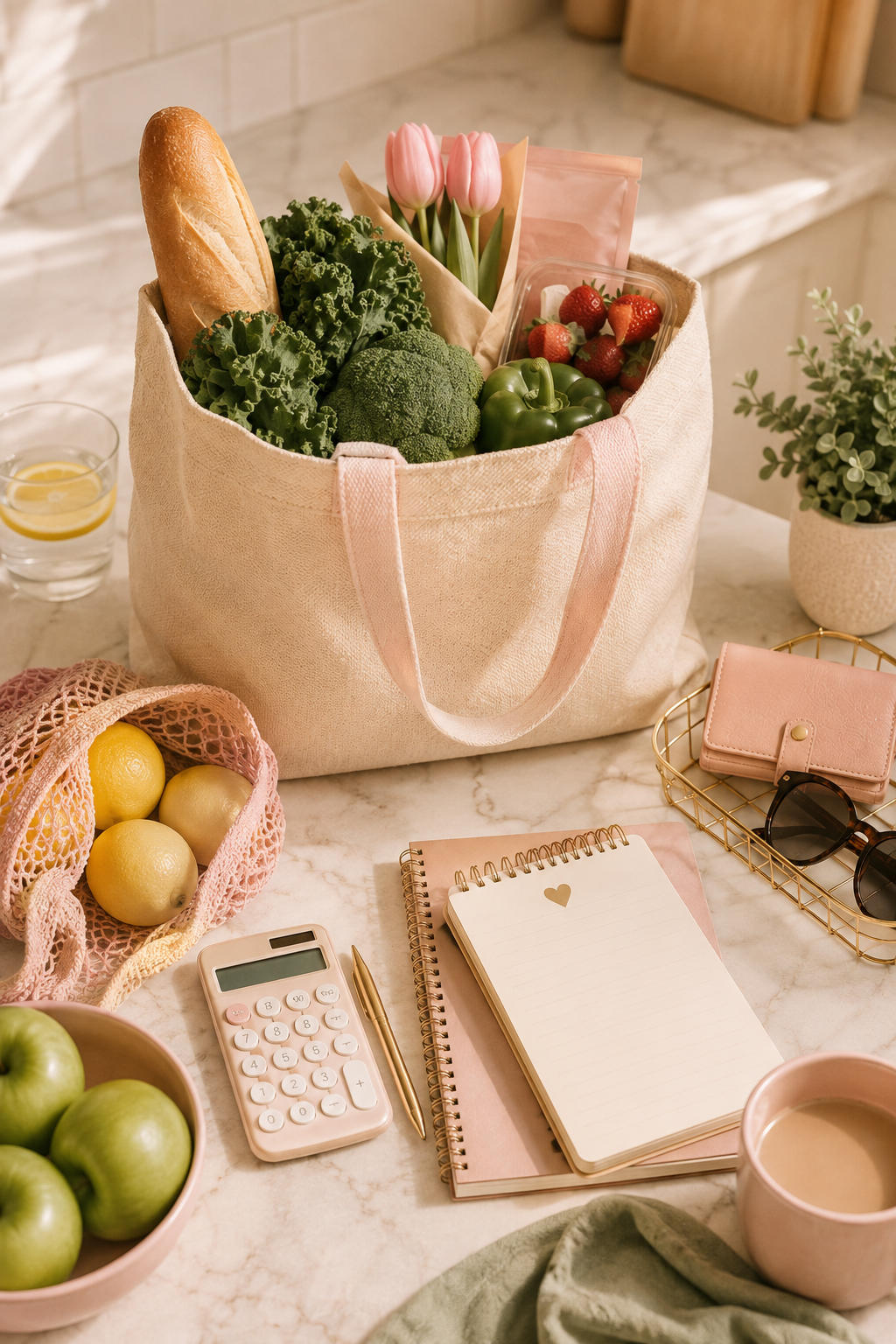
You walked in for milk, eggs, and chicken. You walked out $140 later, wondering how a "quick trip" turned into your entire Wants budget for the week.
If that sounds familiar, you're not bad at budgeting — grocery stores are quite literally designed to make you spend more than you planned. Eye-level placement, end-cap "deals," the bakery smell that hits you at the door — none of that is an accident. The good news: once you know the pattern, it's easy to outsmart.
Here's how to walk out with what you actually wanted, for less than you're paying now.
Why the Cart Fills Up Faster Than the List
Before the tips, it helps to know what you're up against. Grocery stores are laid out so that essentials — milk, eggs, bread — sit at the back, meaning you walk past everything else to get there. Impulse items live at checkout, at eye level, and on end caps labeled "sale" whether or not it actually is one. None of this is a coincidence, and none of it means you lack discipline. It means the store has a plan for your cart, and you need one too.
Before You Go: Set Yourself Up to Win
- Shop with a list — and stick to it. This sounds obvious, but the list is your entire defense system. Everything you buy that isn't on it is a decision made in the store, under pressure, usually hungry. Write the list before you're standing in the aisle.
- Eat something first. Shopping hungry doesn't just make you buy snacks — it makes everything look worth buying. A snack before you shop is one of the cheapest budgeting tools that exists.
- Check what you already have. A quick glance in your fridge and pantry before you shop prevents the classic "buy it again because I forgot I had it" purchase — and reminds you what needs used up before it goes to waste.
- Set a number before you walk in. Not a strict, stressful number — just a target. Knowing "I'm aiming for $90 today" changes how you shop far more than shopping with no number in mind at all.
In the Store: Small Habits That Add Up
Shop the perimeter first, center aisles second.
The outer edges of most stores hold the actual staples — produce, dairy, meat. The center aisles hold the processed, marked-up convenience items. Filling your cart from the perimeter first often means you're closer to your number before you even hit the "extras" aisles.
Compare unit price, not sticker price.
The bigger package isn't always the better deal, and the smaller one isn't always worse. Most price tags list a small "per ounce" or "per unit" number — that's the one that actually tells you which option saves you money.
Give yourself one "yes" item.
Total restriction is what makes grocery budgets collapse by week two. Let yourself pick one thing that's just for joy — a nice coffee, a treat, something not on the list — and budget for it on purpose. It keeps the whole trip from feeling like punishment.
Watch the register total as it climbs.
Most self-checkouts and registers show a running total. Glance at it. It's the easiest real-time gut check there is — no app, no math, just awareness.
Beyond the Store: Habits That Lower the Bill Long-Term
Plan meals around what's already on sale, not the other way around. Flip the usual order — check the sale flyer or app first, then build your meals from what's discounted that week.
Buy meat and staples in bulk when the price is genuinely good, and freeze what you won't use immediately. This turns a good sale into several future meals instead of just one.
Cook double, freeze half. When you're already cooking, doubling a recipe rarely doubles the effort — but it does hand your future self a ready-made meal instead of a $15 takeout order on a tired night.
This Week's Small Experiment
On your next trip, try just one thing: shop with a set number in mind and check the running total as you go. That's it. Notice how differently you shop when the number is visible the whole time instead of a surprise at checkout.
Keep Your Grocery Budget in the Bigger Picture
Groceries are one of the biggest swings in most people's monthly budget — which is exactly why it deserves its own space to plan and track, not just a guess each week. Inside the Monthly Money Blueprint, your grocery budget lives right alongside your other Variable Spending categories, so you can set a number, watch it in real time, and see exactly how it fits into your whole month.
Shop the Monthly Money Blueprint →
You don't have to choose between saving money and enjoying your groceries. You just need a plan before you walk in.
Small changes. Big freedom. ♡