

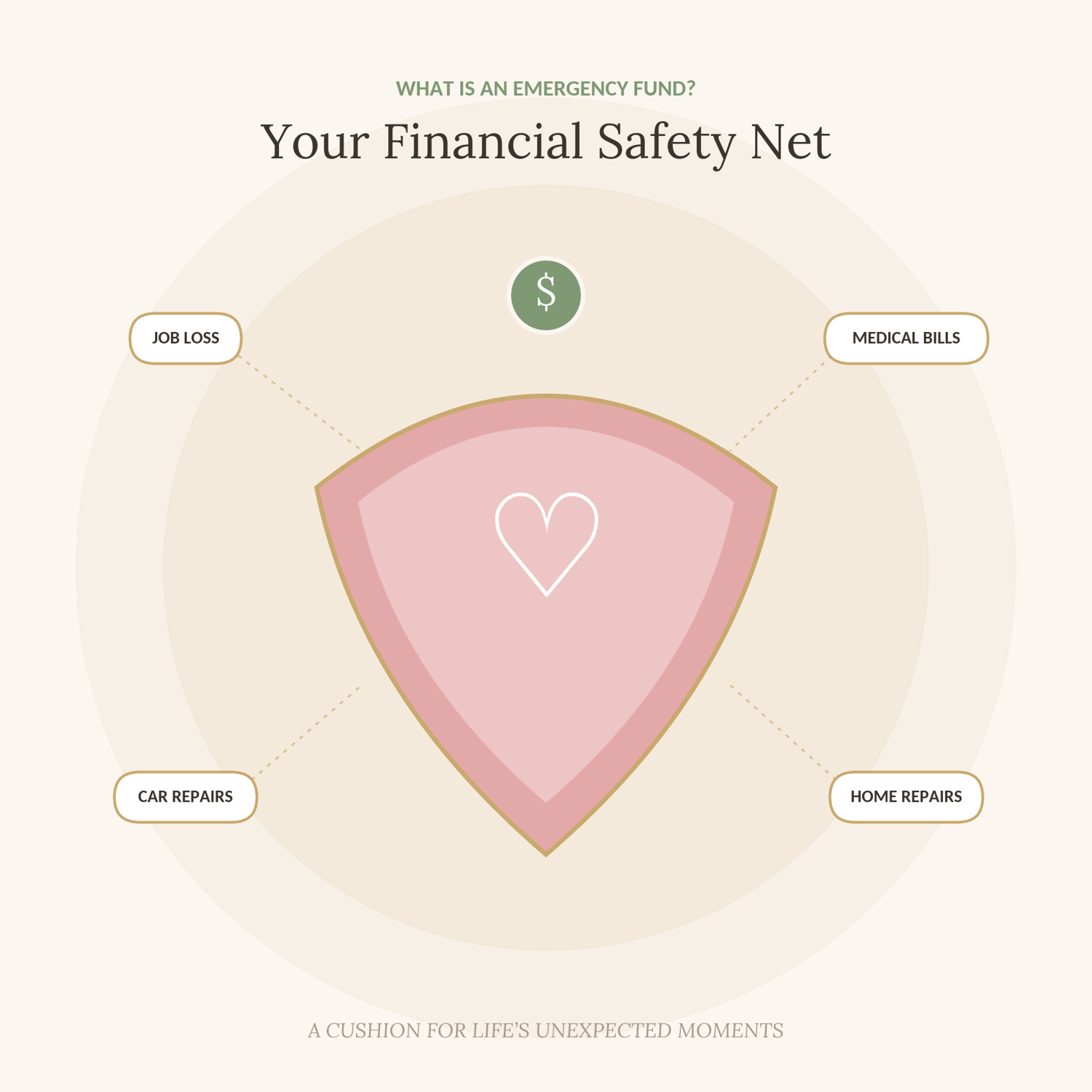
Before we talk numbers, let's clear something up: an emergency fund is not the same thing as your savings account.
Your savings might be earmarked for a vacation, a new couch, a down payment — goals you're excited about and planning toward. An emergency fund has exactly one job: to catch you when life doesn't go according to plan. A job loss. A car repair. A medical bill you didn't see coming. It's not for spending. It's for surviving the unexpected without derailing everything else you've built.
Once that distinction is clear, the next question makes a lot more sense: how much of it do you actually need?
What Counts as "An Emergency"
Not every unplanned expense qualifies — and knowing the difference protects your fund from slowly disappearing on things that aren't true emergencies.
Is an emergency:
- Job loss or a sudden drop in income
- A necessary car repair that affects your ability to get to work
- An unexpected medical or dental bill
- An urgent home repair (a broken water heater, a roof leak)
Is not an emergency:
- A sale you don't want to miss
- A gift you forgot to budget for
- Regular car maintenance you knew was coming
- Anything that was actually predictable, just not planned for
That second list matters as much as the first — if everything qualifies as an "emergency," your fund never gets the chance to actually protect you when a real one shows up.
Determining Your Number: Three Stages, Not One Big Leap
The number people hear most often is "three to six months of expenses" — and honestly, that's the right long-term target. But treating it as your starting point is exactly why so many women give up before they begin. Instead, build toward it in stages.
Stage 1: $500–$1,000 — Your Starter Fund
This is the number that matters most in your first few months. It's small enough to be genuinely achievable, and it's enough to absorb life's smaller surprises without reaching for a credit card.
Stage 2: One Month of Essential Expenses
Next, aim to cover one full month of your true needs — not your whole lifestyle, just the essentials: rent, groceries, utilities, transportation, insurance, minimum debt payments.
Stage 3: Three to Six Months of Essential Expenses
Your true long-term target. Where you land in that range depends on your life:
- Closer to 3 months if your income is steady and predictable, or you have a second income in your household.
- Closer to 6 months if your income is variable, commission-based, or you're your household's only earner.
Finding Your Real Number
To make Stage 3 concrete instead of scary, add up only your essential monthly expenses — rent, utilities, groceries, transportation, insurance, and minimum debt payments. Leave dining out, subscriptions, and shopping off this list entirely; an emergency fund covers survival, not your everyday lifestyle.
If that number comes to $2,200 a month, your full target range is $6,600 to $13,200. A big number, yes — but now it's your number, built from real math instead of a vague internet rule.
Where to Keep It
One more piece worth knowing: your emergency fund shouldn't live in the same account you spend from daily, and it generally shouldn't be invested where its value could drop right when you need it. A separate, easily accessible savings account is usually the right home — close enough to reach quickly, far enough that it's not tempting to dip into for everyday spending.
Progress Over Perfection
You don't need Stage 3 today. You don't even need Stage 2 today. What you need is to know your number, know your stage, and add to it consistently — because a fund that's growing, even slowly, is already doing exactly what it's meant to do.
Track Every Stage in One Place
Once you know your target, the hardest part is simply watching it build without losing momentum along the way. That's exactly you can add emergency savings inside the Monthly Money Blueprint planner — so you can watch your money accumulate right alongside your bills and spending, month after month.
Shop the Monthly Money Blueprint →
You don't need it all saved by Friday. You need a number, a stage, and one month of progress at a time.
A big part of financial freedom is having your heart and mind free from worry. ♡