
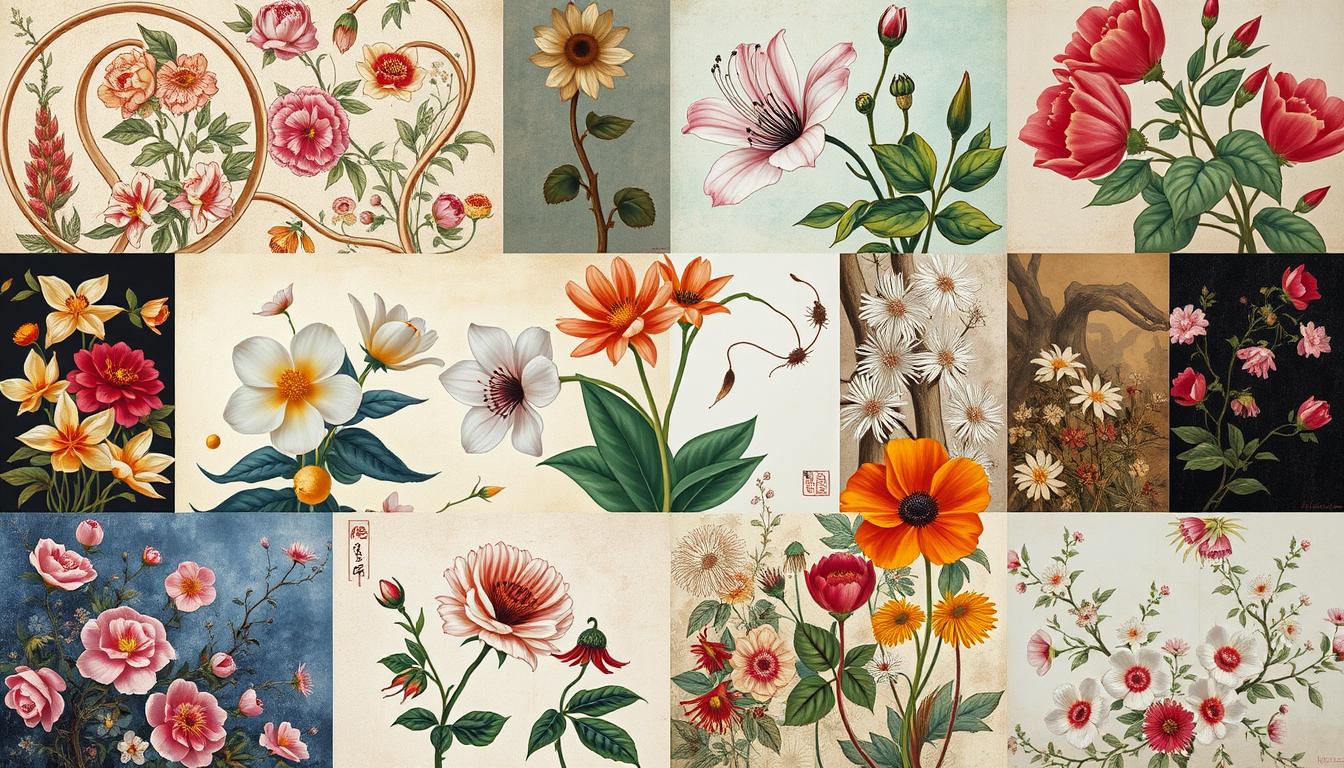
Flowers have always caught the eye of artists, leading to many works across different cultures and times. They bring beauty to paintings, sculptures, and more. This love for flowers has changed art history, affecting styles from realistic to abstract.
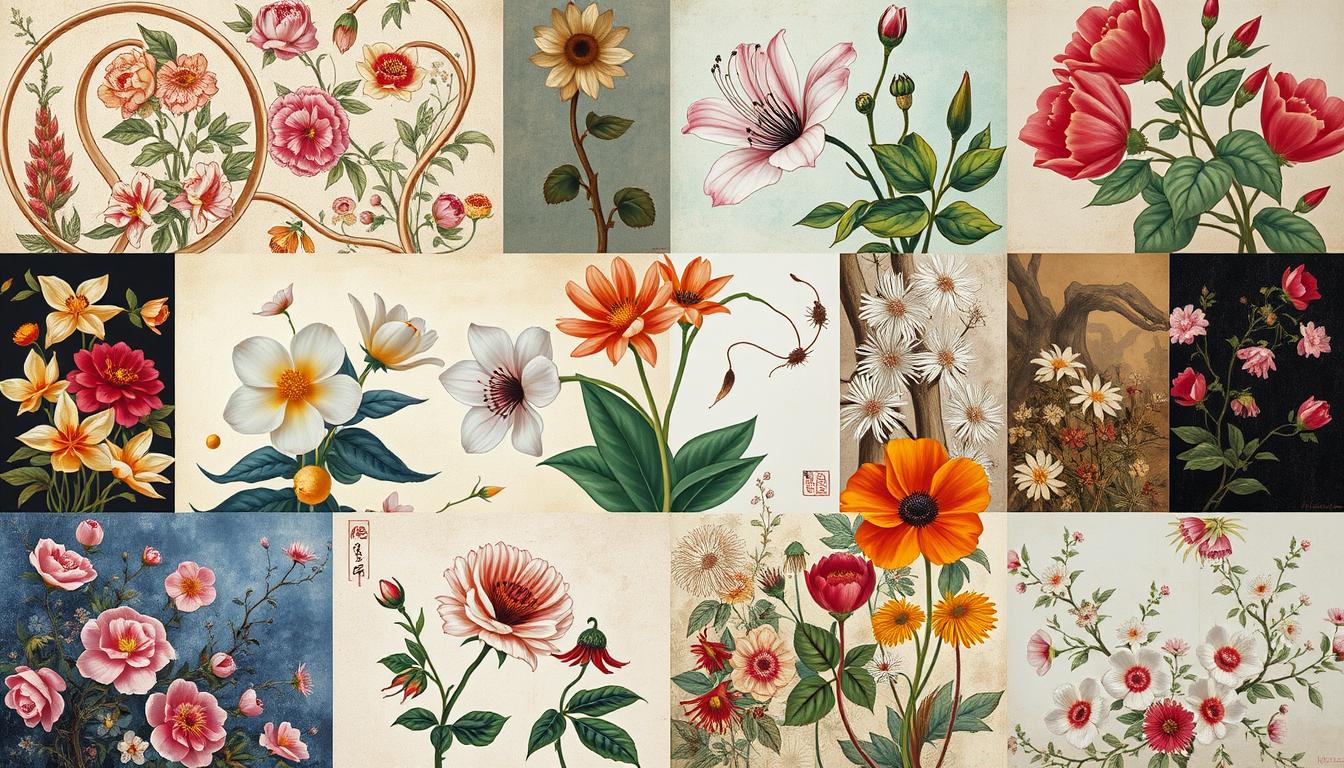
Artists have found special ways to show the beauty of flowers. Some focus on making flowers look real in still life paintings. Others use flowers to spark their imagination in new ways. This tradition of flower art keeps growing, with today's artists bringing new ideas to the table.
Let's dive into the world of floral art and see how flowers have influenced art over time. From old civilizations to today's art galleries, flowers keep inspiring artists. They remind us of nature's power to inspire and bring joy.
The Historical Significance of Floral Motifs in Artwork
Flowers have always caught the eye of artists, leaving a lasting impact on art history. From ancient times to the Renaissance, floral motifs have changed. They show how art styles and cultural values have shifted.
Ancient Floral Representations
Ancient art often used flowers in religious and decorative ways. Egyptian murals showed lotus flowers, while Greek vases had detailed floral patterns. These works started the long tradition of flowers in art.
Renaissance: A Blooming Interest
The Renaissance brought a new focus on nature and accurate botanical drawings. Artists like Leonardo da Vinci and Albrecht Dürer made detailed flower studies. They made flowers more than just decorations, making them subjects of art.
Renaissance paintings often used flowers with deep meanings. This added more depth to their art.
Cultural Significance of Flowers
Flowers in art have meant different things across cultures and times. In European still life, some flowers stood for virtues or vices. In Asian art, certain flowers shared complex ideas.
This deep history of floral symbolism still affects today's artists. It connects the past and present in art.
"Art is the unceasing effort to compete with the beauty of flowers - and never succeeding." - Gian Carlo Menotti
Famous Artists Known for Their Floral Masterpieces
Flowers have always inspired artists, leading to some of the most famous art pieces. Let's look at the works of famous painters who made a big impact on art.
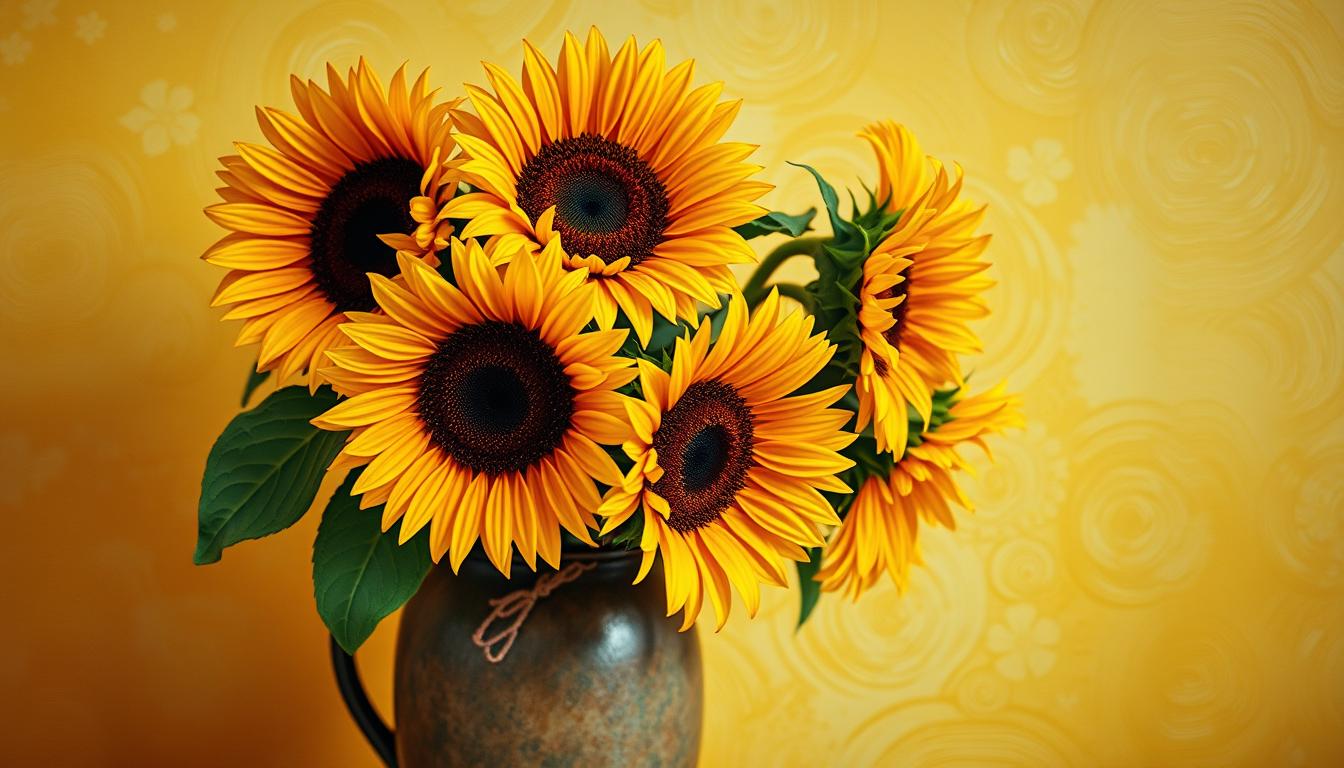
Vincent van Gogh's love for nature is clear in his sunflower series. These bright, yellow flowers seem to come alive, showing his unique style and deep feelings. His thick brushstrokes and bright colors make the paintings full of energy.
Georgia O'Keeffe's flowers are known for their big presence. She focuses on close-ups, showing details we often miss. Her use of soft colors and curves pulls us into the flower's center.
Claude Monet's water lilies show his skill with light and color. These paintings capture the play of light on water, creating a peaceful scene. Monet's impressionist style makes us feel like we're right there, enjoying nature's calm.
"I must have flowers, always, and always." - Claude Monet
Andy Warhol's flowers take a bold, pop art approach. His daisies in bright, unnatural colors challenge the usual flower art. Warhol's use of patterns and flat colors makes a strong visual statement, mixing commercial design with fine art.
Techniques and Mediums Used to Capture Floral Beauty
Artists use many methods to make flowers come alive on canvas. Each method has its own way to show the beauty of petals and stems.
Capturing the Luminosity of Petals
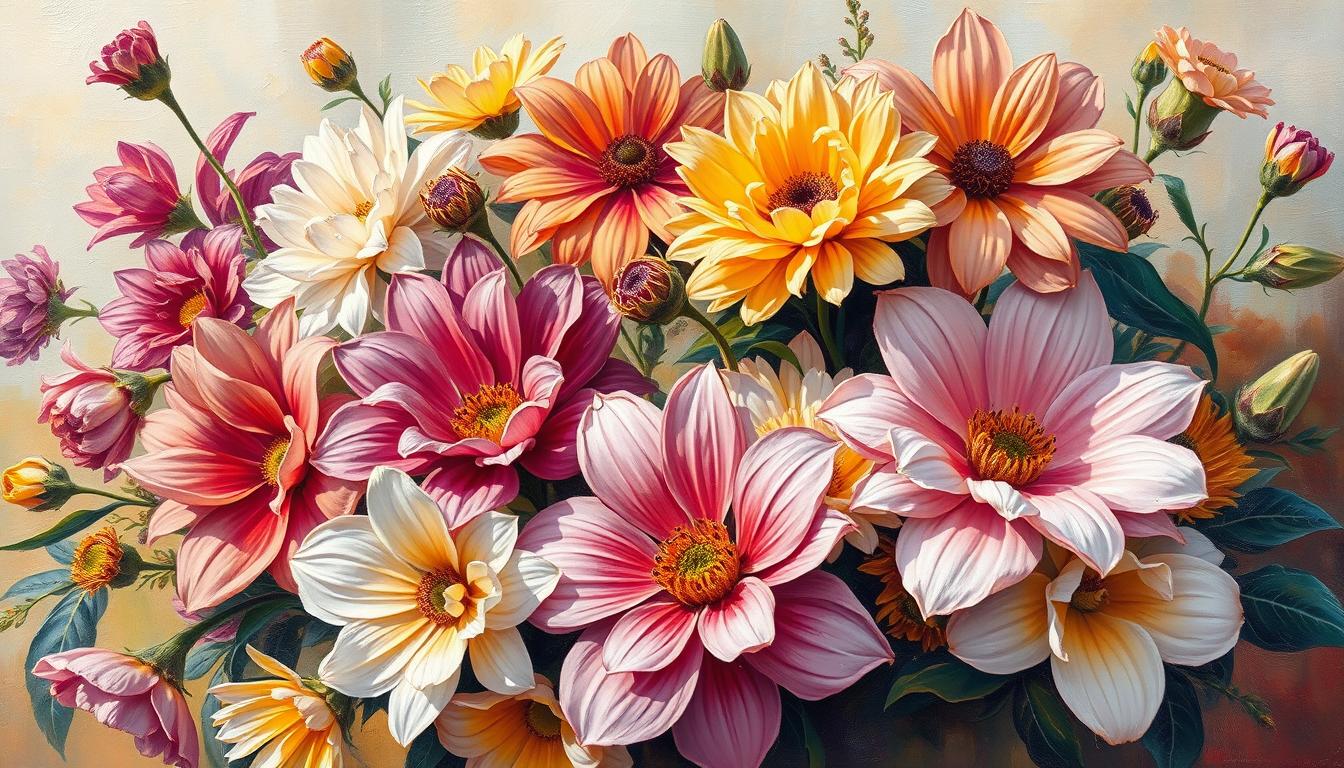
Oil painting is great at showing the bright colors of flower petals. Artists layer colors to add depth and brightness. The slow drying of oils lets them blend colors and create textures that look like real petals.
Embracing Delicate Nature
Watercolor florals show the fleeting beauty of flowers. This method uses fluid paint for soft colors and details. Artists blend wet paint to make dreamy backgrounds that make the flowers look even more delicate.
Creating Textured Floral Compositions
Mixed media art lets artists play with texture in their flower art. They mix paint with things like fabric or natural materials for added depth. This way, they can try new things and show flowers in unique ways.
"Flowers are the music of the ground. From earth's lips spoken without sound." - Edwin Curran
Artists use oils, watercolors, or mixed media to capture flower beauty. Each method has its own way to show the beauty and complexity of nature's flowers.
Flowers in Art: From Still Life to Abstract Interpretations
The world of floral art has grown from traditional still life paintings to bold abstract art. Artists love flowers for their beauty. They use them to show color, form, and emotion.
Still life paintings with flowers have been popular for centuries. They show the beauty of petals, stems, and leaves. These paintings symbolize life's shortness. Now, contemporary flower art goes beyond tradition, trying new styles and perspectives.
Abstract floral art moves away from showing flowers as they really are. It focuses on the feeling of flowers, not just how they look. Artists use bright colors, shapes, and new materials. This creates pieces that make us feel the spirit of flowers.
Art is not what you see, but what you make others see.
This quote by Edgar Degas shows what modern floral art is about. Today's artists make amazing floral installations. These works change spaces and make us see flowers in new ways. They mix art and nature, showing us what floral art can be.
The Influence of Botanical Illustrations on Floral Art
Botanical illustrations mix science with art. They change how we view and value plants in science and art.
Scientific Accuracy Meets Artistic Expression
Botanical artists make detailed drawings of plants. They show every part, from petals to roots. These pieces help scientists and inspire other artists.
Artists like Maria Sibylla Merian changed botanical art in the 17th century. Her work set new standards for accuracy and beauty.
Modern Botanical Art's Appeal
Botanical illustration is still loved today. Artists blend traditional and new tech to create beautiful plant art. This mix keeps botanical art exciting.
"Botanical art captures the essence of nature's beauty with scientific precision."
Now, botanical artists focus on rare or endangered plants. Their work teaches us about plant conservation. It shows how art can educate and inspire us to protect nature.
Exploring the Emotional Impact of Floral Artwork
Floral artwork has a special way of touching our feelings. It uses vibrant colors and the beauty of flowers to make us feel different emotions. This is why it's often used in art therapy.
Color psychology is key in how we feel about floral art. Warm colors like reds and oranges make us feel passionate and full of energy. Cool colors like blues and purples make us feel calm and peaceful. Artists pick their colors to make certain feelings in their art.
Flowers also have special meanings in art. Different flowers mean different things in different cultures. For example, roses stand for love and passion, while lilies mean purity and new beginnings.
"Art washes away from the soul the dust of everyday life." - Pablo Picasso
Art therapy is now recognizing the benefits of floral art. Looking at or making floral art can lower stress, make us feel better, and help with emotional healing. Looking at the details of flowers can be calming. It lets us forget our troubles and enjoy nature's beauty.
Contemporary Trends in Floral Art and Photography
Today's floral artists are bursting with new ideas. Digital floral art has brought fresh ways to make beautiful botanical images. Artists blend photos and drawings with software, creating unique pieces that grab our attention. This blend of technology and nature is changing how we view flower art.
Floral photography is also on the rise. Photographers are finding new angles to capture the beauty of flowers. They experiment with light, focus, and color to show the intricate details of petals and stems. Some even use special lenses to reveal the tiny details of blooms.
Eco-art is a big trend in the floral world. Artists use natural materials to create art that's good for the planet. They work with real flowers, leaves, and branches. These pieces often change over time, just like nature does. It's a way to show us the beauty and fragility of our planet.
Sustainable floristry is another exciting area. Florists create art with locally grown flowers and plants that don't need much water. They avoid foam and plastic, choosing eco-friendly options instead. This trend shows how art can be both beautiful and kind to the earth.