
Why Preventing Problems Is No Longer Enough
Most eCommerce systems are built around one goal:
Prevent problems before they happen.
Stores focus on:
- improving workflows
- reducing delays
- fixing bottlenecks
- minimizing refunds and chargebacks
And this works up to a point.
But as operations grow more complex, something becomes clear:
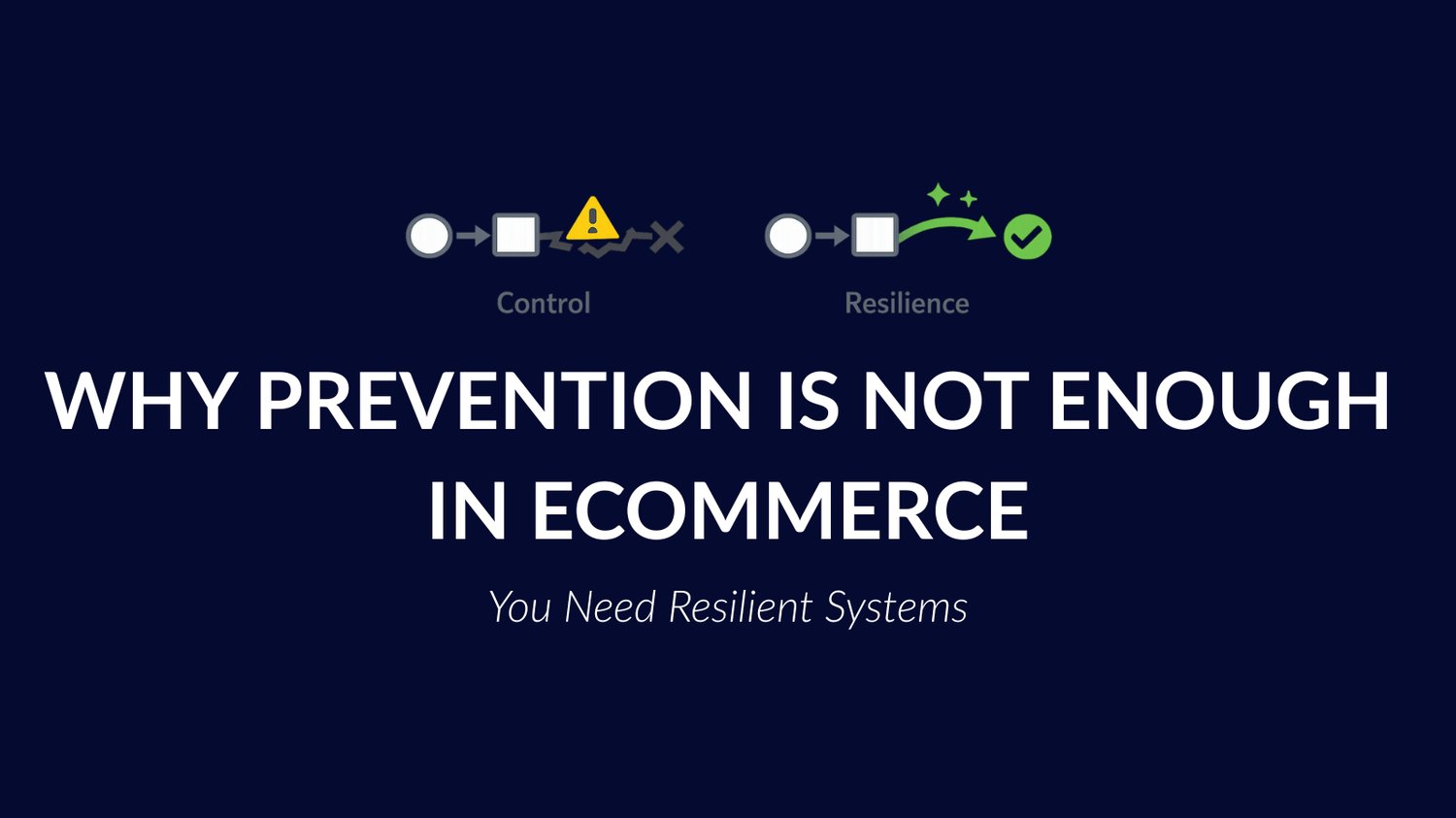
Prevention alone is not enough.
Even well-structured systems experience:
- sudden delays
- supplier issues
- fulfillment disruptions
- unexpected demand spikes
The question is no longer just:
“How do we avoid problems?”
It becomes:
“How fast can we recover when problems happen?”
If your store is operating around 10–30 orders daily, you’re entering the stage where disruptions become more visible. This is where resilience starts to matter—not just control.
Download the Free Shopify Fulfillment Risk Audit
Before building resilience, you need to understand where your current system is vulnerable. This audit helps identify hidden risks across your fulfillment workflow.
👉 Download the free checklist here: Free Shopify Fulfillment Risk Audit
The Limits of Control in eCommerce Operations
In earlier stages, improving control solves most issues.
Stores running on platforms like Shopify or marketplaces such as eBay often fix problems by:
- standardizing processes
- improving inventory synchronization
- tightening fulfillment workflows
- strengthening documentation
These changes reduce:
- errors
- delays
- inconsistencies
But they do not eliminate risk entirely.
Because not all disruptions are predictable.
When Systems Still Break
Even strong systems face situations like:
- sudden supplier stockouts
- shipping carrier delays
- unexpected spikes in order volume
- integration or system failures
These events expose a critical gap:
Most systems are designed for efficiency, not recovery.
When systems fail mid-process, the issue is rarely the start or end—but the gaps in between (see → Fulfillment System Failures in eCommerce ).
The Shift From Prevention to Resilience
This is where operational thinking needs to evolve.
Instead of focusing only on:
- preventing delays
- avoiding errors
- reducing variability
High-performing stores also focus on:
- recovering quickly from disruptions
- maintaining continuity under stress
- minimizing long-term impact
This capability is called:
Operational Resilience
Download the Free Shopify Fulfillment Risk Audit
Many resilience issues start as small operational gaps—delays, inconsistencies, or weak workflows. This checklist helps you identify those gaps before they turn into disruptions.
👉 Get the audit here: Free Shopify Fulfillment Risk Audit
What Is Operational Resilience in eCommerce?
Operational resilience is the ability of a system to:
- continue functioning during disruptions
- recover quickly after failures
- maintain consistency under pressure
It is not about eliminating problems.
It is about absorbing and adapting to them.
Why Resilience Matters More as You Scale
As order volume increases:
- small issues affect more customers
- delays compound faster
- recovery becomes more complex
This creates a new challenge:
Even efficient systems become fragile under stress.
That’s why scaling (as discussed earlier) often leads to breakdowns.
Resilience ensures that when systems are stressed:
- they don’t collapse
- they recover faster
- they stabilize quickly
The Difference Between Efficient and Resilient Systems
Efficient systems:
- optimized for speed
- minimize cost
- reduce variability
Resilient systems:
- tolerate disruptions
- adapt to change
- recover quickly
The strongest operations combine both.
How Resilience Shows Up in Real Operations
In practice, resilient systems include:
- backup fulfillment options
- alternative suppliers
- flexible workflows
- clear recovery processes
These systems don’t just operate well, they bounce back quickly.
Connecting This to Your Current System
Up to this point, your system likely focuses on:
- risk identification
- workflow control
- cost efficiency
- dispute prevention
Resilience builds on top of that.
It ensures that when those systems fail or are pushed beyond limits, you still maintain control.
Download the Free Shopify Fulfillment Risk Audit
Start by identifying where your current fulfillment system is vulnerable before building resilience on top of it.
👉 Access the free checklist here: Free Shopify Fulfillment Risk Audit
What Comes Next
In the next guides, we’ll break down how resilience is actually built into eCommerce operations:
- what happens when fulfillment systems fail
- how recovery workflows are designed
- how to reduce disruption impact
- how resilient systems scale without breaking
Because in modern eCommerce:
It’s not just about preventing problems.
It’s about staying operational when they happen.
 About the Author
I work with eCommerce sellers to identify and fix fulfillment system gaps—especially for stores handling 10–30 orders per day where operations start to break under pressure.
My focus is on building structured systems that not only prevent issues, but also recover quickly when disruptions happen.
If your store is experiencing operational issues:
👉 Download the free fulfillment audit: Free Shopify Fulfillment Risk Audit
📢 Share This
Found this useful? Share it with other store owners:
Comments ()