
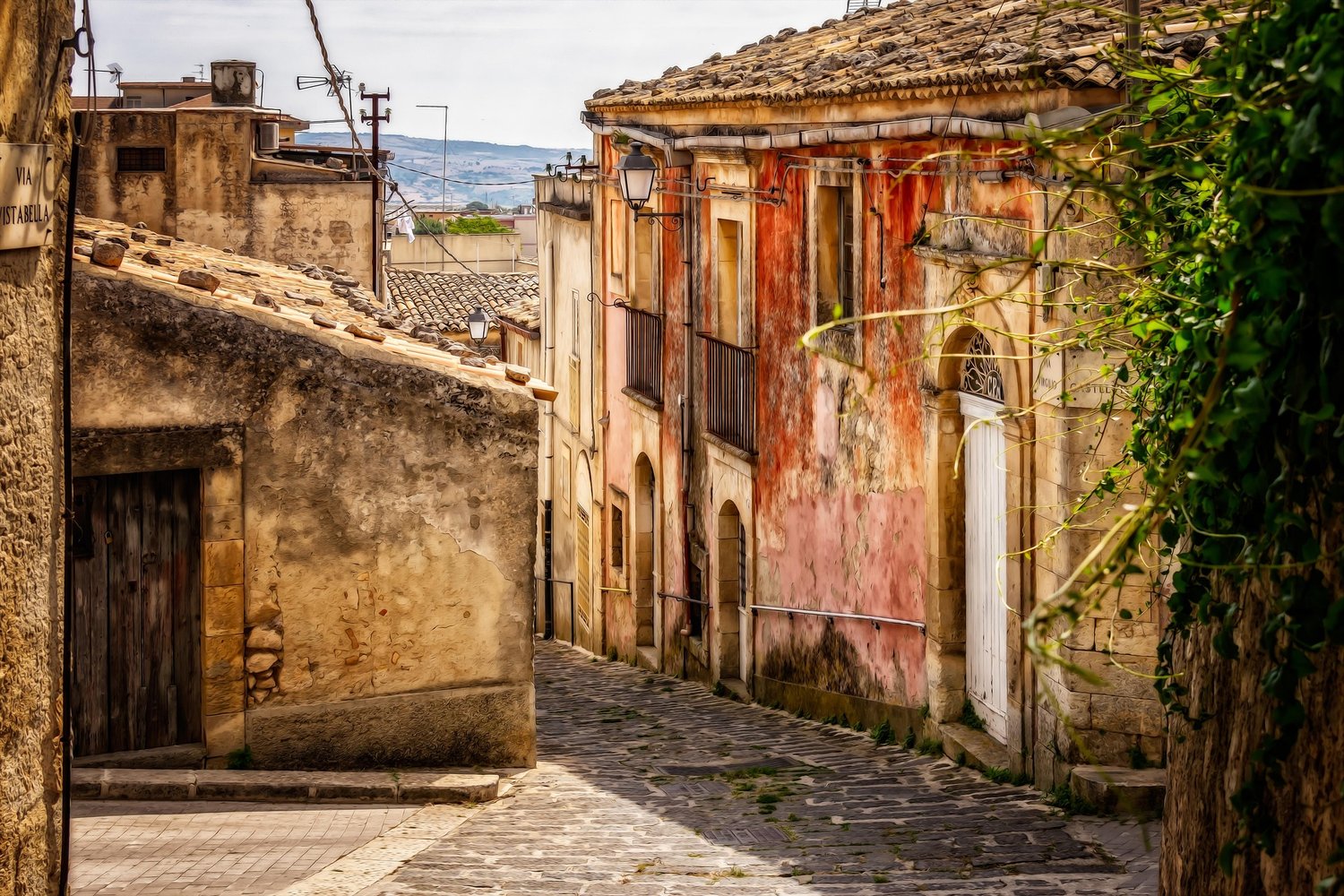
I often talk with my father-in-law about the past. He sometimes tells me about poverty in Southern Italy after the Second World War. In the countryside men and women would leave home before dawn to work the land, children walk several miles to school, and mothers prepare meals for large families with only a few basic ingredients.
For those who did not experience those years, it can be difficult to imagine daily life without many of the comforts we now take for granted. In many parts of Southern Italy, homes had no running water, heating came from a fireplace or a wood-burning stove, and electricity was not always available. I still remember visiting houses as a child where wood-burning stoves were used not only for heating but also for cooking.
The war had left Italy with serious economic problems. Employment opportunities were limited, and agriculture remained the main source of income in much of the South. The agricultural calendar shaped everyday life: sowing, harvesting, the grape and olive harvest determined the rhythm of the year. The work was physically demanding and rarely provided financial security, but it supported many families.
Children also contributed to family life. When they were able to attend school regularly, they often spent the rest of the day helping in the fields, caring for animals, or doing household chores. Their games required imagination rather than money. A ball made from old rags, a race through the streets, or an improvised football match was often enough. Education was not equally accessible to everyone. Many children left school early because their families depended on their work, while others walked long distances every day to continue to go to school. For many parents, education represented the possibility of a different future for their children. In the decades that followed, many young people left Southern Italy in search of work in northern Italy or abroad. For many families, migration was an economic necessity rather than a personal choice.
Community life played an important role. People knew one another, shared tools, food, and helped neighbours when needed. Religious festivals, local celebrations, and family gatherings offered opportunities to spend time together despite the difficulties of everyday life. I appreciate the resilience, solidarity, and dignity with which many people faced one of the most complex periods in Italian history. which remind me that progress stems not only from economic development, but also from the capacity of communities to support one another.
Comments ()