
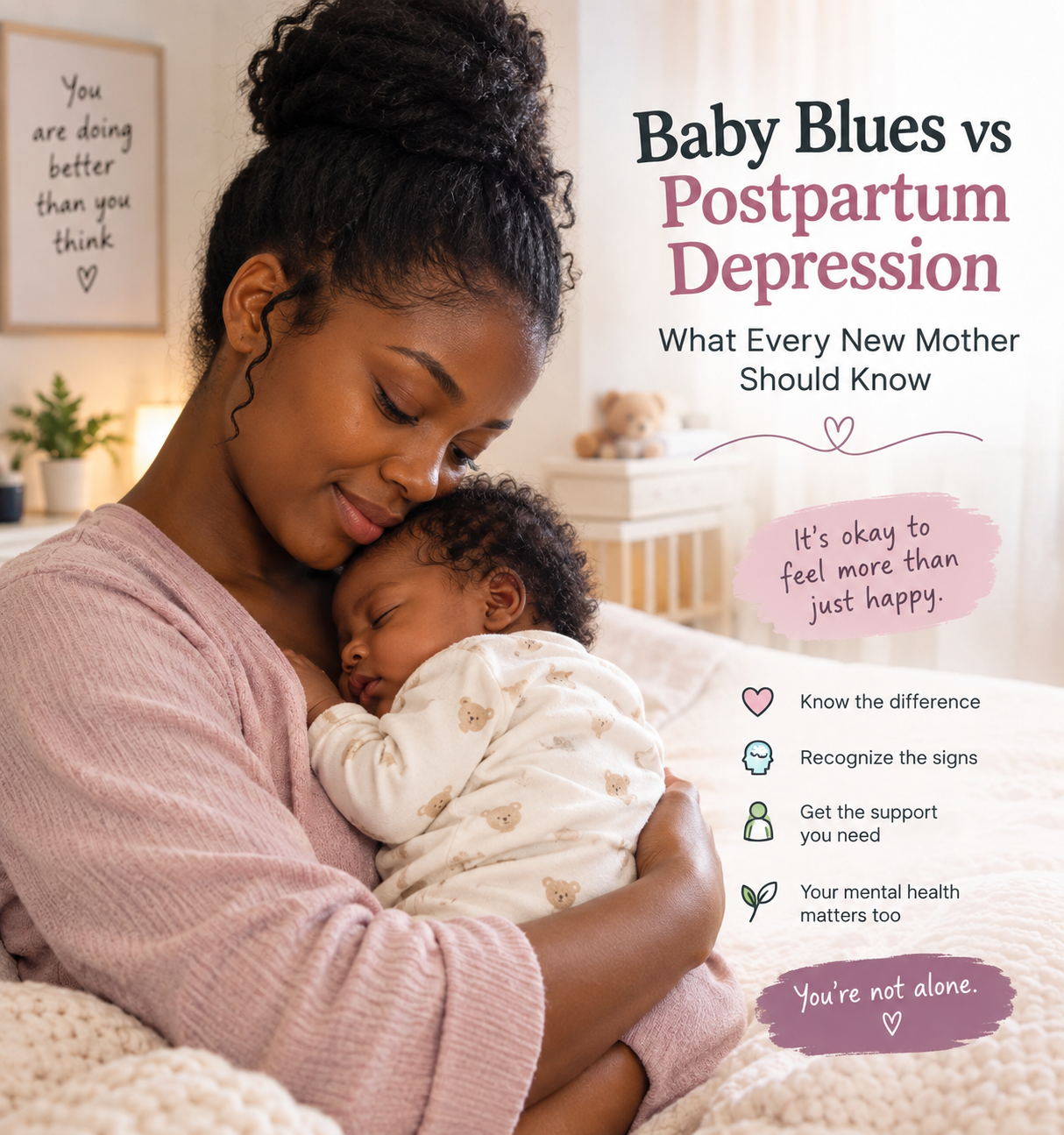
Having a baby can bring happiness, excitement, love and also unexpected emotional changes. Many new mothers experience mood changes after giving birth, but not every emotional struggle is simply “part of being a new mom.”
Two terms you may hear are baby blues and postpartum depression (PPD). Although they can have some similar symptoms, they are not the same. Understanding the difference can help a new mother recognize when she may need additional support.
What Are the Baby Blues?
The baby blues are very common after childbirth. They are usually linked to the major physical, hormonal, emotional, and lifestyle changes that happen after having a baby.
A mother experiencing the baby blues may:
- Feel emotional or tearful
- Become irritated or overwhelmed easily
- Experience mood swings
- Feel anxious or worried
- Have difficulty concentrating
- Feel exhausted or more sensitive than usual
These feelings usually begin within the first few days after birth and improve on their own within about two weeks.
Having the baby blues does not mean you are a bad mother or that you don't love your baby.
What Is Postpartum Depression?
Postpartum depression is a more serious and longer-lasting condition that can occur during pregnancy or after childbirth.
A mother with postpartum depression may experience persistent sadness, hopelessness, anxiety, loss of interest in things she normally enjoys, difficulty functioning, or feeling disconnected from herself or her baby.
Some mothers may also experience:
- Persistent feelings of guilt or worthlessness
- Severe anxiety or constant worry
- Major changes in sleep or appetite
- Difficulty bonding with the baby
- Feeling overwhelmed by everyday responsibilities
- Losing interest in activities she previously enjoyed
- Feeling unable to cope
Postpartum depression is not a sign of weakness and it is not a mother's fault. It is a health condition that deserves proper support and professional care.
Baby Blues vs Postpartum Depression
One of the simplest ways to think about the difference is duration and severity.
Baby BluesPostpartum DepressionVery common after birthLess common but seriousUsually begins within a few daysCan begin during pregnancy or after birthSymptoms are generally mildSymptoms can significantly affect daily lifeUsually improves within about 2 weeksCan persist for weeks or longer without treatmentSupport, rest and reassurance can helpProfessional support and treatment may be needed
The two can look similar at first, which is why it's important not to dismiss ongoing emotional difficulties.
When Should a New Mother Talk to a Healthcare Professional?
If emotional symptoms are lasting longer than two weeks, becoming more intense, or making it difficult to care for yourself or your baby, speak with a doctor, midwife, nurse, or other qualified healthcare professional.
You don't have to wait until you feel completely overwhelmed before asking for help.
Talking about how you feel is an important part of postpartum care.
How Can Family and Partners Help?
Support from the people around a new mother can make a meaningful difference.
Partners and family members can:
- Listen without judging
- Help with meals and household responsibilities
- Encourage the mother to rest when possible
- Help her attend healthcare appointments
- Check in regularly and ask how she is actually feeling
- Take concerns seriously rather than saying, “Everyone feels like this.”
- Encourage professional help when needed
Sometimes the most helpful thing you can say is:
“You don't have to handle everything alone. I'm here with you.”
A Reminder for Every New Mother
Motherhood doesn't require you to feel happy every moment.
You can love your baby and still feel overwhelmed. You can be grateful for your baby and still struggle emotionally. Asking for help does not make you a bad mother it means you are taking your wellbeing seriously.
If you notice that something doesn't feel right emotionally, don't suffer in silence. Talk to someone you trust and speak with a healthcare professional.
Your mental health matters too.
Final Thought
The postpartum period is about more than recovering physically from childbirth. Your emotional and mental wellbeing deserve attention too.
Knowing the difference between baby blues and postpartum depression can help mothers and their families recognize when extra support may be needed.
You don't have to go through motherhood alone.