
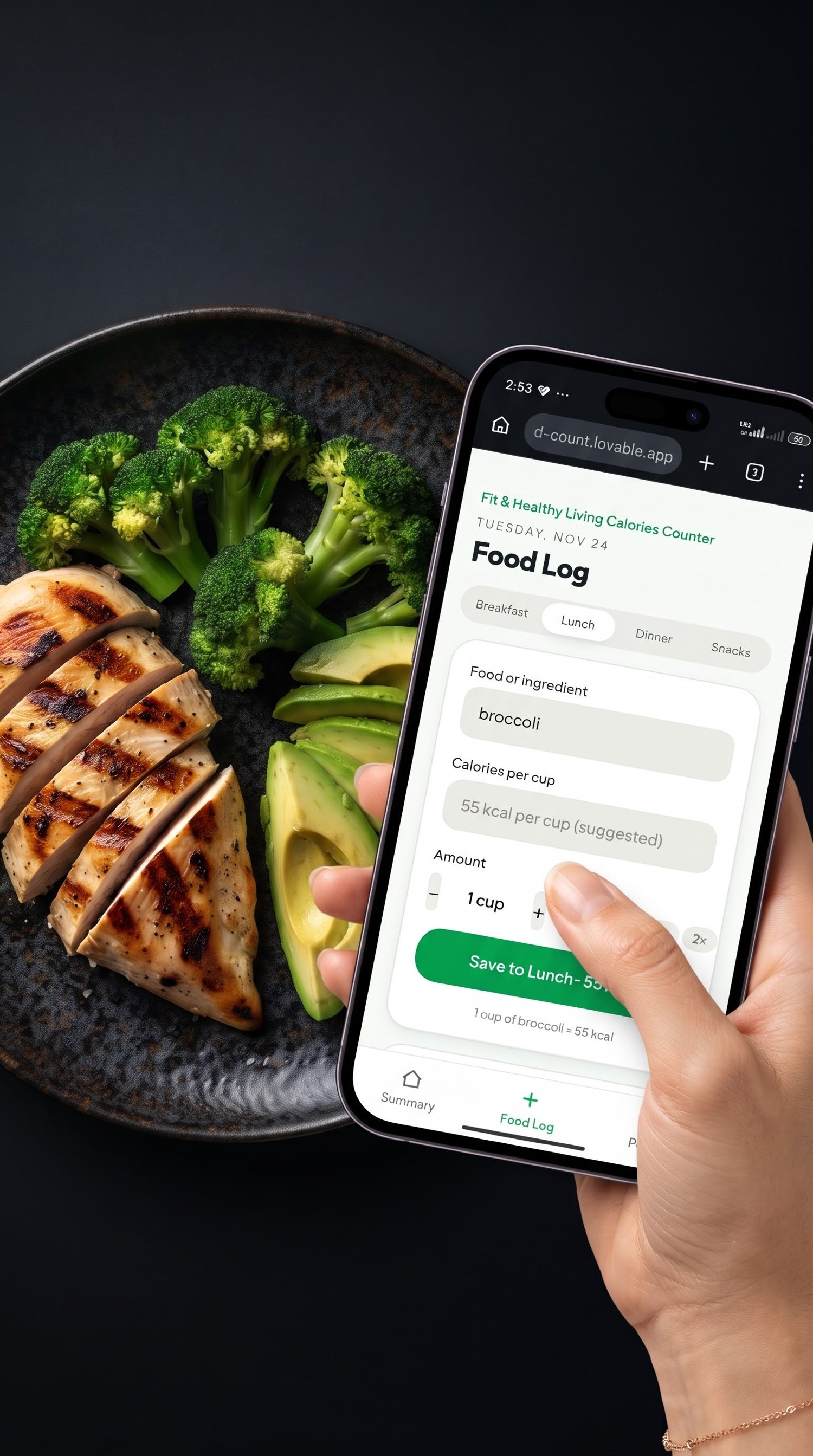
How to Estimate Food Portions Without a Food Scale
You don't always need a kitchen scale to become more aware of how much food you eat. Everyday objects and simple visual references can help you estimate food portions and keep a more consistent food diary.
1. Use Your Hand as a Reference
Your hand can provide convenient visual comparisons:
- Palm: a reference for a portion of meat, chicken, or fish.
- Fist: a useful comparison for foods such as rice, pasta, or vegetables.
- Thumb: a reference for small portions of foods like butter or peanut butter.
- Cupped hand: a visual guide for nuts or other small snacks.
These comparisons are estimates, not exact measurements.
2. Pay Attention to Your Plate
Looking at the proportions on your plate can also help you become more aware of your meals.
Try to notice how much space is occupied by vegetables, protein foods, and carbohydrates. This simple observation can help you describe your meals more consistently in your food diary.
3. Be Consistent With Your Estimates
The goal isn't to measure every bite perfectly. Instead, use the same visual references regularly so your food records become easier to compare from day to day.
4. Record What You Eat
After estimating your portions, write down the foods and approximate amounts in your food diary. Over time, this can help you recognize patterns in your everyday eating habits.
Make Food Tracking Easier
A digital food diary can help you keep your meal records organized. The Fit & Healthy Living Calories Counter lets you record meals, monitor your calorie intake, and calculate your daily calorie goal.
Ready to organize your food records?
Discover the Fit & Healthy Living Calories Counter
Remember: visual portion estimates are useful for everyday awareness, but they are not a substitute for precise measurements when those are necessary.